
The Dam Square & Royal Palace area serves as the physical and symbolic heart of Amsterdam. Originally created in the 13th century when a dam was built across the Amstel River to prevent flooding, the square has evolved into a major urban hub. While the Dam Square & Royal Palace site initially facilitated trade and local government, it now accommodates thousands of visitors daily. You can observe a diverse range of architectural styles, from the classicism of the palace to the modern facades of surrounding commercial buildings. Understanding the history of Dam Square & Royal Palace requires an examination of its transition from a medieval marketplace to a center of national importance.
In this blog:
The 13th-Century Origins of the Dam Square
The history of Dam Square began approximately in 1270 when a dam was constructed to connect the settlements on both banks of the Amstel River. This structure provided a safe harbor for ships and allowed for the regulation of water levels, which was essential for the city’s early growth. As the dam expanded, it became a central marketplace where merchants traded fish, grain, and other goods. Over time, the area around Dam Square developed into the primary administrative center of Amsterdam, as the proximity to the water made it an ideal location for the weigh house and the first town hall.
As the city expanded during the 14th and 15th centuries, the space known as Dam Square was enlarged to accommodate more residents and traders. The location was not only a commercial hub but also a site for public announcements and judicial proceedings. The Royal Palace did not exist during this early period; instead, a smaller, gothic-style town hall occupied part of the site. This early version of Dam Square was much more irregular in shape than the paved plaza you see today. The presence of the Amstel River, which originally flowed through the square, defined the early urban layout before later canal developments redirected the water.
Tip: The first wooden foundation pile for the construction of the building that is now the Royal Palace was driven into the ground on October 28, 1648.
How to get there?
Plan my journey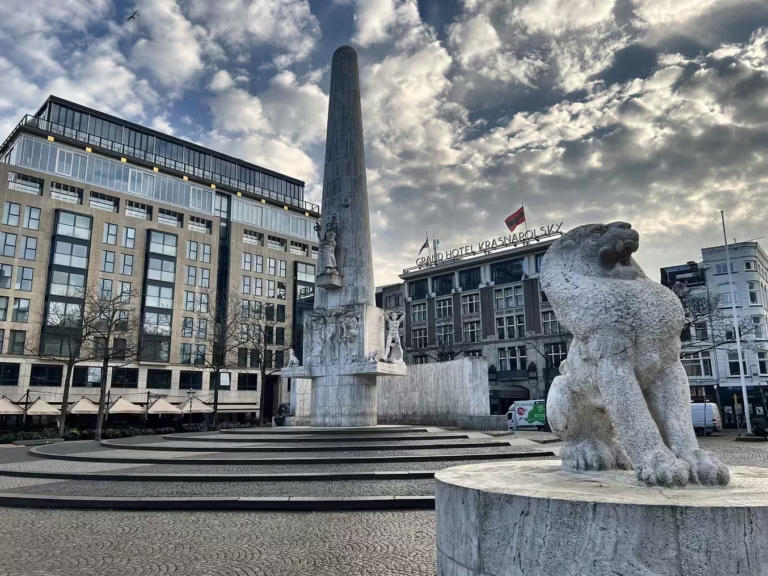
Architectural Design and the 13,659 Foundation Piles
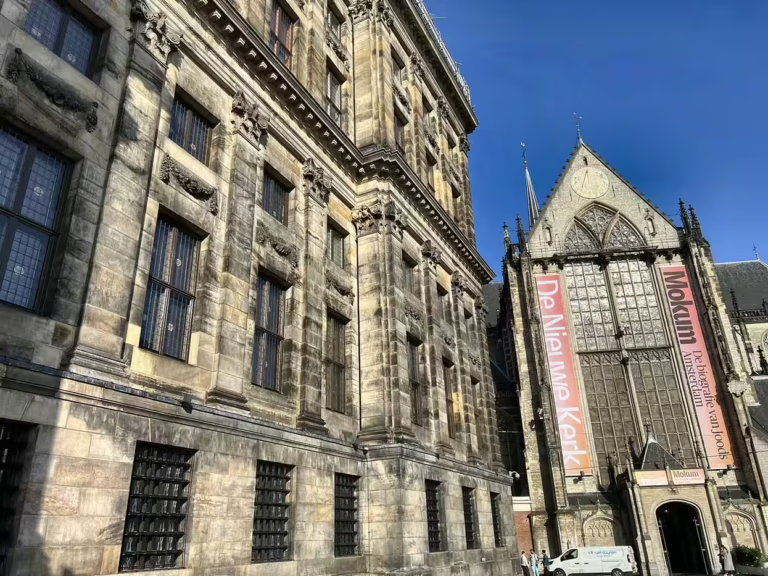
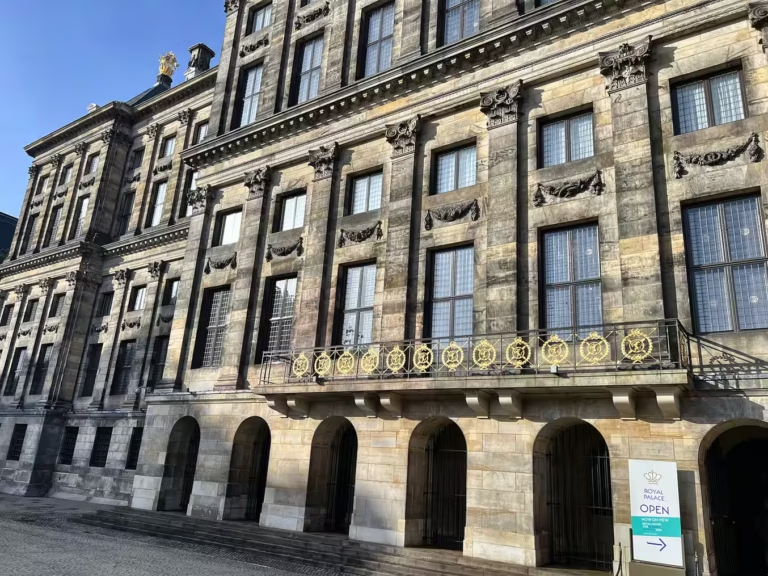
The Royal Palace is widely regarded as the most significant secular building of the Dutch Golden Age. Designed by architect Jacob van Campen, the building was constructed in the Dutch Classicist style, which drew inspiration from Roman and Greek architecture. This style utilized symmetry, classical columns, and white marble to project an image of order and power. Because the soil in Amsterdam is composed of soft peat and clay, the Royal Palace required an extensive foundation. Builders used exactly 13,659 wooden piles to support the massive stone structure, a feat of engineering that remains a subject of study for architectural historians.
The exterior of the Royal Palace is primarily made of Bentheimer sandstone, which has darkened over the centuries due to environmental exposure. You can see the intricate pediments on the front and back of the building, which feature sculptures representing the maritime power of Amsterdam and the four continents known at the time. While the Royal Palace occupies a dominant position on Dam Square, its proportions were carefully calculated to maintain a sense of balance with the surrounding buildings. The use of the “Golden Ratio” in its design contributes to the harmonious appearance of the facade, even though the building is exceptionally large for its urban context.
Tip: The Royal Palace is situated at the official address of Dam 1, 1012 JS Amsterdam, and is registered as a national monument under Rijksmonument number 730.
Royal Palace at Dam Square
The 1956 National Monument and Remembrance Traditions
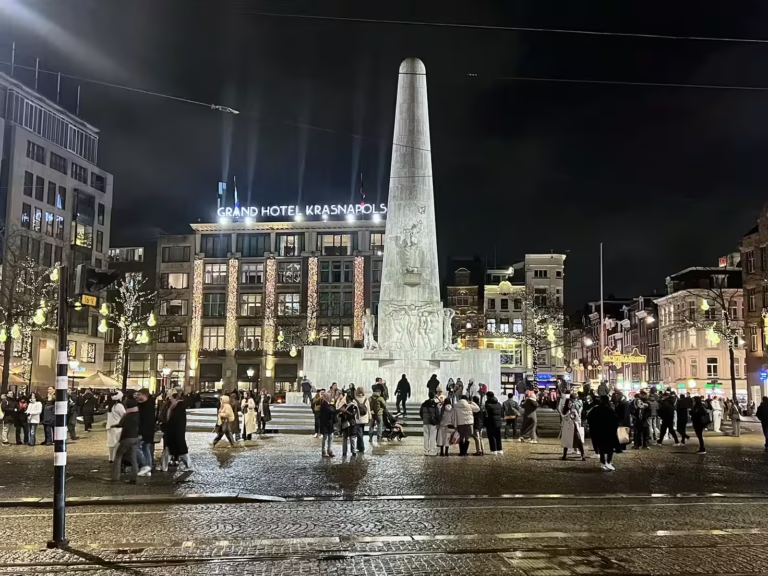
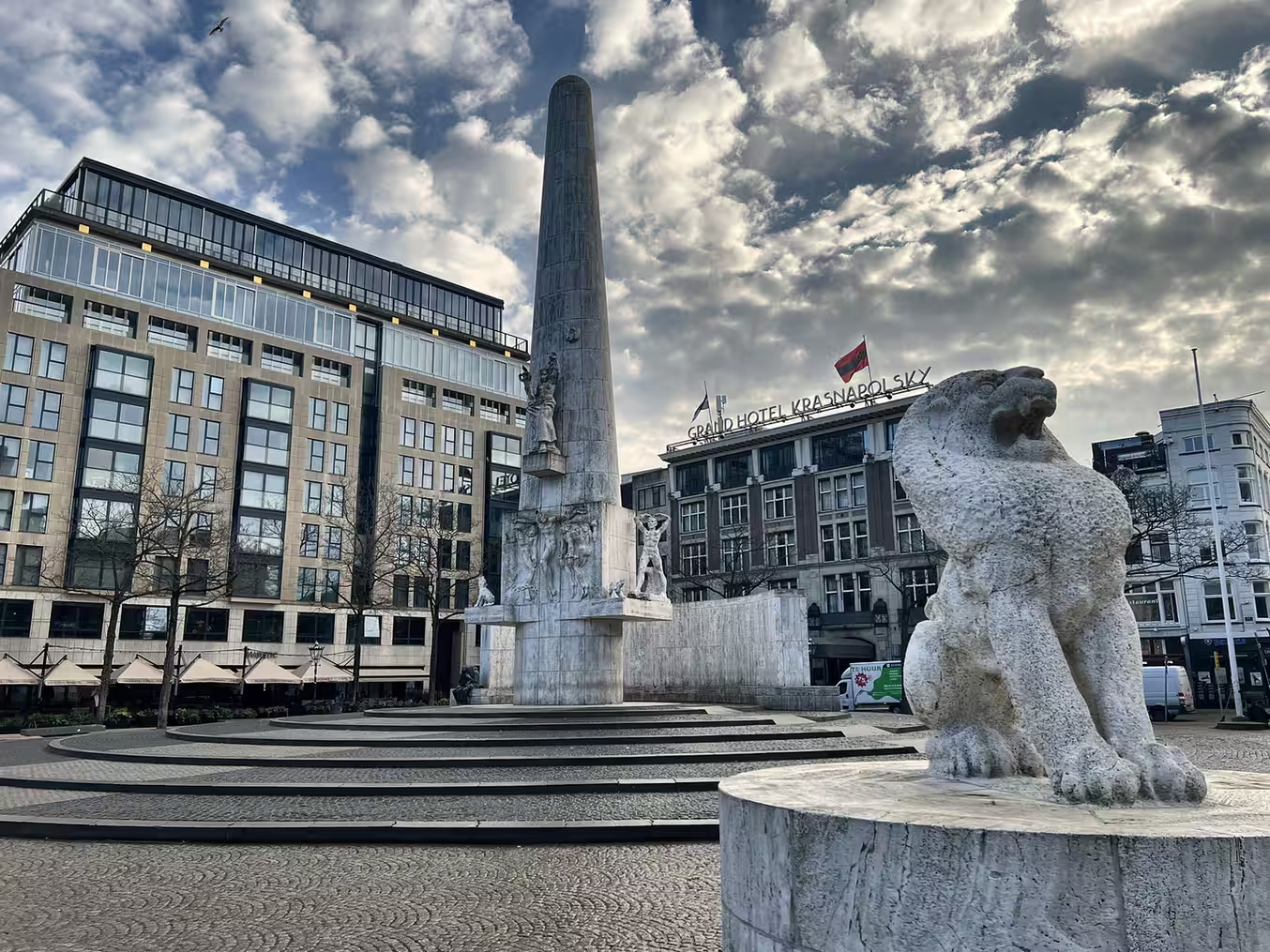
Opposite the palace on Dam Square stands the National Monument, a white stone obelisk designed by architect J.J.P. Oud. Unveiled in 1956, this monument serves as a memorial to the victims of World War II and subsequent armed conflicts involving the Netherlands. The monument is 22 meters high and features sculptures by John Raedecker that represent various themes, including resistance, loyalty, and peace. Every year on May 4, Dam Square hosts the National Remembrance Day ceremony, where the King and Queen lay a wreath at the base of the monument in the presence of government officials and veterans.
The National Monument is constructed from travertine, a type of limestone that was sourced from Italy. Within the curved wall at the back of the monument, there are twelve urns containing soil from the eleven Dutch provinces and the Dutch East Indies. This symbolic inclusion ensures that the monument on Dam Square represents the entire nation and its former colonial territories. During the 1960s and 1970s, the monument on Dam Square became a gathering point for young people and protesters, reflecting the square’s ongoing role as a site for public expression. While the Royal Palace represents the formal authority of the state, the National Monument provides a space for collective mourning and reflection.
Tip: The National Monument on Dam Square was officially unveiled by Queen Juliana on September 13, 1956.
(the post will continue after this block)
Amsterdam Top 5 Museums
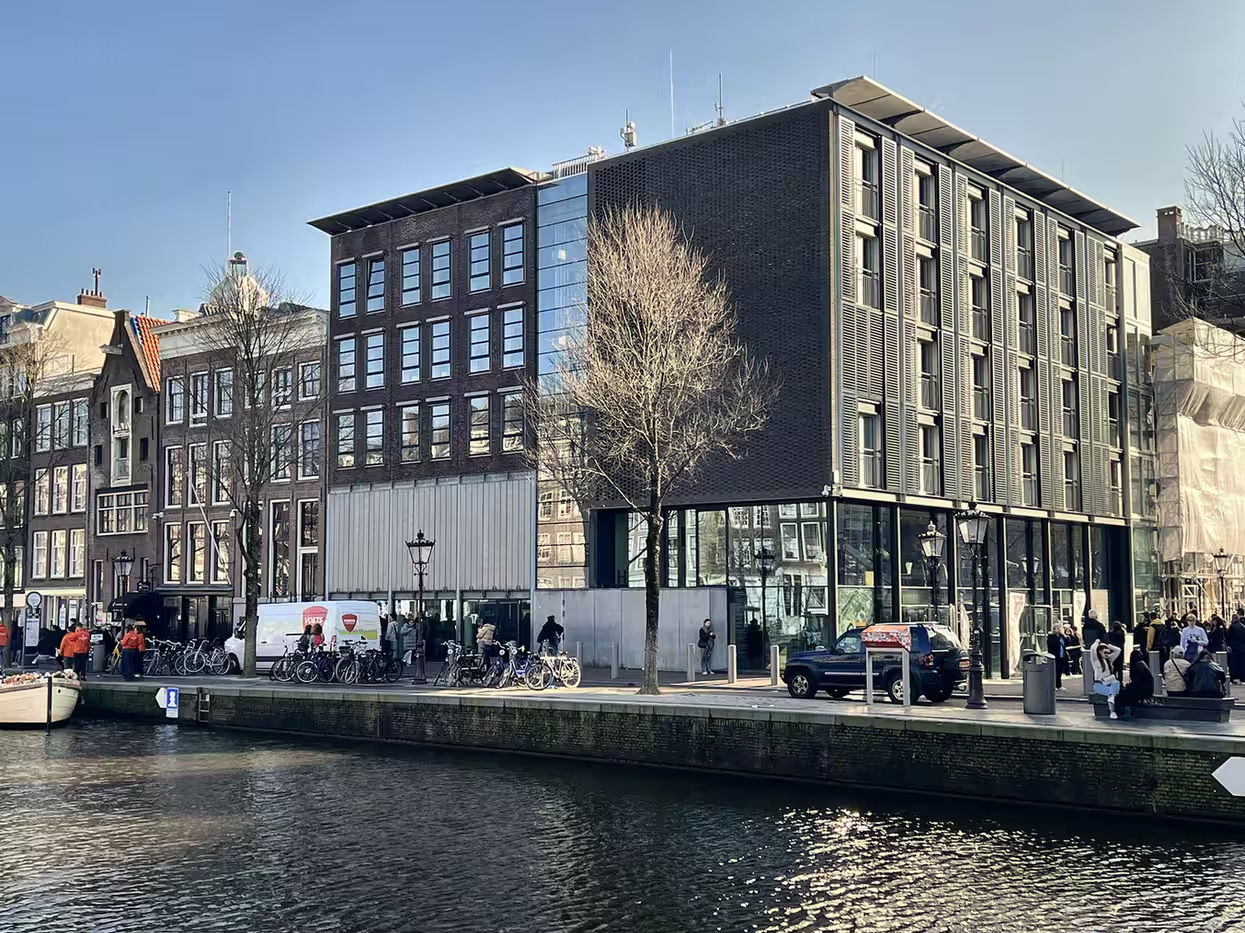
1. Anne Frank house
The Anne Frank House preserves the secret annex where Anne Frank and her family hid during World War II, offering visitors a powerful glimpse into her life and the history behind her famous diary.
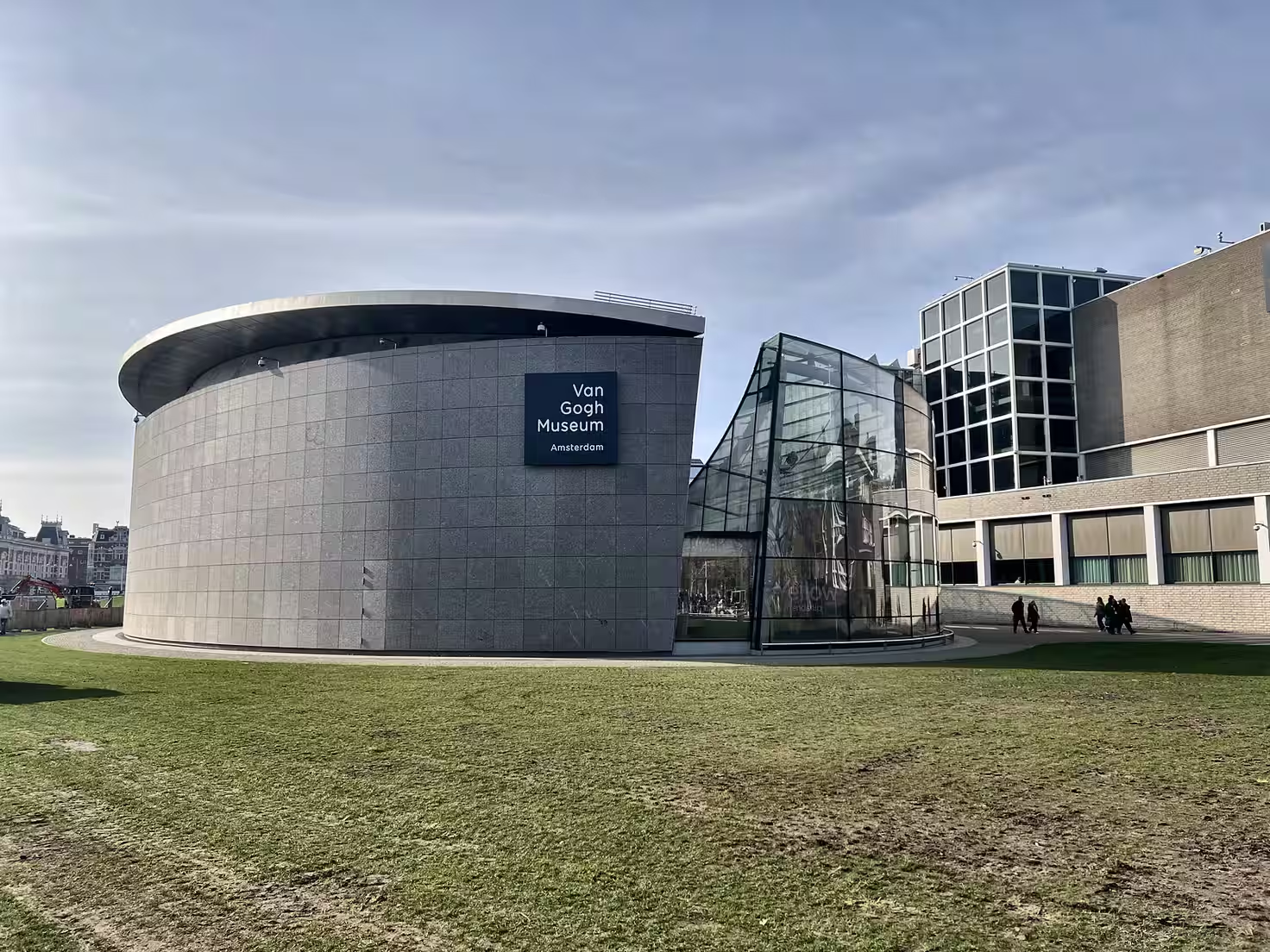
2. Van Gogh museum
The Van Gogh Museum houses the world’s largest collection of works by Vincent van Gogh, allowing visitors to explore his paintings, drawings and letters while learning about the life and artistic development of one of the most influential painters in history.
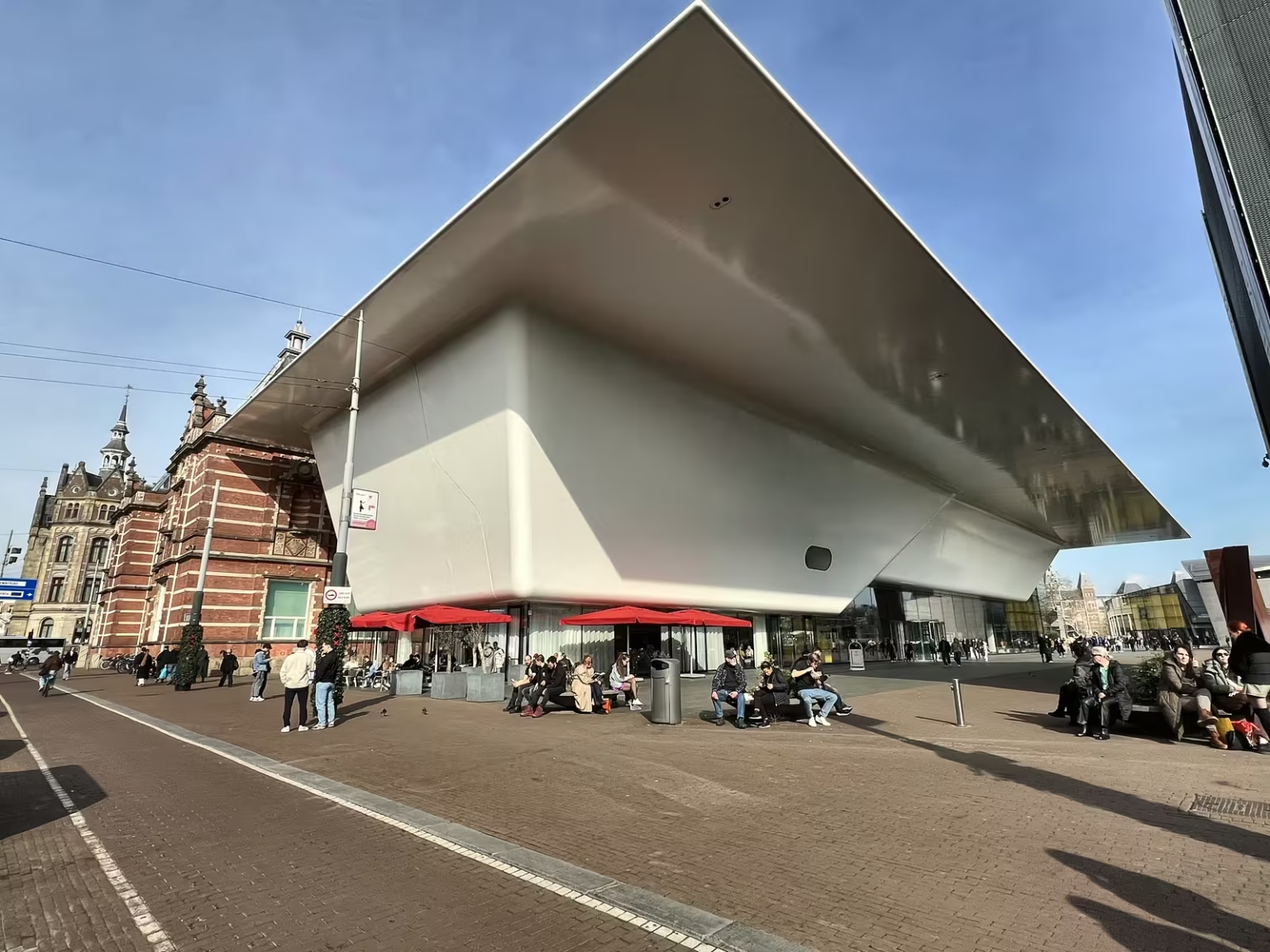
3. Stedelijk museum
Stedelijk Museum Amsterdam showcases modern and contemporary art and design, featuring works by artists such as Mondrian while highlighting groundbreaking movements that shaped international art and culture.
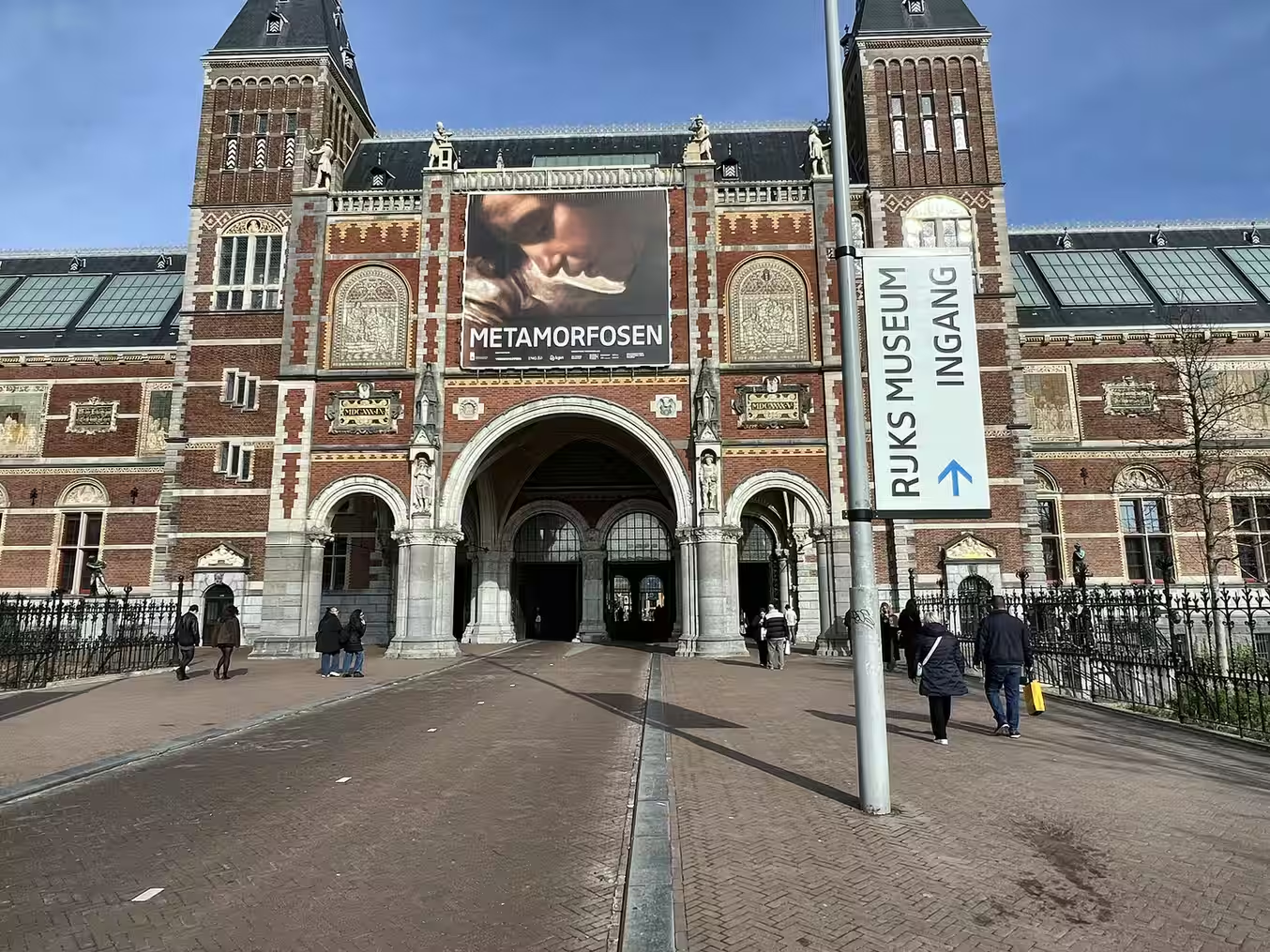
4. Rijks museum
Rijksmuseum presents the rich history of the Netherlands through masterpieces by Dutch masters such as Rembrandt and Vermeer, including the world-famous painting The Night Watch.
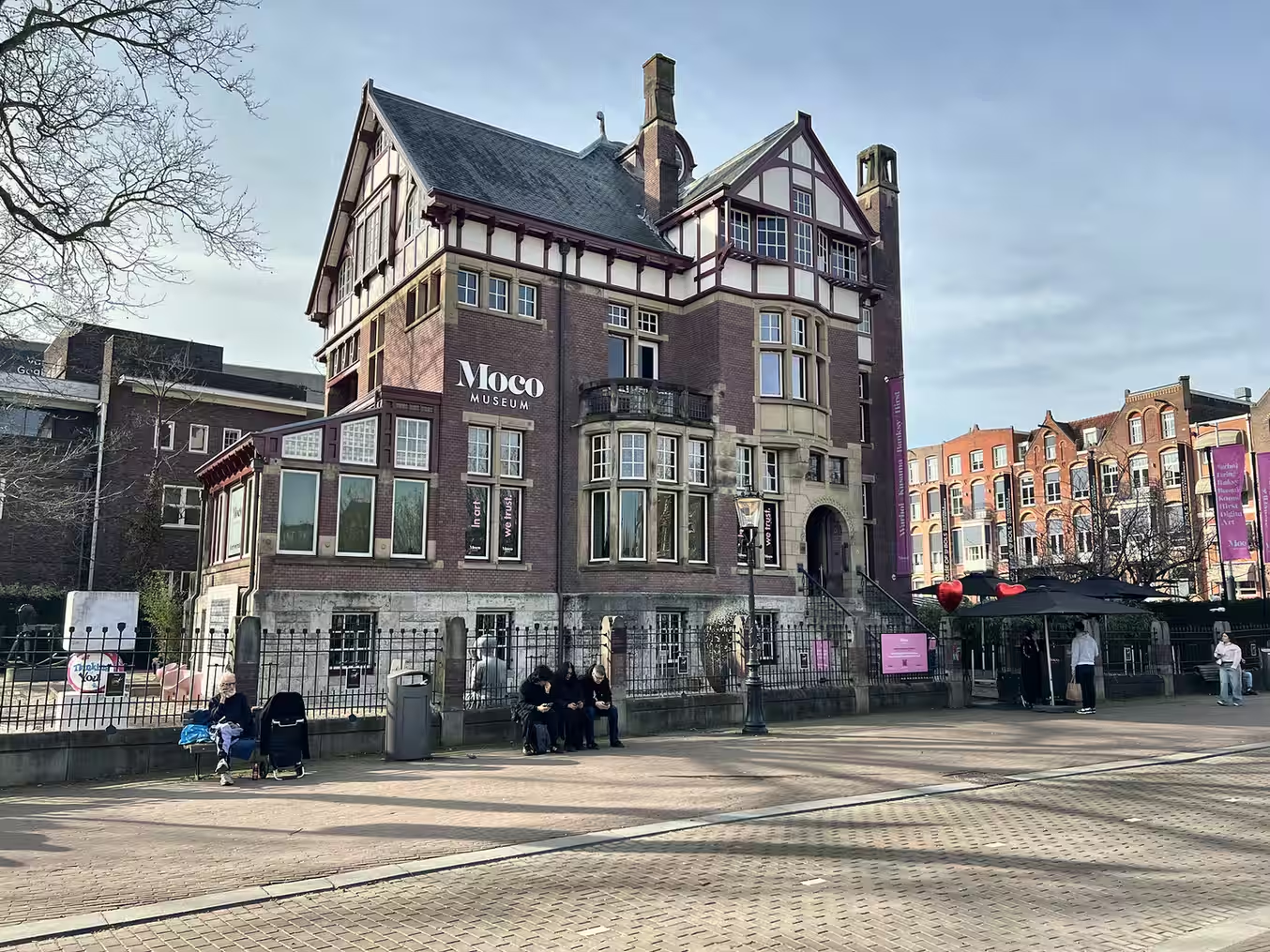
5. Moco museum
Moco Museum exhibits modern and contemporary art from influential artists such as Banksy, Basquiat and Kusama, combining street art, pop art and digital art in a vibrant museum setting.
Interior Highlights: The Burgerzaal and the Atlas Statue
When you enter the Royal Palace, the most prominent room you encounter is the Burgerzaal (Citizens’ Hall). This massive space was designed to reflect the entire universe, featuring marble floors inlaid with maps of the eastern and western hemispheres and the celestial sky. The maps were intended to demonstrate that Amsterdam was the center of the world during the 17th century. The Royal Palace uses high ceilings and large windows to create a bright environment that highlights the detailed carvings and paintings. The Burgerzaal served as the public heart of the town hall, where citizens could meet and observe the workings of their government.
At the end of the Burgerzaal, a large statue of Atlas carries the globe on his shoulders, symbolizing the weight of the world and the responsibility of the city’s rulers. The Royal Palace also contains various smaller rooms, such as the Schepenzaal (Magistrates’ Chamber), where legal cases were heard. Many of these rooms are decorated with paintings by pupils of Rembrandt, including Ferdinand Bol and Govert Flinck. Although the Royal Palace is no longer a town hall, the interior remains largely as it was in the 17th century, providing a direct connection to the administrative history of Dam Square. The craftsmanship visible in the marble fireplaces and brass chandeliers illustrates the immense wealth available to the city at the peak of its global influence.
The Historical Transition from Town Hall to Residence in 1808
The function of the building on Dam Square changed drastically in 1808. During the Napoleonic wars, Louis Bonaparte, the brother of Napoleon, was appointed King of Holland. He decided that the town hall was the only building in Amsterdam suitable for a royal residence. Consequently, the Royal Palace was established, and the city government was forced to relocate to the Prinsenhof. Louis Bonaparte brought a vast collection of Empire-style furniture to the Royal Palace, much of which remains in the building today. This collection is one of the most complete sets of Napoleonic furniture outside of France.
This transition from a civic building to the Royal Palace was not initially popular with the residents of Amsterdam, as Dam Square had always been a public space. However, after the fall of Napoleon and the establishment of the Kingdom of the Netherlands in 1813, King William I returned the building to the city, only to later accept it back as a royal residence. Since then, the Royal Palace has been at the disposal of the Dutch monarch. While the King does not live there permanently, the Royal Palace is used for official state visits, New Year’s receptions, and the presentation of various royal awards. This dual history as both a town hall and the Royal Palace is unique among European royal residences.
What makes Dam Square Amsterdam so popular?
The Dam Square & Royal Palace complex forms the historical and political center of Amsterdam. This area features the 17th-century former town hall, the 1956 National Monument, and the 15th-century New Church, serving as a primary site for state ceremonies, public demonstrations, and international tourism in the Netherlands.
Public Events, Media Presence, and Contemporary Functions
Modern-day Dam Square is a frequent location for televised events and national celebrations. Because of its central position, it often serves as the backdrop for international news broadcasts concerning the Netherlands. The Royal Palace is frequently seen during the abdication of monarchs or the introduction of new members of the Royal House, as the balcony overlooking Dam Square is the traditional site for the King or Queen to greet the public. These moments draw large crowds to Dam Square, where the atmosphere is monitored by local authorities to ensure public safety and order.
In addition to royal events, the Royal Palace and the surrounding square host cultural festivals and markets throughout the year. For instance, the annual “Kermis” (fair) on Dam Square transforms the plaza into an amusement park with various rides and stalls. While these events are popular, they often spark debate about the preservation of the historic character of Dam Square. The presence of the Royal Palace ensures that any activity on the square is subject to strict regulations regarding noise and structural impact. Despite these restrictions, Dam Square remains the most active public space in the city, continuously adapting to the needs of modern society while maintaining its historical identity.
Take a virtual tour with Google Streetview!
Practical Visitor Information and Official Regulations
Visiting the Royal Palace is possible for the public most of the year, provided there are no official state events taking place. The palace administration publishes a schedule of opening times, and it is recommended to check this before planning a trip to Dam Square. When the Royal Palace is open, you can access an audio guide that explains the history of the different rooms and the significance of the art collection. The entrance to the Royal Palace is located on the side of the building facing the New Church, which is also a significant monument on Dam Square.
Security measures are strictly enforced at the Royal Palace and around Dam Square. Because the building is an active residence of the King, visitors must pass through security screenings before entry. Photography is generally allowed inside the Royal Palace, but the use of flash or tripods is often restricted to protect the historic interiors. Around Dam Square, you will find numerous public transport links, including tram lines that stop directly in front of the National Monument. The accessibility of Dam Square makes it a logical starting point for any tour of Amsterdam’s historic center. Whether you are interested in the political history of the Royal Palace or the memorial significance of the square, the site offers a comprehensive view of Dutch national identity.
Frequently Asked Questions (FAQ)
Is the Royal Palace on Dam Square the King’s primary home?
No, the King of the Netherlands primarily resides at Huis ten Bosch Palace in The Hague. The Royal Palace on Dam Square is used for state functions, official receptions, and as a place for the monarch to receive foreign heads of state.
Can you climb the National Monument on Dam Square?
No, the National Monument is a commemorative sculpture and does not have an interior staircase or viewing platform. It is designed to be viewed from Dam Square, and the stairs at the base are often used as a seating area by the public.
How many foundation piles support the Royal Palace?
There are exactly 13,659 wooden foundation piles supporting the Royal Palace. This number is a well-known fact in Amsterdam’s history and demonstrates the complexity of building on the city’s soft soil.
What is the building next to the Royal Palace?
The prominent building located directly next to the Royal Palace on Dam Square is the Nieuwe Kerk (New Church). It is a 15th-century church that is now used for major exhibitions and royal weddings or inaugurations.
Sources
- Amsterdam City Archives. (2026). The Construction of the Town Hall on Dam Square.
- National Monumenten Organization. (2026). National Monument on Dam Square: History and Design.
- Royal Palace Amsterdam. (2026). Architecture and History of the Palace on Dam Square.
- Stadsarchief Amsterdam. (2026). The 13,659 Piles of the Royal Palace.
- Wikipedia contributors. (2026, February 10). Royal Palace of Amsterdam. In Wikipedia, The Free Encyclopedia.

Leave a Reply