
Stedelijk Museum Amsterdam focuses on modern and contemporary art and design. At Museumplein, its historic building sits beside the white extension nicknamed the Bathtub. Read about the museum’s collections, architecture and visitor facilities before you go.
In this guide
The Architectural Evolution from 1895 to 2012
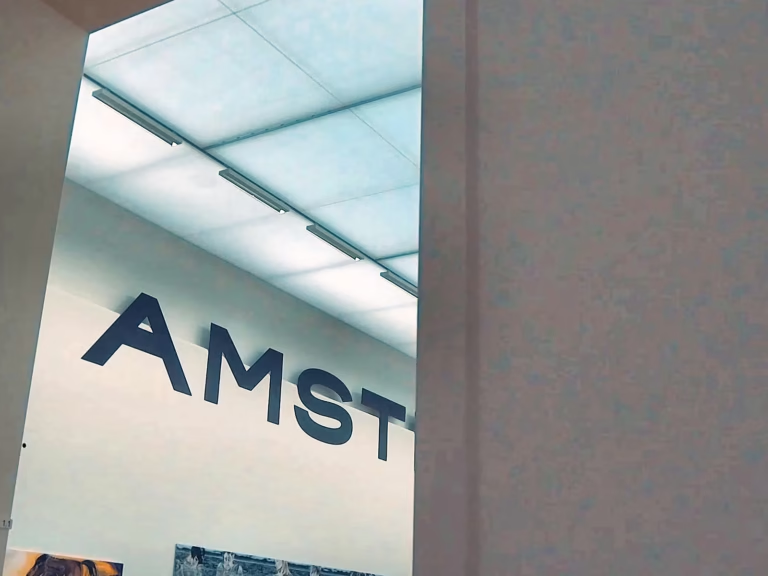
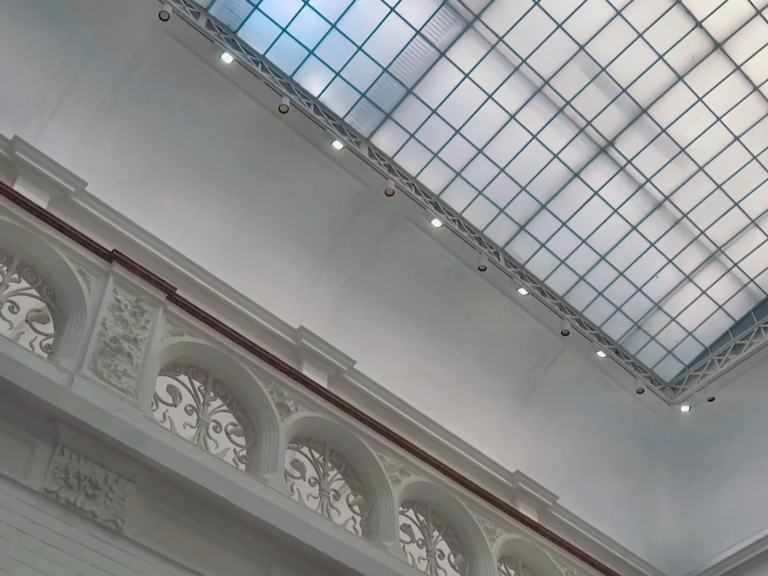
The Stedelijk Museum Amsterdam was originally opened in 1895. The primary building was designed by architect Adriaan Willem Weissman in a style inspired by the 16th-century Dutch Renaissance. The red brick facade and ornate gables were intended to match the aesthetic of the city’s historic center. For over a century, this building served as the sole home of the collection until the increasing volume of artifacts and visitors necessitated a modern expansion.
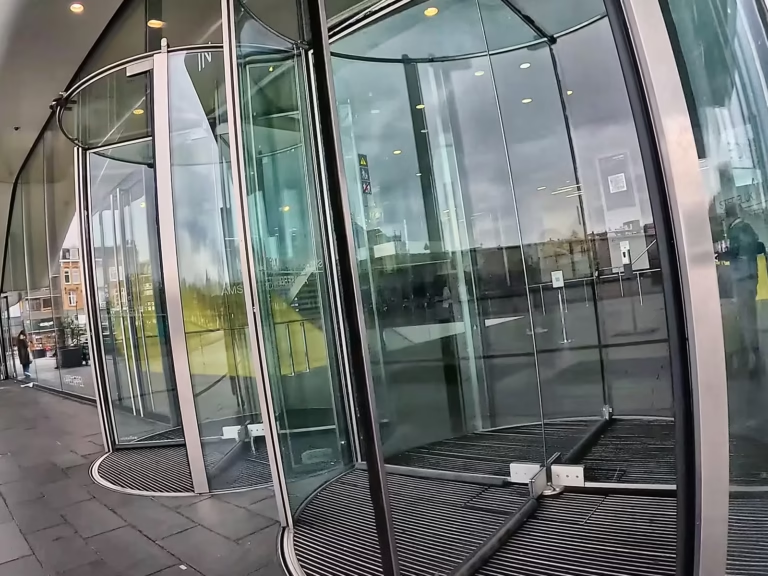
In 2012, the museum inaugurated its new wing, designed by Benthem Crouwel Architects. This addition is notable for its smooth, white facade made of a high-tech synthetic fiber (aramid and carbon fiber), which measures approximately 100 meters in length. The ground floor of the new wing is transparent, creating a seamless transition between the museum and the public space of Museumplein. This expansion nearly doubled the museum’s exhibition space, allowing for a dedicated permanent display of its greatest hits alongside rotating temporary exhibitions.
Tip: The original building of the Stedelijk Museum Amsterdam, designed by A.W. Weissman, was officially opened on September 14, 1895.


Key Art Movements and Permanent Collections
The collection of the Stedelijk Museum Amsterdam comprises approximately 90,000 objects. The museum’s permanent exhibition, titled “STEDELIJK BASE,” provides a chronological journey through the history of modern art. Significant focus is placed on the De Stijl movement, with the museum holding a world-class collection of works by Piet Mondrian. Visitors can observe the transition from his early landscape paintings to the primary-color abstractions that defined his later career.
Another pillar of the collection is the CoBrA movement (Copenhagen, Brussels, Amsterdam), featuring artists like Karel Appel and Constant. This post-war movement is characterized by spontaneous and experimental styles. The museum also maintains a significant collection of European and American art from the 1960s to the present, including Pop Art, Minimal Art, and Conceptual Art. In addition to fine art, the Stedelijk Museum Amsterdam is a major center for design, showcasing furniture by Gerrit Rietveld and industrial design from the Bauhaus school.
Tip: The Stedelijk Museum Amsterdam is located at the exact address of Museumplein 10, 1071 DJ Amsterdam.
Stedelijk Museum Amsterdam
Famous Artists and Notable Works
Within the galleries of the Stedelijk Museum Amsterdam, visitors encounter works by some of the most influential figures in art history. The museum owns several significant pieces by Kazimir Malevich, representing the largest collection of his work outside of Russia. His suprematist compositions are a focal point for those interested in the birth of abstract art. The museum also houses major works by Wassily Kandinsky and Henri Matisse, including Matisse’s large cut-out “La Perruche et la Sirène.”
In the contemporary sections, the museum features works by Jeff Koons, Marlene Dumas, and Gilbert & George. The collection is not limited to paintings and sculptures; it also includes photography, video art, and large-scale installations. One of the most physically imposing works is the “Beanery” by Edward Kienholz, a walk-in installation that recreates a 1960s bar. The museum actively acquires new works to reflect current global trends in art, ensuring that the collection remains relevant for repeat visitors.

ESCAPE THE CITY!

Westerpark Amsterdam: green space and the Westergas complex
Westerpark Amsterdam brings green space and former industrial buildings together. Walk through the park, then explore the Westergas complex to see how…
Vondelpark Amsterdam: walks, cafés and park history
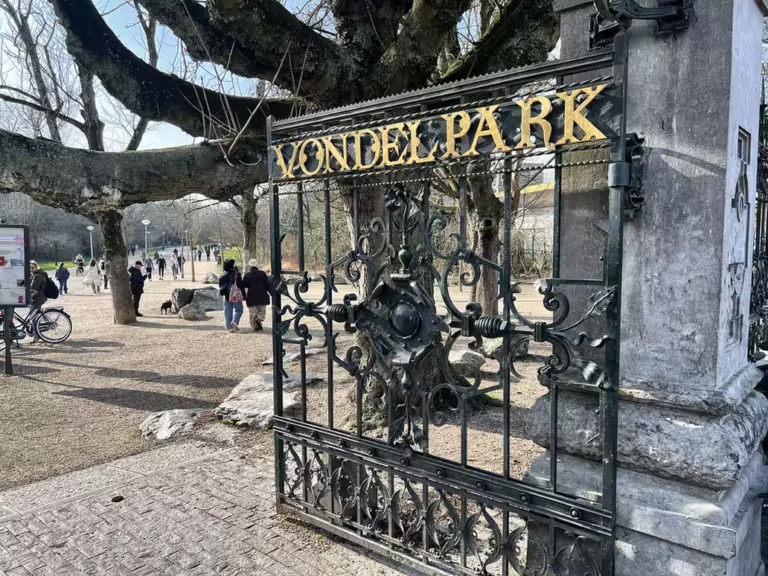
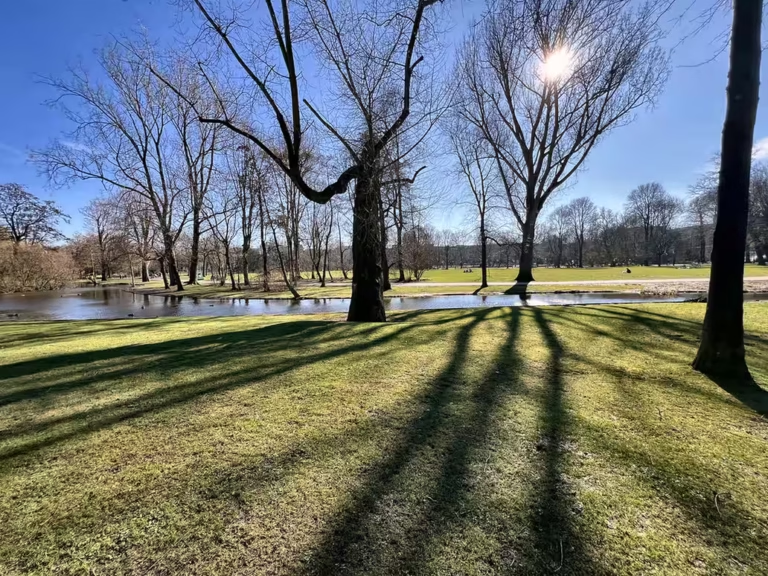
Vondelpark Amsterdam is a place to walk, cycle or pause near Museumplein. Its lawns, ponds and winding paths are used by residents…
Oosterpark Amsterdam: walks, monuments and history
Oosterpark Amsterdam combines walking paths and lawns with monuments that invite a longer look. This guide covers the park’s design, history and…
Famous Artists and Notable Works
Within the galleries of the Stedelijk Museum Amsterdam, visitors encounter works by some of the most influential figures in art history. The museum owns several significant pieces by Kazimir Malevich, representing the largest collection of his work outside of Russia. His suprematist compositions are a focal point for those interested in the birth of abstract art. The museum also houses major works by Wassily Kandinsky and Henri Matisse, including Matisse’s large cut-out “La Perruche et la Sirène.”
In the contemporary sections, the museum features works by Jeff Koons, Marlene Dumas, and Gilbert & George. The collection is not limited to paintings and sculptures; it also includes photography, video art, and large-scale installations. One of the most physically imposing works is the “Beanery” by Edward Kienholz, a walk-in installation that recreates a 1960s bar. The museum actively acquires new works to reflect current global trends in art, ensuring that the collection remains relevant for repeat visitors.



The Library and Educational Resources
The Stedelijk Museum Amsterdam is also a significant research institution. It houses one of the most comprehensive libraries for modern and contemporary art in Europe. The library is located within the museum complex and is accessible to researchers, students, and the general public. It contains over 190,000 titles, including exhibition catalogs, monographs, and rare periodicals. The library’s digital database allows visitors to search the collection and access digitized archival materials.
Educational programs are a core part of the museum’s mission. The institution offers workshops, guided tours, and lectures designed for different age groups. The “Blikopeners” program is a specific initiative where young Amsterdammers (aged 15–19) are trained to provide tours and share their perspectives on the collection. This focus on education ensures that the Stedelijk Museum Amsterdam serves as a platform for critical thinking and cultural dialogue rather than just a passive viewing space.
Tip: The museum library is open to the public from Tuesday to Friday between 12:00 and 17:00.

Stedelijk Museum Amsterdam: modern art, design and visits
Stedelijk Museum Amsterdam focuses on modern and contemporary art and design. At Museumplein, its historic building sits beside the white extension nicknamed the Bathtub. Read about the museum’s collections, architecture and visitor facilities before you go.
Location, Transport, and Accessibility
The Stedelijk Museum Amsterdam is centrally located on Museumplein, making it part of a cluster that includes the Rijksmuseum and the Van Gogh Museum. It is easily accessible via Amsterdam’s public transport network. Tram lines 2, 5, and 12 stop at the Van Baerlestraat station, which is located directly beside the museum. Alternatively, tram lines 3 and 12 stop at the Museumplein station, providing a short walk across the grass to the entrance.
The building is fully accessible for visitors with limited mobility. All floors in both the historic building and the new wing are served by elevators. Wheelchairs are available for loan at the information desk free of charge, though they cannot be reserved in advance. The museum also provides facilities for visitors with sensory sensitivities, including quiet spaces and detailed information about the light and sound levels in specific installations. The entrance for visitors with wheelchairs or strollers is located at the main entrance in the new wing.
Take a virtual tour with Google Streetview!
Practical Visitor Information
The Stedelijk Museum Amsterdam is open daily from 10:00 to 18:00. Tickets can be purchased online through the museum’s official website or at the box office. It is a factual requirement that children under the age of 12 must be accompanied by an adult. The museum accepts the National Museum Pass (Museumkaart), which provides free admission for residents and long-term visitors who hold the card. The I amsterdam City Card also grants free entry and includes public transport to the site.
The museum features a restaurant called “TEN Good Food Cafe,” located on the ground floor with a terrace facing Museumplein. A specialized museum shop is also available, offering an extensive selection of art books, design objects, and posters. To protect the artworks, large bags, umbrellas, and backpacks are not permitted in the galleries; the museum provides a free cloakroom and lockers in the basement. It is recommended to book tickets in advance during peak tourist seasons (April to August) to ensure entry during a preferred time slot.
Frequently Asked Questions (FAQ)
Is the Stedelijk Museum Amsterdam part of the Museumkaart?
Yes, holders of a valid Dutch Museumkaart can enter the museum for free without purchasing a separate ticket.
How much time should I spend at the museum?
A typical visit to see the permanent collection and the main temporary exhibitions takes approximately 2 to 3 hours.
Are there lockers available for bags?
Yes, the museum provides free lockers in the basement. Large luggage items that do not fit in a standard locker are not accepted.
Is photography allowed?
Photography without flash or a tripod is permitted for personal, non-commercial use in most galleries.
Where is the entrance located?
The main entrance is located in the new white wing (“The Bathtub”) facing Museumplein.
Sources
- Benthem Crouwel Architects. (2024). Projects: Stedelijk Museum Amsterdam Extension.
- Holland.com. (2024). Stedelijk Museum Amsterdam.
- I amsterdam. (2024). Stedelijk Museum Amsterdam.
- Stedelijk Museum Amsterdam. (2024). Visit and Collection Information.
- Wikipedia contributors. (2024). Stedelijk Museum Amsterdam.

Leave a Reply