
The Van Gogh Museum Amsterdam traces Vincent van Gogh’s life through paintings, drawings and letters. Its buildings on Museumplein reflect different periods of museum design. This guide introduces the collection, the Van Gogh family’s role and practical visitor information.
In this guide
The Legacy of the Van Gogh Family Collection
The existence of the Van Gogh Museum is fundamentally linked to the efforts of the artist’s family. After Vincent van Gogh died in 1890, his works were left to his brother, Theo van Gogh. Theo passed away only six months later, leaving the collection to his widow, Jo van Gogh-Bonger. It was Jo who spent decades organizing exhibitions and selling individual pieces to build Vincent’s international reputation. Upon her death in 1925, the remaining collection was inherited by her son, Vincent Willem van Gogh, often referred to as “the Engineer.”
In 1962, Vincent Willem van Gogh reached an agreement with the Dutch State to house the collection in a dedicated museum. The Vincent van Gogh Foundation was established to manage the artworks, and the state agreed to construct a specialized building in Amsterdam. This agreement ensured that the largest concentration of Van Gogh’s work would remain together rather than being dispersed through various private auctions. The collection remains the core of the Van Gogh Museum, representing the artist’s output through nearly 200 paintings and hundreds of drawings that were never sold during Jo van Gogh-Bonger’s lifetime.
Tip: The Van Gogh Museum is located at the exact street address of Museumplein 6, 1071 DJ Amsterdam.
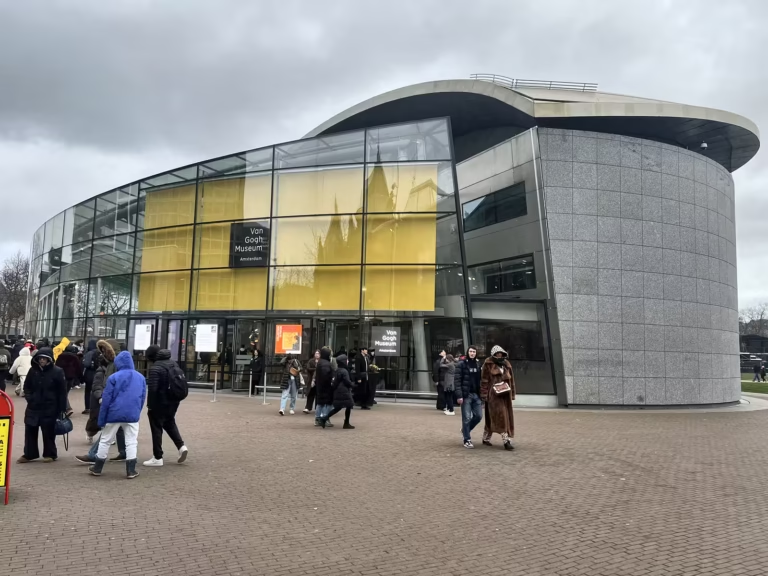
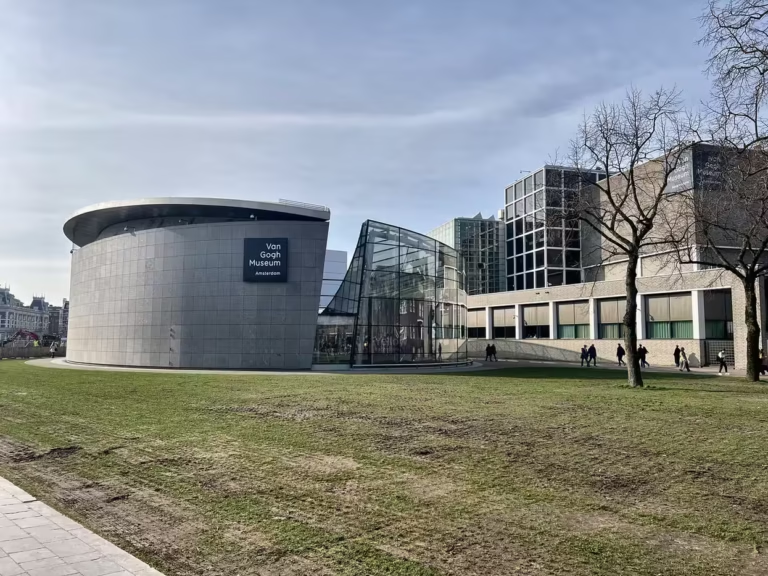
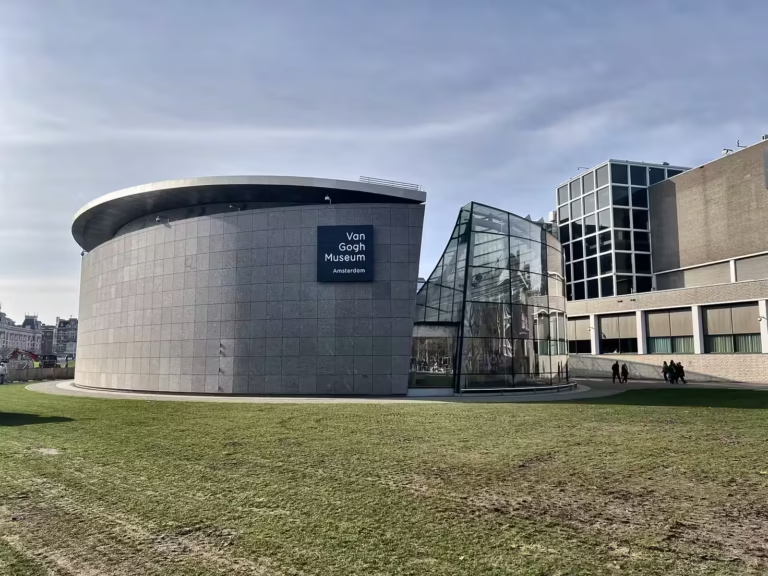
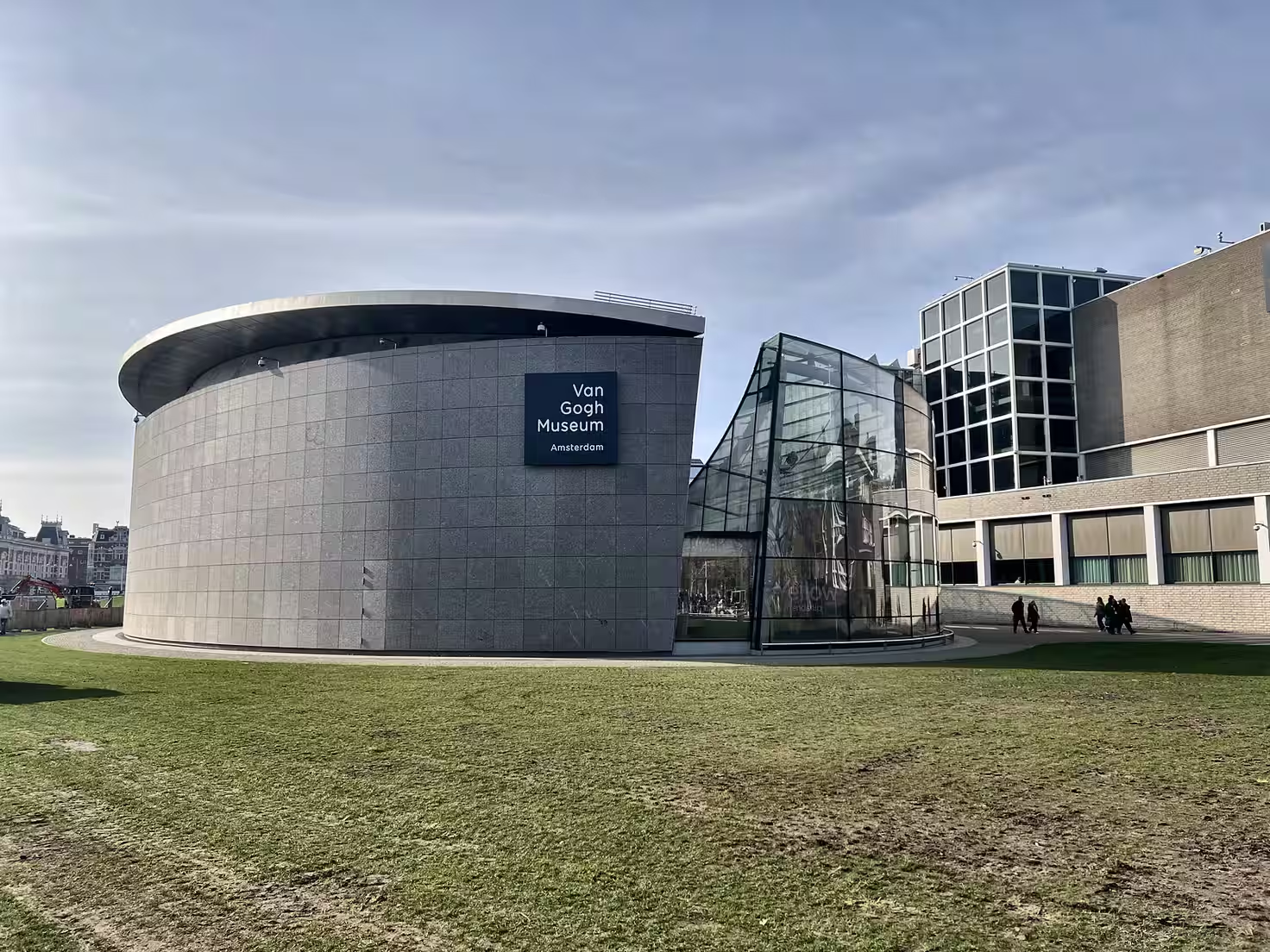
The Van Gogh Museum features modern architecture with a sleek glass entrance and a round stone structure set in a grassy area
The sign of the Van Gogh Museum is prominently displayed on the wall showcasing its name and location in amsterdam
Architecture: From De Stijl to Japanese Modernism
The Van Gogh Museum complex is composed of two buildings that reflect different architectural eras. The main building, known as the Rietveld Building, was designed by the famous Dutch architect Gerrit Rietveld, a member of the De Stijl movement. Rietveld died in 1964, a year after the design process began, and the project was completed by his partners. The building is characterized by its geometric forms and the use of natural light, which enters through a large central atrium. The museum officially opened its doors to the public on June 2, 1973.
In 1999, the museum expanded with the addition of the Exhibition Wing, designed by the Japanese architect Kisho Kurokawa. This wing is primarily used for temporary exhibitions and features an elliptical shape that contrasts with the square design of the Rietveld building. A major renovation in 2015 introduced the new Glass Entrance, which connects the two structures and faces the open grass of Museumplein. This entrance consists of a transparent glass structure that utilizes high-tech glass fins as load-bearing elements, allowing for a modern aesthetic that facilitates the flow of over two million annual visitors.
Tip: The Van Gogh Museum officially opened at its current location on June 2, 1973.
Van Gogh Museum Amsterdam
Permanent Collection: Paintings and Drawings
The permanent collection of the Van Gogh Museum is organized chronologically, allowing visitors to follow Vincent’s artistic journey. The first floor focuses on his early works in the Netherlands, including the sombre “The Potato Eaters” (1885). This period is defined by dark earthy tones and a focus on peasant life. As visitors move through the museum, they witness the dramatic shift in his style following his move to Paris in 1886, where he was influenced by Impressionism and Pointillism.
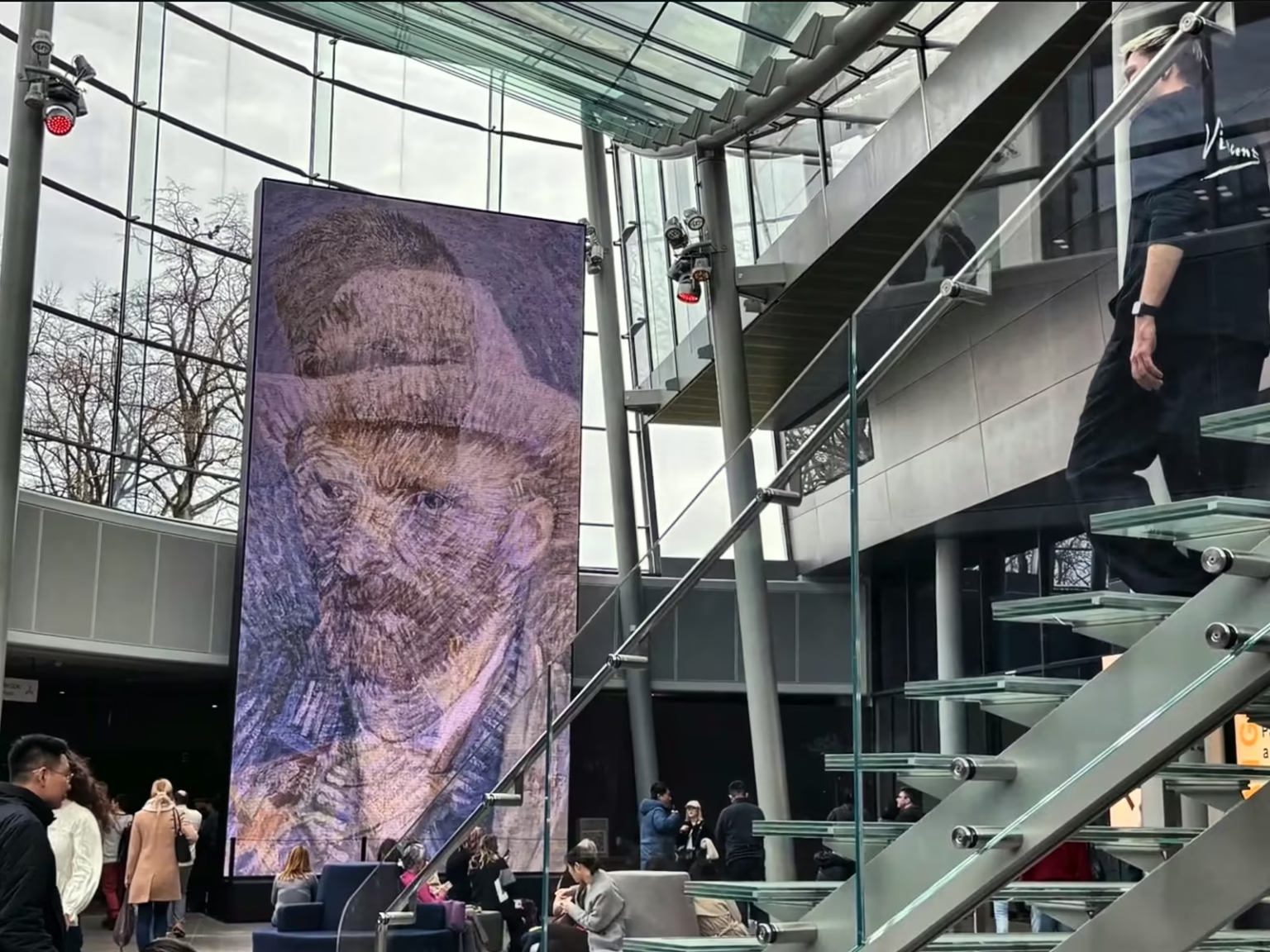
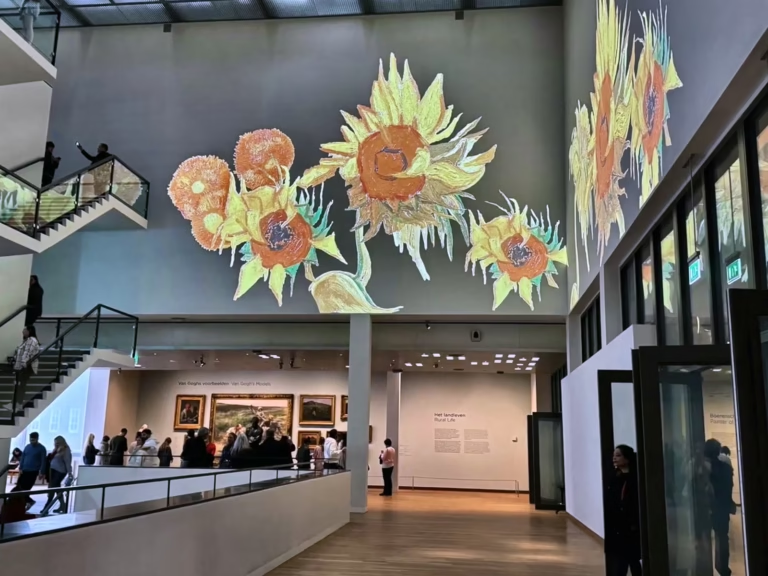
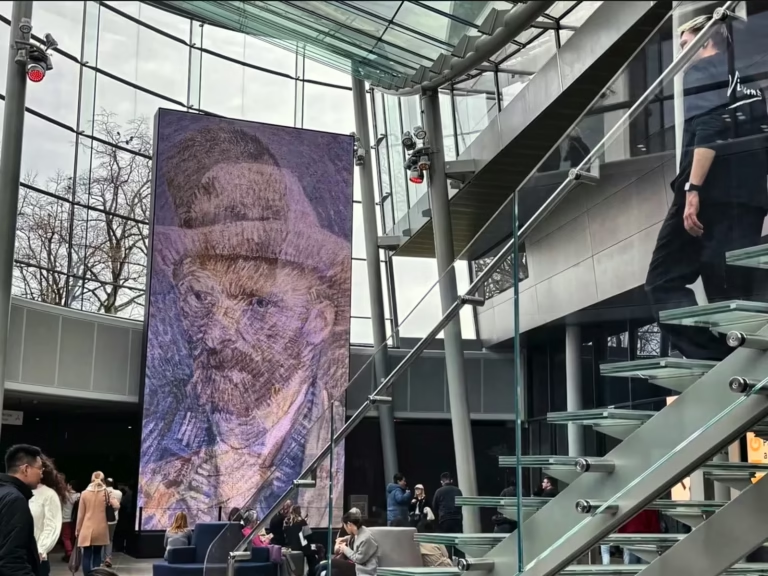
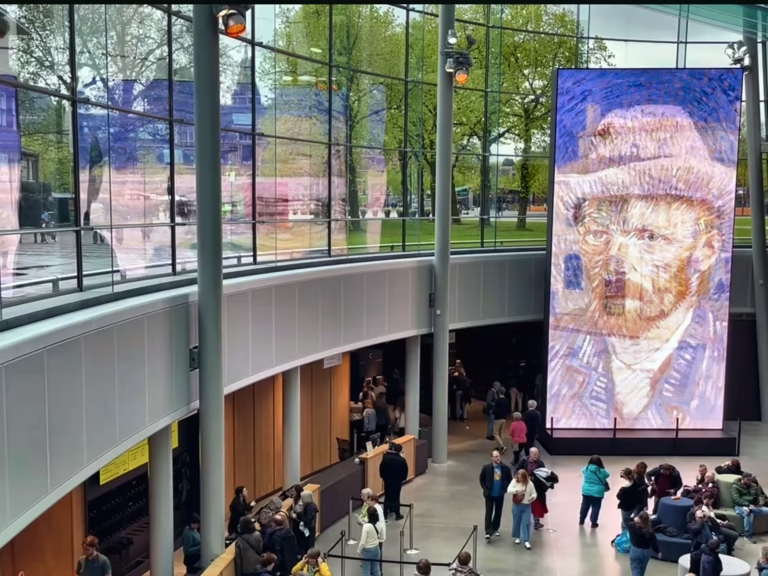
The museum’s most famous masterpieces are located on the middle floors. These include “The Sunflowers” (1889), “The Yellow House” (1888), and “Almond Blossom” (1890). The collection also features many of his self-portraits, which serve as a factual record of his changing physical appearance and emotional state. In addition to paintings, the museum houses over 500 drawings. Due to their sensitivity to light, these works are shown in rotating temporary displays to prevent the fading of the paper and ink. The museum’s inventory reflects the most prolific periods of Van Gogh’s life in Arles, Saint-Rémy, and Auvers-sur-Oise.
Listen to songs about Amsterdam on Spotify
Dutch classics about Amsterdam
The Personal Letters and Biographical Insights
Beyond the visual art, the Van Gogh Museum is the primary repository for the artist’s personal correspondence. The collection includes approximately 700 letters, most of which were written by Vincent to his brother Theo. These letters are considered a crucial historical source, providing factual insights into his artistic theories, his struggles with mental health, and his deep financial dependence on his brother. The letters often contain small sketches of paintings he was working on at the time, which helps historians date his works with precision.
Because the letters are extremely fragile, they are rarely on permanent public display. Instead, the museum offers digital workstations where visitors can read translations and view high-resolution scans of the original Dutch and French manuscripts. The museum also maintains a research library that is accessible to scholars. This library contains literature on Van Gogh and 19th-century art history, further establishing the Van Gogh Museum as a global center for Van Gogh studies. The biographical narrative presented in the museum is heavily based on these primary documents, ensuring a high degree of factual accuracy in the storytelling.
International Influence and Cultural Impact
The impact of the Van Gogh Museum extends beyond the borders of the Netherlands. As one of the most visited art museums in the world, it plays a central role in the global understanding of Post-Impressionism. The museum frequently collaborates with international institutions for exchange programs, lending its masterpieces to museums like the Musée d’Orsay in Paris or the Metropolitan Museum of Art in New York. These collaborations often focus on technical research, such as the “Van Gogh’s Studio Practice” project, which uses X-ray and chemical analysis to understand his painting techniques.
The museum also manages the “Van Gogh Europe” network, which links various sites related to the artist across the Netherlands, Belgium, and France. This cultural impact is also visible in the museum’s educational programs, which target different age groups to foster an appreciation for art history and creative expression. The Van Gogh Museum remains a focal point for Dutch tourism, contributing significantly to the cultural economy of Amsterdam. Its role in the preservation of 19th-century art history makes it a vital institution for both professional historians and the general public.
Van Gogh Museum Amsterdam: paintings, letters and visit guide
The Van Gogh Museum Amsterdam traces Vincent van Gogh’s life through paintings, drawings and letters. Its buildings on Museumplein reflect different periods of museum design. This guide introduces the collection, the Van Gogh family’s role and practical visitor information.
Practical Visitor Information and Ticketing
The Van Gogh Museum operates with a mandatory online-only ticketing system. It is a verifiable fact that tickets cannot be purchased at the museum entrance; they must be booked in advance via the official website (vangoghmuseum.nl). Every ticket is assigned a specific timed entry slot, and visitors are encouraged to arrive within 30 minutes of their scheduled time. During peak seasons, such as the tulip season (March-May) or summer, tickets often sell out several weeks in advance.
The museum is open daily from 09:00 to 18:00, with occasional extended hours on Fridays until 21:00. The museum is located in the Museum Quarter and is easily accessible via public transport. Tram lines 2, 5, and 12 stop at the Van Baerlestraat station, which is a two-minute walk from the entrance. The museum is fully accessible for wheelchair users, and elevators serve all floors. Photography is generally prohibited in the gallery spaces to protect the art and ensure a smooth flow of traffic, although specific “photo walls” are provided in the atrium for visitors.
Tip: Tickets for the Van Gogh Museum are released in batches on the official website, with a primary release occurring exactly four months in advance.
Take a virtual tour with Google Streetview!
Frequently Asked Questions (FAQ)
Is the Van Gogh Museum included in the Museumkaart?
Yes, holders of a valid Dutch Museumkaart can visit the museum for free, but they must still book a timed entry slot online in advance.
Can I see “The Starry Night” at the Van Gogh Museum?
No, “The Starry Night” is part of the permanent collection of the Museum of Modern Art (MoMA) in New York City.
How much time should I plan for my visit?
Most visitors spend between 1.5 and 2 hours to see the permanent collection and any temporary exhibitions.
Are there lockers for bags and coats?
Yes, the museum provides a free cloakroom and lockers. However, large suitcases and backpacks are not permitted and cannot be stored.
Where can I find the museum’s entrance?
The main entrance is located in the modern glass building on the Museumplein side, near the Rijksmuseum.

Leave a Reply