
The Amsterdamse Bos represents one of the largest urban parks in Europe, designed in the 1930s as a social employment project. Unlike traditional English landscape gardens, this forest was built with functionality and public health in mind. Today, it attracts millions of visitors annually who come for the Bosbaan rowing course, the organic goat farm, and the extensive network of cycling and walking paths. This guide explores the historical origins, the architectural vision of Cornelis van Eesteren, and the practical facilities available to modern visitors.
In this blog:
The Historical Origin and Construction
The realization of the Amsterdamse Bos began in 1934. During the Great Depression, the Dutch government initiated the Werkverschaffing (public works relief program) to combat high unemployment rates. Thousands of workers were deployed to transform the marshy polders into a forest. Because the primary goal was labor provision, most of the work was performed by hand with shovels and wheelbarrows, rather than heavy machinery.
The project was originally named the Boschplan. It took decades to complete, with the final stages of planting continuing well into the 1970s. The area sits approximately four meters below sea level in the Bovenkerkerpolder. To ensure the survival of the trees, a complex drainage system was installed, consisting of hundreds of kilometers of pipes and ditches to manage the groundwater levels.
During the Second World War, the construction faced significant challenges. However, the forest also played a role in the survival of local citizens, as wood was gathered for fuel during the Hunger Winter of 1944-1945. Despite this, the core structure of the forest remained intact, allowing it to grow into the mature landscape seen today.
How to get there?
Plan my journey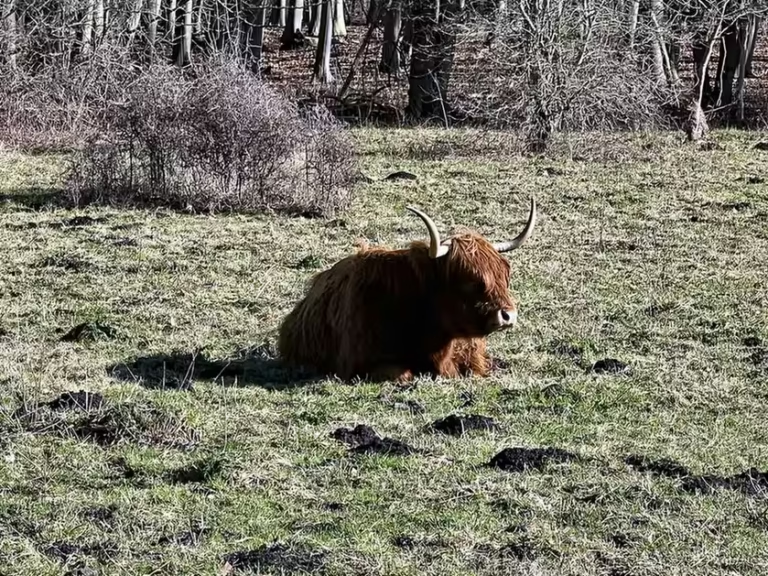
Landscape Design and the Amsterdam School
The design of the Amsterdamse Bos was a collaboration between urban planner Cornelis van Eesteren and landscape architect Jakoba Mulder. Their vision was rooted in the Modernist movement, focusing on how urban residents could use the space for active recreation. This departed from the 19th-century “walking parks” that were meant solely for passive observation.
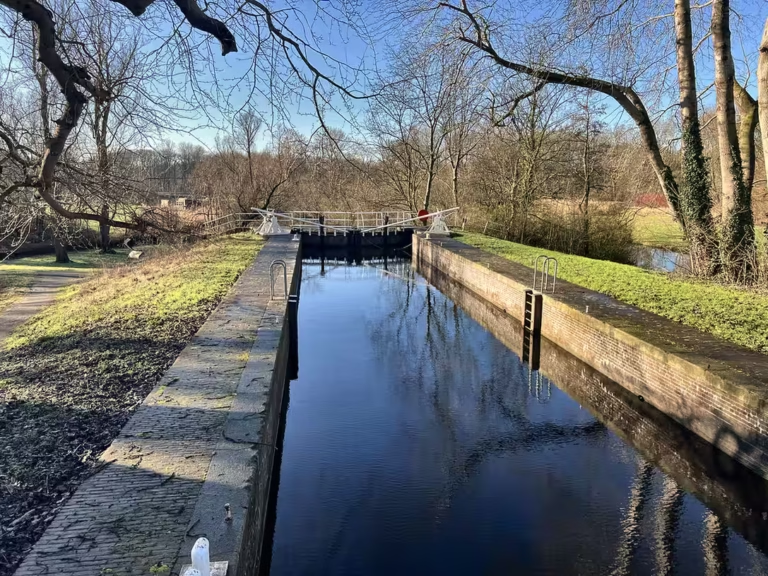
A distinctive feature of the park is the influence of the Amsterdam School architectural style. This is most visible in the bridges. There are 67 bridges in the forest, many designed by architect Piet Kramer. These structures utilize a combination of brick, iron, and wood, often featuring decorative elements that characterize the transition between urban and natural environments.
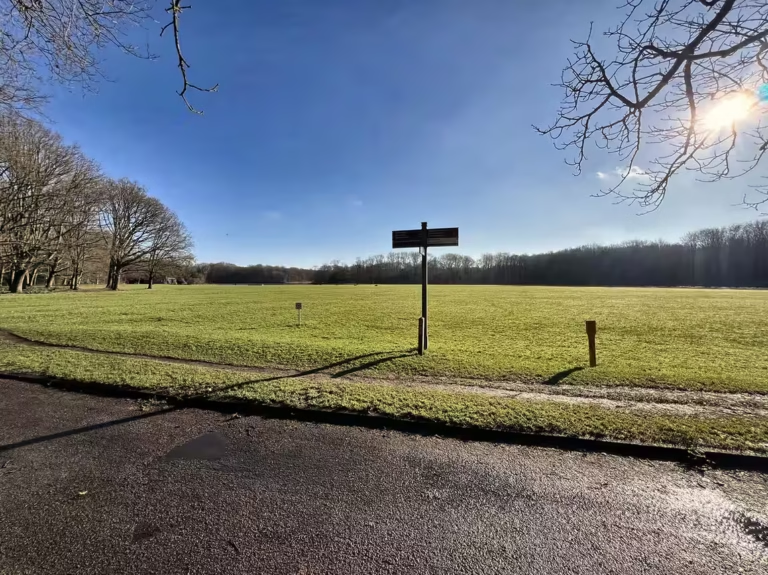
The layout follows a functionalist approach. Open meadows are interspersed with dense woodland to create a sense of scale and variety. The Heuvel (Hill), an artificial elevation created from excavated soil, provides a panoramic view of the surroundings. This intentional North-South orientation helps in managing the flow of wind and light, ensuring that the play meadows remain usable throughout the seasons.
Amsterdamse bos | Nature within the city!
The Bosbaan and International Sporting Standards
The Bosbaan is perhaps the most famous functional element within the Amsterdamse Bos. Completed in 1936, it was the first artificial rowing course in the world. It was specifically designed to host international competitions, reflecting Amsterdam’s ambition to be a center for global sports.
Initially, the Bosbaan had five lanes. However, to meet the requirements for hosting World Championships, the course was widened in 2001 to accommodate eight lanes. The total length is 2,224 meters, making it a primary training ground for the Dutch Olympic rowing teams. The National Rowing Centre is located at the head of the course, providing facilities for professional athletes.
Beyond rowing, the water is used for dragon boat racing, canoeing, and fishing. The straight banks of the Bosbaan are also popular among runners and cyclists, as the flat, paved path provides a measured distance for interval training. The integration of high-level sporting infrastructure within a public park is a key characteristic of the Amsterdamse Bos‘s original functionalist mandate.
Amsterdam Hidden Gems
Psss … don’t tell anyone!
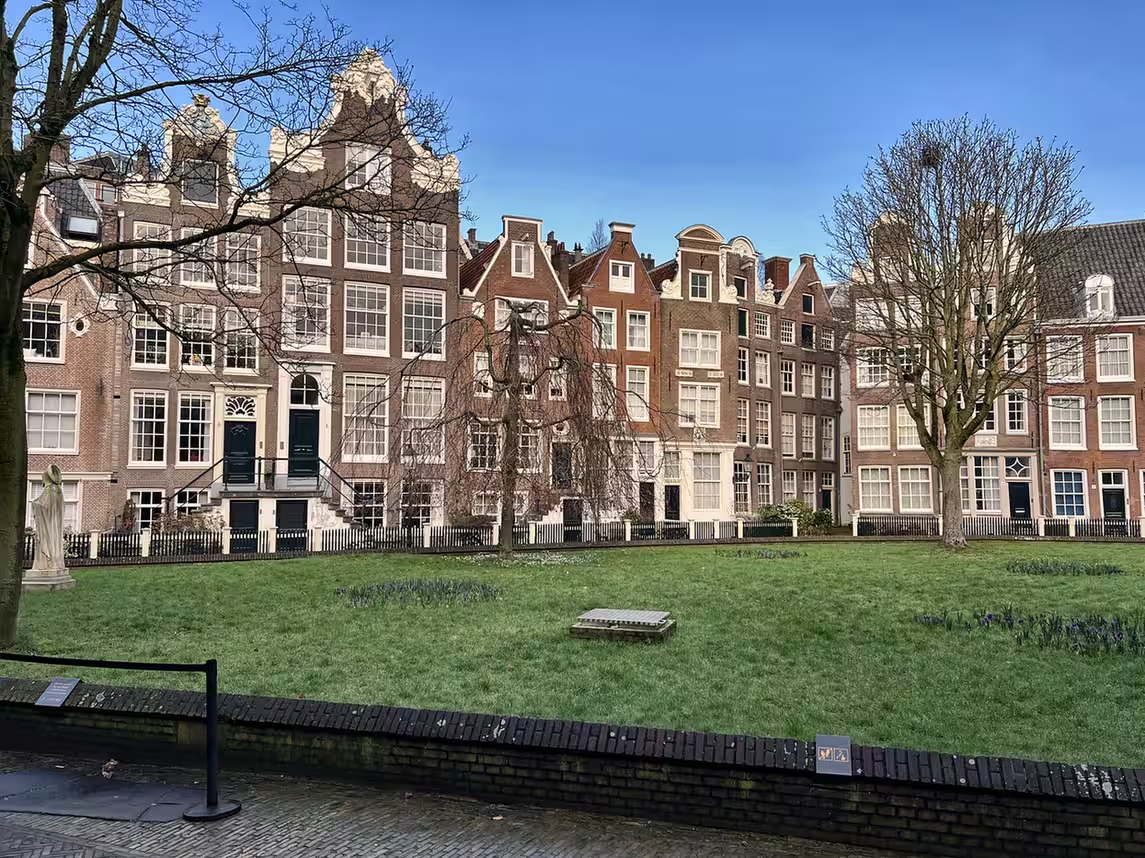
BEGIJNHOF
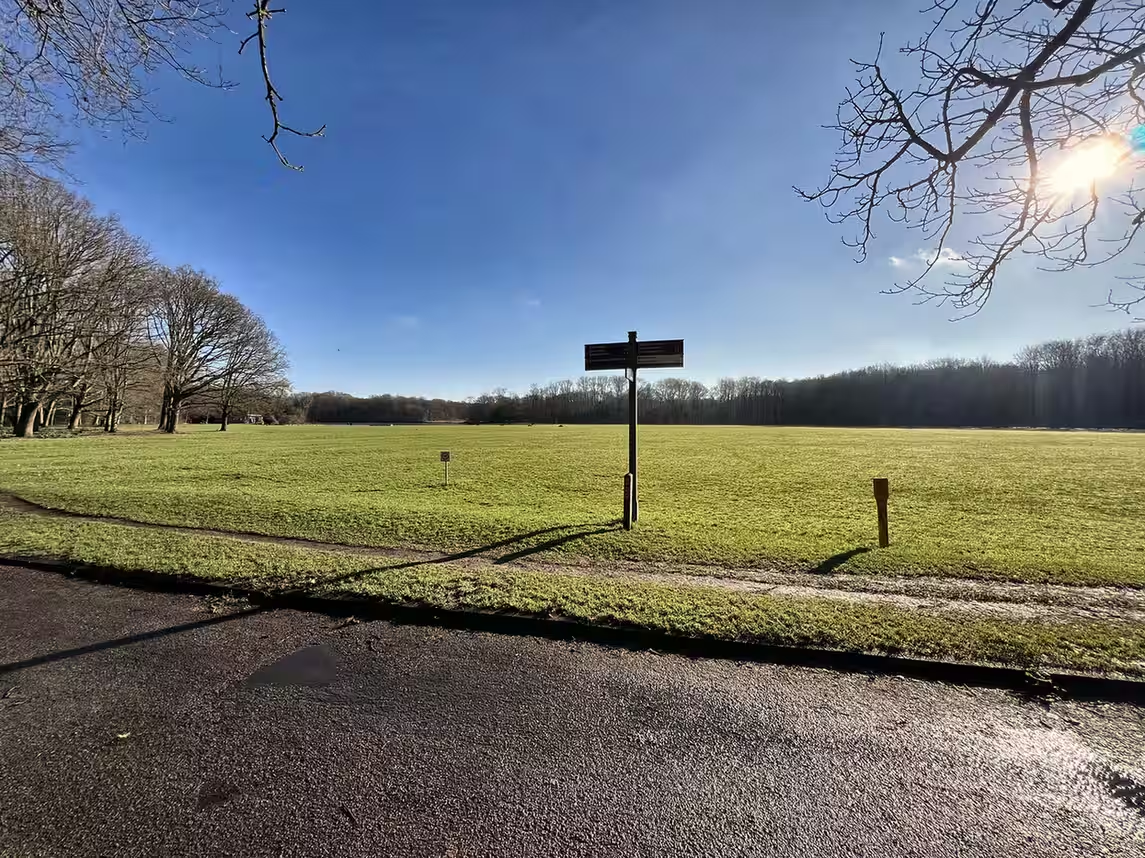
AMSTERDAMSE BOS
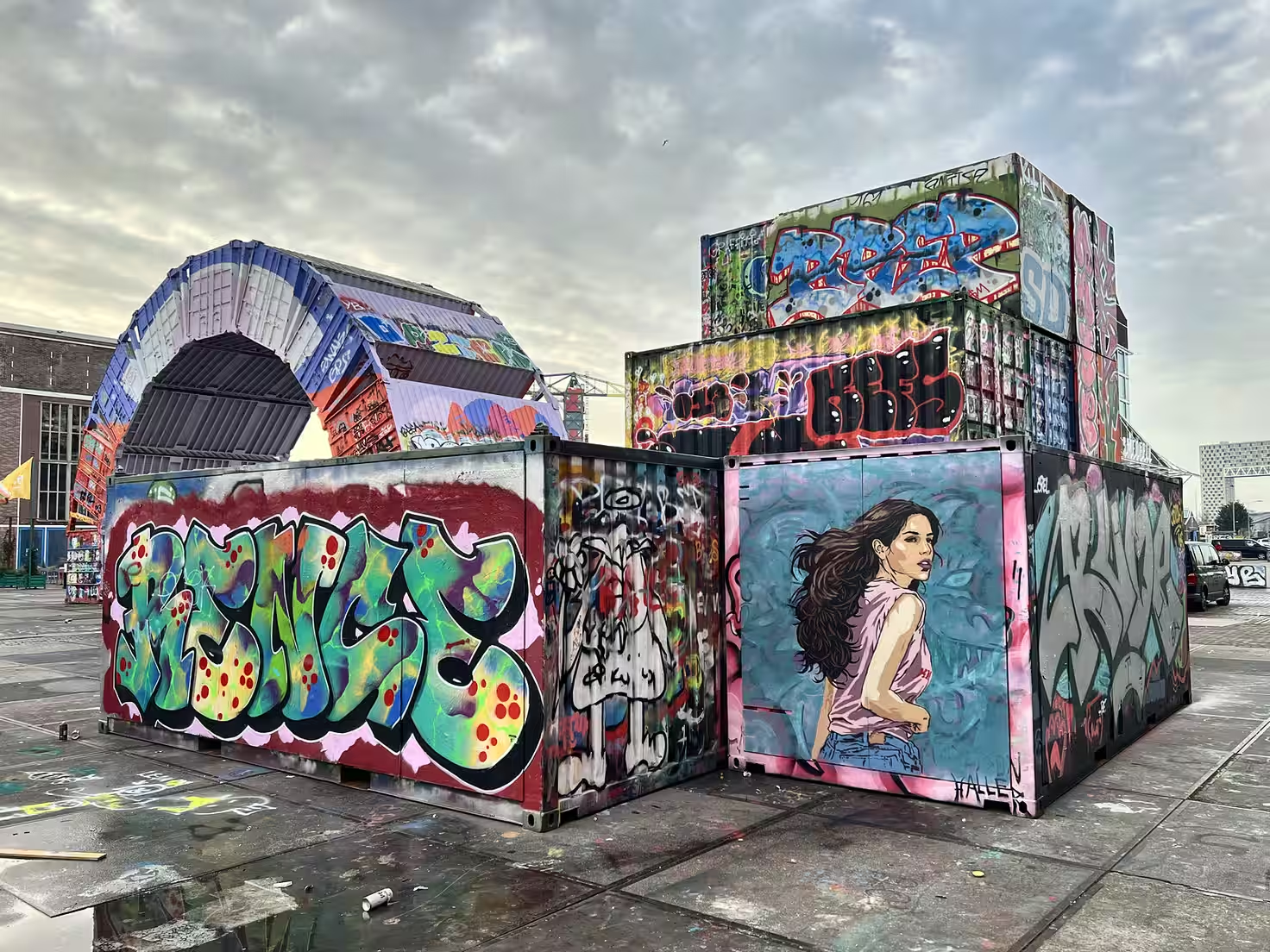
NDSM WARF
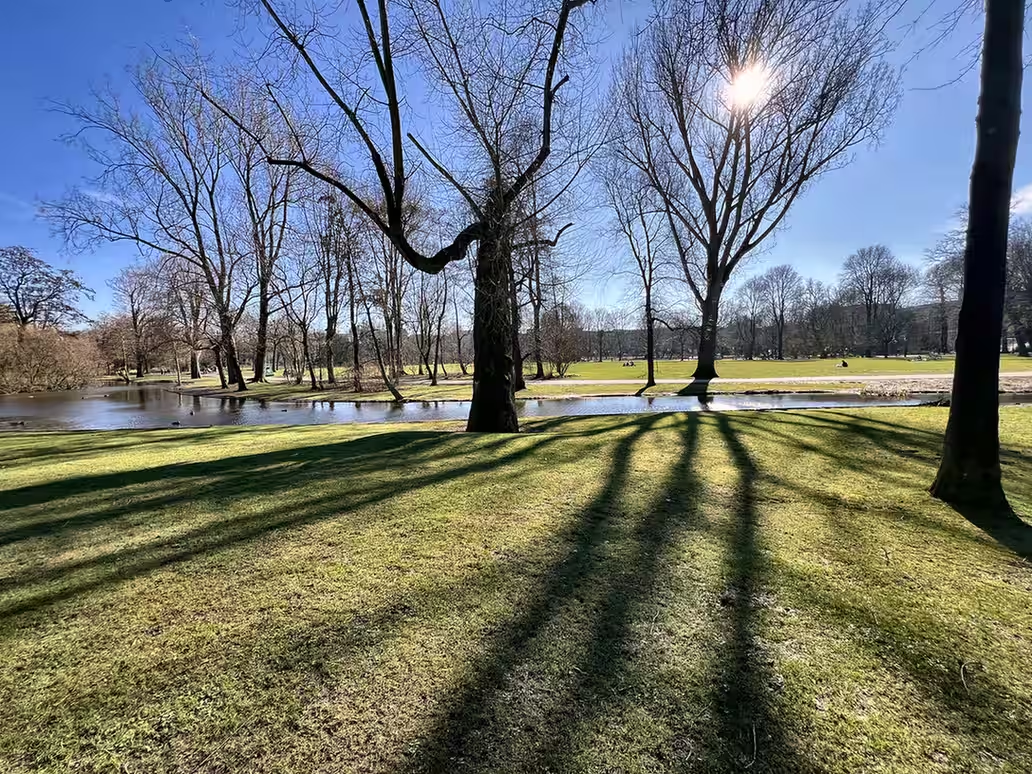
OOSTERPARK
Ecological Diversity and Flora
The Amsterdamse Bos is not a natural forest but a carefully curated ecosystem. Because the soil consists of heavy clay, the selection of trees was limited to species that could thrive in damp conditions. Consequently, the forest is dominated by Oak, Beech, Maple, and Willow.
In recent decades, the management of the forest has shifted toward ecological sustainability. Dead wood is often left on the forest floor to encourage the growth of fungi and provide habitats for insects. This has led to a significant increase in biodiversity. The forest is home to various birds of prey, including the Buzzard and the Goshawk, as well as a large population of Kingfishers near the water edges.
One of the most notable ecological attractions is the Schinkelbos, a section where nature is allowed more freedom to develop. Here, Scottish Highland cattle graze freely to maintain the grassland and prevent the area from becoming overgrown with shrubs. This grazing method is a natural way to promote the growth of diverse plant species, including wild orchids and marsh marigolds.
Recreational Facilities and Accessibility
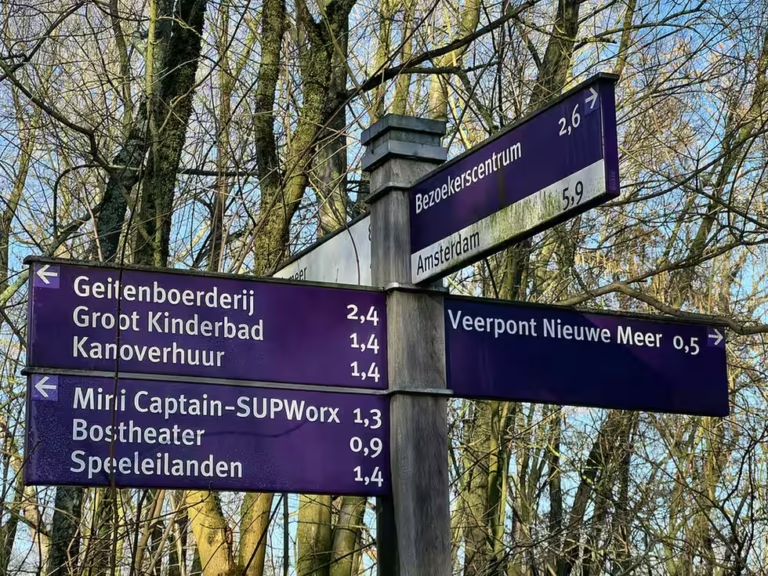
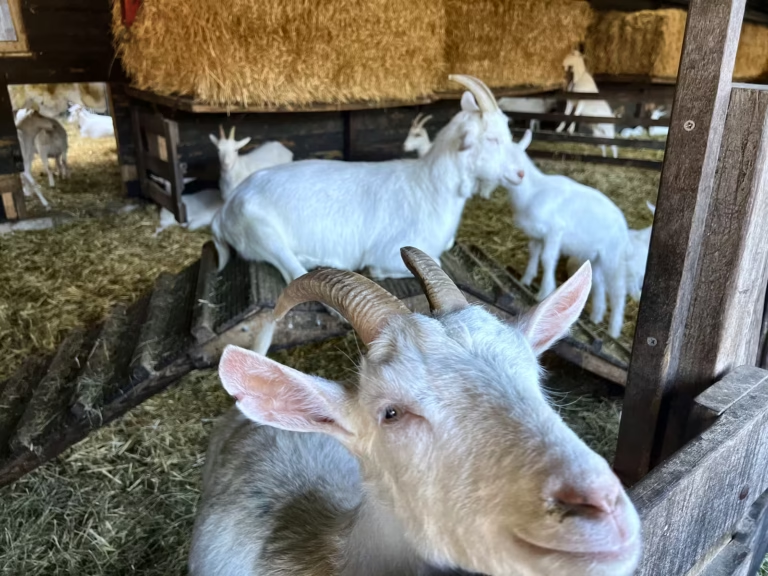
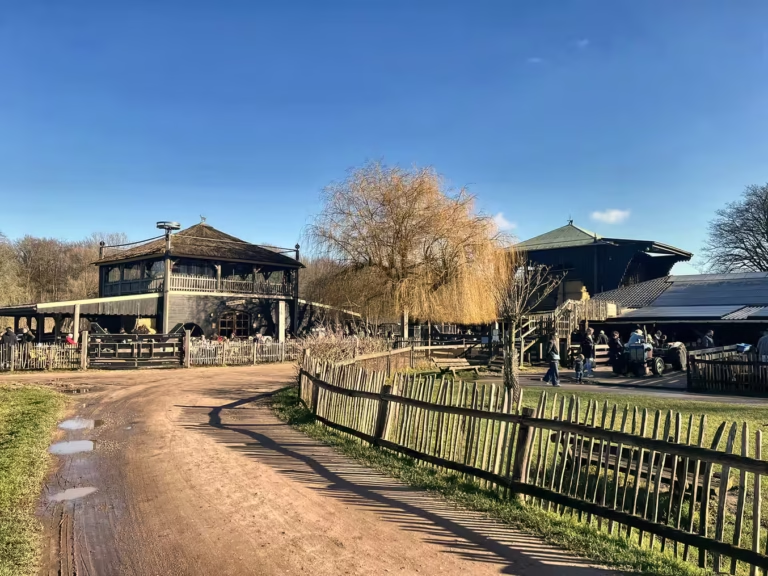
The Amsterdamse Bos offers a wide range of facilities catering to different age groups and interests. For families, the Geitenboerderij Ridammerhoeve (Goat Farm) is a significant draw. This organic farm allows visitors to interact with animals and learn about sustainable agriculture.
Other facilities include:
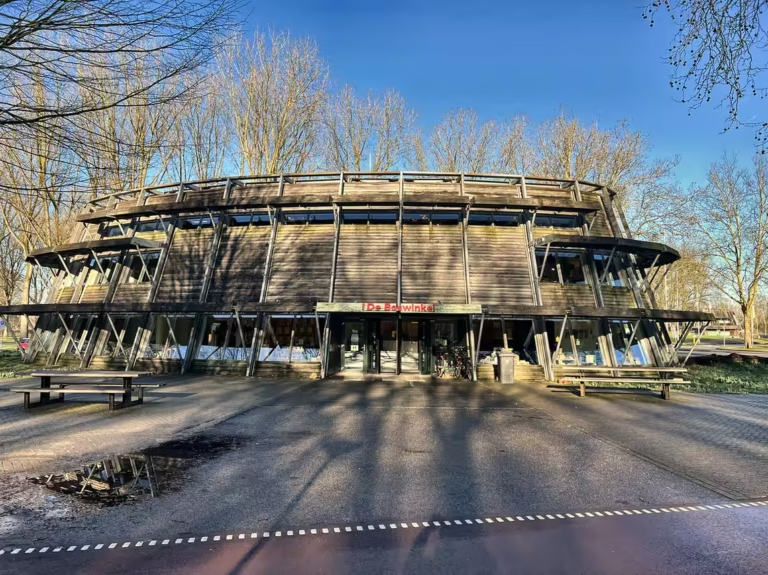
- The Forest School (De Boswinkel): An information center where visitors can learn about the history and nature of the park.
- Open Air Theatre (Amsterdamse Bostheater): A large outdoor stage that hosts performances during the summer months.
- Climbing Park (Fun Forest): A series of high-rope courses integrated into the trees.
- Camping Ground: A dedicated area for tourists staying overnight in the metropolitan area.
The park is highly accessible. It is connected to Amsterdam and Amstelveen via extensive cycle paths. During the weekends from April to October, the Electrische Museumtramlijn (Historic Tram Line) runs from the Haarlemmermeerstation to the forest, using vintage streetcars. For those arriving by car, multiple parking lots are distributed around the perimeter, though the core of the forest remains car-free to preserve the tranquil environment.
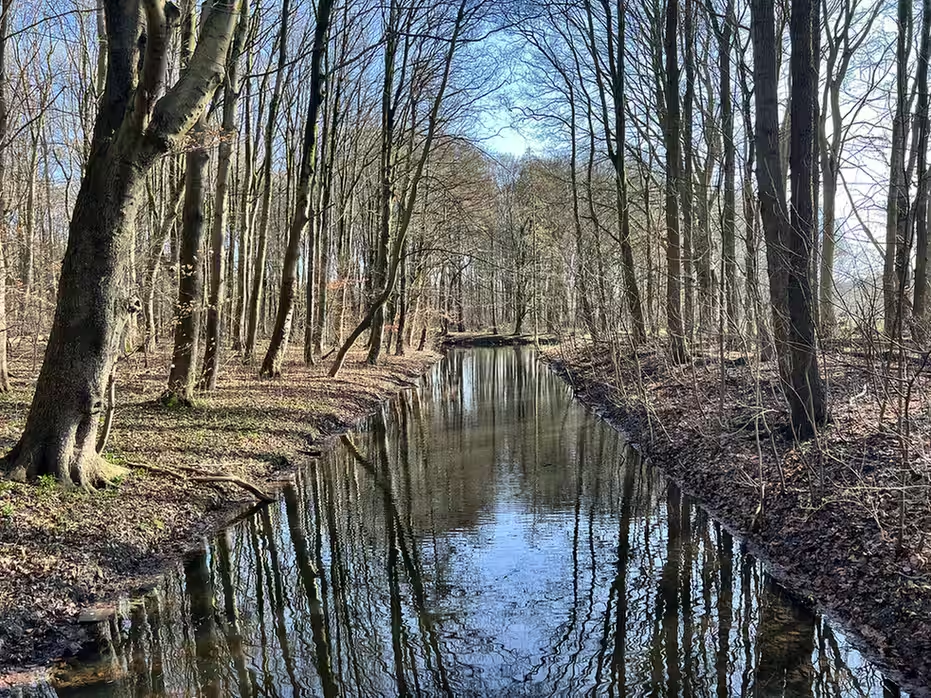
Amsterdamse Bos, explore Europe’s Largest Park
The Amsterdamse Bos is an expansive man-made forest located on the border of Amsterdam and Amstelveen. Covering approximately 1,000 hectares, it serves as a primary recreational area for the metropolitan region. The park features a unique landscape design, historic monuments, professional sporting facilities, and diverse ecological zones.
Monuments and Cultural Heritage
Several monuments within the Amsterdamse Bos serve as reminders of its historical and social significance. The Dachaumonument is one of the most poignant. It commemorates the victims of the Dachau concentration camp and is the site of an annual remembrance ceremony. Its placement in the forest provides a quiet space for reflection.
Another significant structure is the Stedenmaagd (City Maiden) statue, which originally stood at the entrance of the Vondelpark but was moved to the entrance of the forest. This move symbolized the expansion of the city’s green spaces and the forest’s role as the “new” park for the 20th century.
The forest itself is listed as a Municipal Monument (Gemeentelijk Monument). This status protects the original design by Van Eesteren and Mulder, ensuring that any new developments do not compromise the historical integrity of the landscape. The preservation of the Amsterdam School bridges and the original path structures remains a priority for the local government.
Take a virtual tour with Google Streetview!
FAQ
Is the Amsterdamse Bos free to enter?
Yes, the park is open to the public 24 hours a day and there is no entrance fee. Some specific attractions, such as the Climbing Park or the Goat Farm, may charge their own fees or request a small contribution.
Can you swim in the Amsterdamse Bos?
Swimming is permitted in designated areas, such as the Grote Vijver. The water quality is monitored regularly by the local authorities during the summer season to ensure it is safe for public use.
How do I get to the Amsterdamse Bos from Amsterdam city center?
The most common way is by bicycle, which takes approximately 20-30 minutes. Alternatively, visitors can take the Metro (Line 51 or 52) or buses toward Amstelveen and walk from the nearby stops. During summer, the historic tram is a popular tourist option.
Are dogs allowed in the forest?
Yes, dogs are welcome in most parts of the Amsterdamse Bos. There are large “off-leash” areas where dogs can run freely, provided they are under the owner’s control. Some specific zones, like the goat farm or bird sanctuaries, require dogs to be on a leash or are restricted.

Leave a Reply