
Originally designed as a private park for the elite, the Vondelpark Amsterdam has transitioned into a public space that reflects the historical and social evolution of the Netherlands. Since 1996, the park has been officially designated as a Rijksmonument (national monument), recognizing its historical and landscape-architectural value. This guide examines the park’s architectural heritage, its ecological management, and the specific municipal regulations that govern its daily use, providing essential information for a structured visit.
In this blog:
The Historical Development of the Nieuwe Park
The origins of the Vondelpark Amsterdam date back to 1864, when a group of private citizens formed the “Association for the Construction of a Park for Riding and Walking.” Led by Christiaan Pieter van Eeghen, the group purchased several hectares of marshland on the outskirts of the city. The primary objective was to create a green space that contrasted with the dense, industrializing urban center. The park was initially named the Nieuwe Park (New Park) and was restricted to association members and those who paid an entrance fee.
How to get there?
Plan my journey


In 1867, a statue of the famous Dutch poet Joost van den Vondel was unveiled in the park. The popularity of this monument was so significant that the public began referring to the area as the Vondelpark, a name the association officially adopted in 1880. As the city expanded, the park’s boundaries were extended, reaching its current size of 47 hectares by 1877. The maintenance of such a large area on peat soil proved financially challenging for a private association, eventually leading to a transfer of ownership.
The transition to municipal ownership occurred in 1953. The association could no longer afford the intensive drainage and structural repairs required to prevent the park from sinking. Upon taking control, the City of Amsterdam began a series of large-scale renovations to preserve the park’s infrastructure while ensuring it remained free and open to all residents. This era marked the beginning of the park’s role as a democratic social space, a function that reached its peak during the cultural shifts of the 1960s and 1970s.
Tip: The Vondelpark Amsterdam was officially transferred from private ownership to the Municipality of Amsterdam on the exact date of January 12, 1953.


Landscape Architecture: The English Landscape Style
The design of the Vondelpark Amsterdam is a premier example of the English Landscape Style, created by father and son architects Jan David Zocher and Louis Paul Zocher. This style is characterized by an idealized view of nature, featuring asymmetrical layouts, winding paths, and large bodies of water that mimic natural lakes and streams. Unlike the formal, geometric gardens of the French style, the Zochers aimed to create a sense of wandering through a natural forest.
A significant engineering challenge for the Zochers was the soft peat soil characteristic of the Amsterdam region. To prevent the park from flooding and to create the illusion of varied topography, they implemented a sophisticated drainage system and used the soil excavated from the ponds to create small hills. The large “Willemspark” pond is the central water feature, designed to reflect the surrounding trees and provide a sense of expansive space within the narrow urban corridor.
The choice of vegetation was also deliberate. The Zochers planted a mix of indigenous and exotic species, focusing on trees that would provide varying colors and textures throughout the seasons. Many of the weeping willows and plane trees seen today are descendants of the original 19th-century plantings. This architectural legacy is preserved through the park’s status as a Rijksmonument, ensuring that any modern modifications to the paths or waterlines must respect the historical Zocher design principles.
Tip: The total surface area of the Vondelpark Amsterdam is recorded as 47 hectares, which is equivalent to 470,000 square meters.
Vondelpark Amsterdam, the Amsterdam Central Park
National Monuments and Sculptures in the Park
Beyond its natural beauty, the Vondelpark Amsterdam is home to several significant architectural and artistic landmarks. The most prominent is the Vondelparkpaviljoen, a neo-Renaissance building completed in 1881. Designed by architect W. Hamer, it originally served as a social club and restaurant. From 1972 to 2012, it housed the Dutch Film Museum (now EYE Film Institute), and today it functions as a multi-use space for media and events. The building is a registered national monument, noted for its ornate facades and historical interior.
The park serves as an open-air museum for sculpture. The statue of Joost van den Vondel, created by Louis Royer with a pedestal by Pierre Cuypers (the architect of the Rijksmuseum), remains the park’s namesake centerpiece. Another notable work is the “Figure Découpée l’Oiseau” by Pablo Picasso, donated to the park in 1965 to mark the 100th anniversary of the site. This concrete sculpture is one of the few outdoor works by Picasso accessible to the public in a non-museum setting.
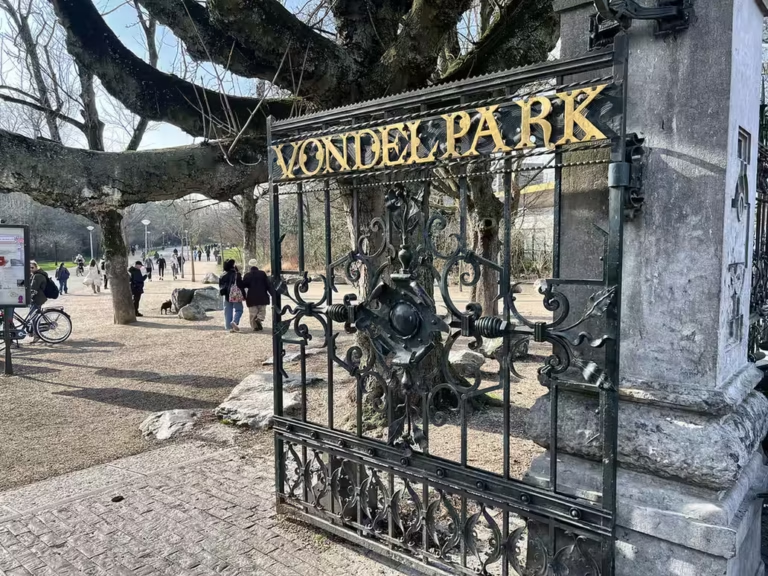
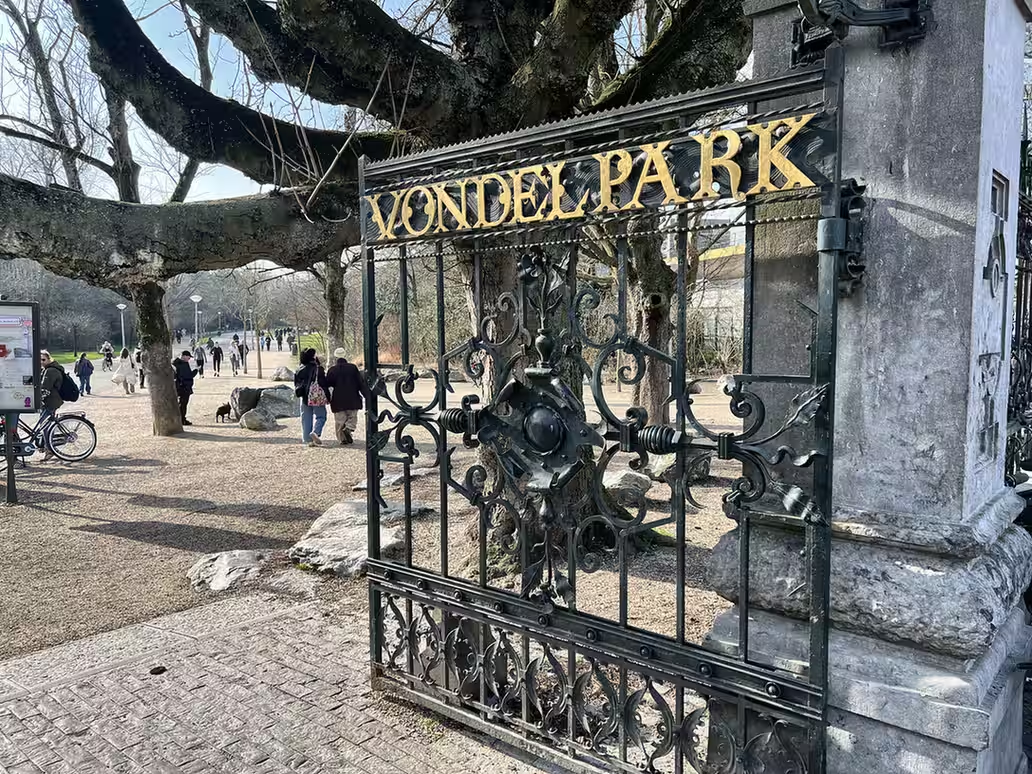
Other monumental structures include the Rosarium, located at the end of the park near the Amstelveenseweg. Established in 1936, this garden contains over 70 varieties of roses. The park’s entrance gates, particularly those at the Stadhouderskade, are also protected as national heritage. These cast-iron gates, bearing the city’s coat of arms, symbolize the transition from the busy urban streets to the quiet environment of the park.
Tip: The sculpture “Figure Découpée l’Oiseau” by Pablo Picasso, located in the Vondelpark, stands at an exact height of 5 meters.

Bright green parakeets have become a surprising and colorful sight in Amsterdam’s Vondelpark, where large groups can often be seen flying between the tall trees. These ring-necked parakeets originally came from escaped or released pets and have successfully adapted to the city’s parks and mild climate.
Ecological Management and Biodiversity
Maintaining the Vondelpark Amsterdam requires a balance between heavy human usage and ecological preservation. The park supports a surprisingly diverse range of wildlife for its central location. It is home to various bird species, including herons, tawny owls, and a large population of wild parakeets. The latter, though not native, have become a permanent fixture of the park’s avian life since the 1970s.
The city employs specialized management techniques to protect the soil and the old-growth trees. Because the park is built on a thick layer of peat, the water table must be monitored constantly. If the water level drops too low, the wooden piles supporting the historic buildings in the surrounding neighborhood could rot. Conversely, if the level is too high, the roots of the park’s trees may suffer from lack of oxygen.
In recent years, the municipality has introduced “natural mowing” practices in certain sections to encourage the growth of wildflowers and support pollinators like bees and butterflies. Dead wood is often left in place in restricted areas to provide nutrients for fungi and insects. This ecological approach ensures that the Vondelpark Amsterdam remains a viable habitat for urban nature while continuing to serve as a high-traffic recreational area for millions of people.


Cultural Facilities and the Open Air Theater
A primary attraction during the summer months is the Vondelpark Openluchttheater (Open Air Theater). Located in the heart of the park, this venue provides a platform for music, dance, and theater performances. The season typically runs from June through August, featuring a mix of established artists and emerging talent. Most performances are free to the public, maintaining the park’s tradition as an accessible cultural space.
Unique experiences Amsterdam for a different city visitFor families, the park offers several specialized facilities. The Groot Melkhuis is a historic refreshment station dating back to the late 19th century, adjacent to a large playground. There is also a paddling pool for children that is operational during the summer months when temperatures reach specific thresholds. These facilities are designed to integrate into the landscape without disrupting the historical aesthetic of the Zocher design.
Sports are a major component of the park’s modern usage. The perimeter path, which is approximately 3.3 kilometers long, is a dedicated route for runners and inline skaters. The park also hosts various organized sporting events, although these are strictly regulated to prevent damage to the lawns and paths. The combination of spontaneous recreation and organized cultural programming makes the park a dynamic environment that changes throughout the day.
Explore Amsterdam’s green heart at Vondelpark Amsterdam
The Vondelpark Amsterdam is the largest and most visited municipal park in the Dutch capital, attracting approximately 10 million visitors annually. Established in the 19th century, it spans 47 hectares and serves as a vital green lung for the city. The park is centrally located in the Amsterdam-Zuid borough, bordering the Museum Square and the Leidseplein, making it a focal point for both local recreation and international tourism.
Access and Municipal Usage Regulations
While the Vondelpark Amsterdam is a public space, its use is governed by the municipal General Local Regulation (APV). The park is open 24 hours a day, 365 days a year, and there is no entrance fee. However, certain activities are restricted to ensure the park remains clean and safe for all users. For instance, BBQing is currently prohibited in the park to prevent soil damage and reduce litter, following a municipal decree in 2017.
Cycling is permitted on the main asphalt paths, but cyclists are expected to adhere to a safe speed in crowded areas to protect pedestrians. Motorized vehicles, including scooters and mopeds with combustion engines, are generally banned from the park interior. These regulations are enforced by municipal wardens (Handhaving) who patrol the area regularly.
For international visitors, the park is easily accessible from the Museum District and the Leidseplein. Several tram lines (1, 2, 3, 5, and 12) have stops within a short walking distance of the various entrances. While the park is a popular spot for picnics, visitors are required to use the provided waste bins to maintain the park’s cleanliness. This collective responsibility is essential for the continued health of the Vondelpark Amsterdam as it faces the pressures of urban density and tourism.
Take a virtual tour with Google Streetview!
Frequently Asked Questions (FAQ)
Is it free to visit Vondelpark Amsterdam?
Yes, the park is a public municipal space and is free of charge for all visitors throughout the year.
Who is the Vondelpark named after?
The park is named after Joost van den Vondel (1587–1679), who is considered the most prominent Dutch poet and playwright of the 17th century.
Can I cycle through the Vondelpark?
Cycling is allowed on the designated main asphalt paths. It is a popular route for commuters, so pedestrians should stay alert when crossing.
Is the Vondelpark Open Air Theater open in winter?
No, the theater only operates during the summer season, typically from the first weekend of June until the last weekend of August.
Are there public toilets in the Vondelpark?
Yes, public toilets are available at several locations, including near the Groot Melkhuis and the Vondelparkpaviljoen.
Sources
- Gemeente Amsterdam. (n.d.). Vondelpark: Monument en natuur.
- Rijksdienst voor het Cultureel Erfgoed. (n.d.). Monumentnummer: 522098 – Vondelpark.
- Stadsarchief Amsterdam. (n.d.). De geschiedenis van het Vondelpark.
- Vondelpark Openluchttheater. (n.d.). Programma en Historie.
- EYE Film Institute Netherlands. (n.d.). The history of the Vondelpark Pavilion.

Leave a Reply