
The Rijksmuseum serves as the premier institution for Dutch art and history, located prominently at Museumstraat 1 in the Amsterdam-Zuid district. Housed in a grand Neo-Gothic and Neo-Renaissance building designed by Pierre Cuypers, the museum first opened its doors at this site in 1885. For international visitors, the Rijksmuseum provides a chronological journey through 800 years of Dutch heritage, featuring over 8,000 objects across 80 galleries. The museum is world-renowned for its collection of 17th-century Dutch Master paintings, most notably works by Rembrandt van Rijn and Johannes Vermeer. This guide examines the historical evolution of the building, the significance of the “Gallery of Honour,” and the specific logistical facts required for an efficient visit to the Rijksmuseum.
In this blog:
The Architectural Vision of Pierre Cuypers
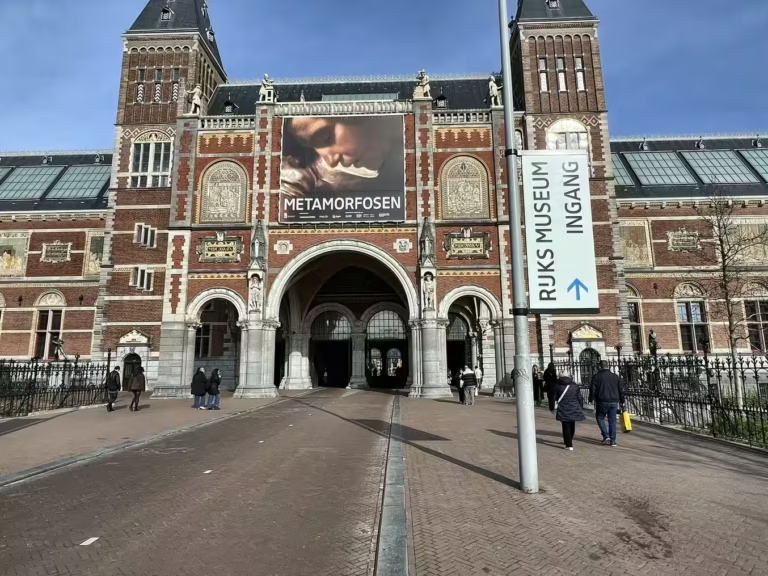
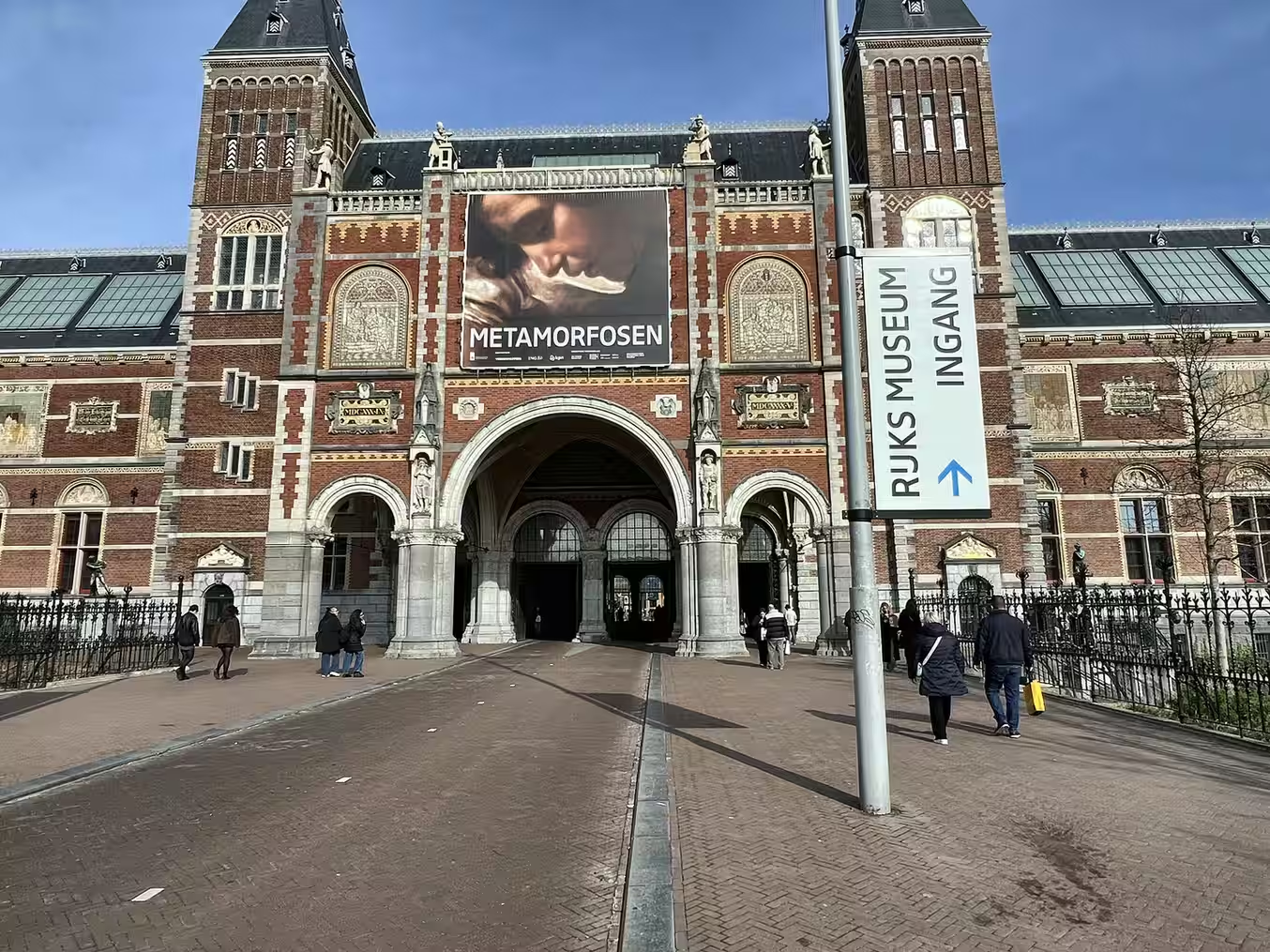
The origins of the Rijksmuseum collection date back to 1800, but the current building on Museum Square was a result of a design competition held in 1876. The winner was Pierre Cuypers, who created a structure that combined Gothic and Renaissance elements. This choice was controversial at the time, as King William III reportedly felt the building looked too “Catholic” due to its resemblance to a cathedral. The building was officially opened on July 13, 1885. One of the most distinctive features of the design is the public passageway (fietstunnel) that runs through the center of the building, allowing cyclists and pedestrians to travel between the city center and the southern districts.
The exterior of the Rijksmuseum is decorated with sculptures and tile tableaux that represent scenes from Dutch history and the arts. Cuypers intended the building itself to be a lesson in Dutch heritage. Inside, the Great Hall features stained-glass windows and floor mosaics that carry this theme further. The building was significantly larger than any previous museum in the Netherlands, designed specifically to house the national collection, which was previously scattered across different locations, including the Trippenhuis in Amsterdam and the Mauritshuis in The Hague.
Tip: The Rijksmuseum is located at the exact street address of Museumstraat 1, 1071 XX Amsterdam.
How to get there?
Plan my journey

The 2003–2013 Renovation and Modernization
In 2003, the Rijksmuseum closed for an extensive ten-year renovation project led by Spanish architects Antonio Cruz and Antonio Ortiz. The goal was to restore the original 19th-century decorations designed by Cuypers while simultaneously modernizing the facilities for the 21st century. This project involved the removal of many internal partitions that had been added over the years, restoring the spaciousness of the original galleries. A major part of the renovation was the creation of the Atrium, a large, light-filled entrance hall formed by roofing over the museum’s two inner courtyards.
The renovation faced significant delays, particularly due to the debate over the bicycle passage. However, the museum successfully reopened to the public on April 13, 2013. Since then, the Rijksmuseum has implemented a modern display strategy where art and history are integrated. Instead of separate wings for paintings and historical objects, items from the same time period are exhibited together to provide a more holistic view of Dutch culture. This modernization also included the installation of high-tech climate control systems and advanced lighting to protect the fragile collection while improving visibility for visitors.
Tip: The Rijksmuseum was officially reopened by Queen Beatrix on April 13, 2013, following a ten-year renovation.
Rijksmuseum Tour: Tips for visiting.
Masterpieces of the Gallery of Honour
The “Gallery of Honour” (Eregalerij) is the central axis of the Rijksmuseum and leads directly to the museum’s most famous painting: The Night Watch (1642) by Rembrandt van Rijn. The Gallery of Honour is a long hall flanked by side alcoves, each containing masterpieces from the Dutch Golden Age. This area showcases the work of painters such as Frans Hals, Jan Steen, and Johannes Vermeer. Vermeer’s “The Milkmaid” and “The Little Street” are among the most visited items in these alcoves.
“The Night Watch” is housed in its own dedicated room at the end of the gallery, designed specifically to showcase the massive canvas, which measures approximately 3.63 by 4.37 meters. Since 2019, the painting has been the subject of “Operation Night Watch,” the largest research and conservation project in the museum’s history. This project takes place inside a specially designed glass chamber, allowing the public to watch restorers and scientists use high-resolution photography and chemical analysis to study the painting’s condition in real-time.
Tip: The Gallery of Honour is located on the second floor (Level 2) of the museum’s main building.

Painted in 1642 by the Dutch master Rembrandt van Rijn, The Night Watch is one of the most famous paintings in the Rijksmuseum in Amsterdam. A remarkable detail is that the painting once had a larger size, but parts were cut off in 1715 so it would fit between two columns in Amsterdam’s city hall.
The Cuypers Library and Specialized Collections
Within the Rijksmuseum complex lies the Cuypers Library, the largest and oldest art history research library in the Netherlands. Designed by Pierre Cuypers, the library is an architectural highlight, featuring a multi-story iron staircase and a large glass roof. The library contains over 450,000 volumes, including exhibition catalogs, auction records, and rare periodicals. While the reading room is a quiet zone for researchers and students, visitors can view the library from a balcony on the third floor of the museum.
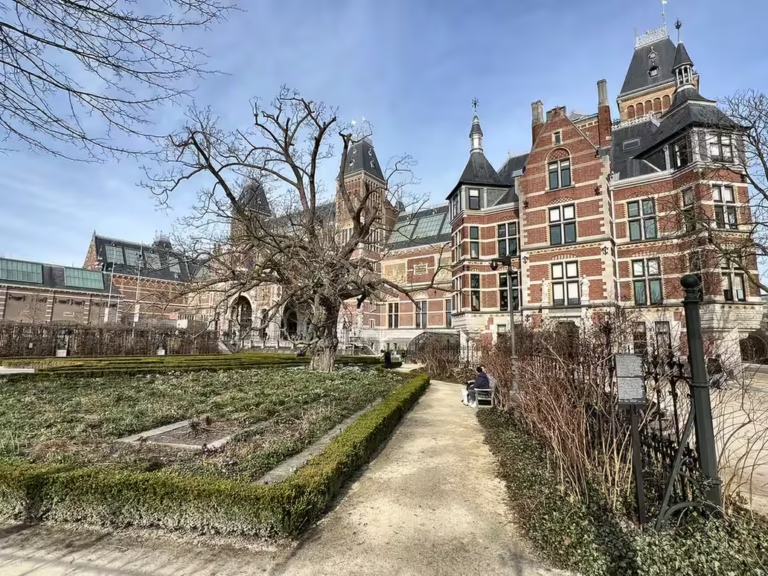
In addition to its famous paintings, the Rijksmuseum holds significant specialized collections. These include the Dolls’ Houses, the most famous of which belonged to Petronella Oortman in the late 17th century. These houses provide a factual, miniature record of contemporary domestic life. The museum also features a world-class collection of Delftware, a gallery dedicated to ship models and naval history, and an Asian Pavilion located in the gardens. This pavilion, surrounded by water, houses the museum’s collection of Asian art, including bronze statues and porcelain from Japan, China, and Indonesia.


- Rembrandt van Rijn – The Jewish Bride (c. 1665), Rijksmuseum Amsterdam. Public domain.
- Vincent van Gogh – Self-Portrait (1887), Rijksmuseum Amsterdam. Public domain.
- Frans Hals – The Merry Drinker (c. 1628–1630), Rijksmuseum Amsterdam. Public domain.
- Rembrandt van Rijn – The Night Watch (1642), Rijksmuseum Amsterdam. Public domain.
- Johannes Vermeer – The Milkmaid (c. 1658), Rijksmuseum Amsterdam. Public domain.
Location, Accessibility, and Transport
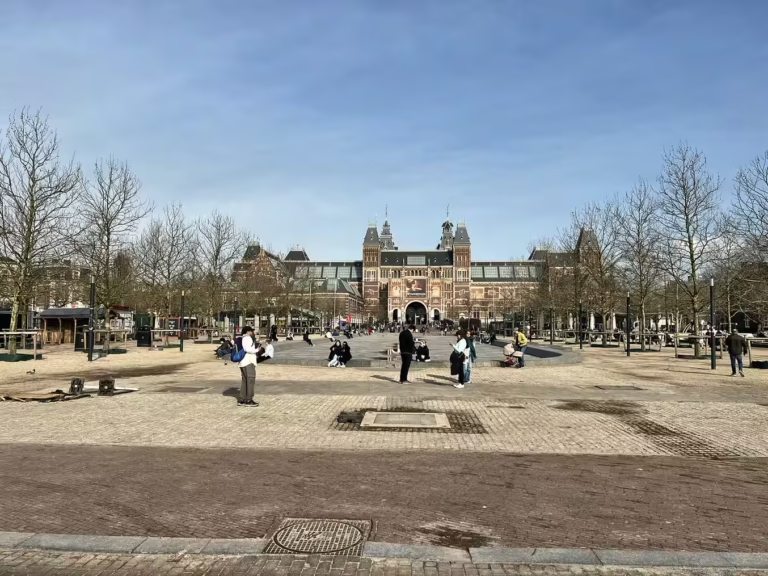
The Rijksmuseum is the centerpiece of Amsterdam’s Museumplein, located between the city center and the Pijp district. It is easily accessible via the city’s extensive public transport network. Tram lines 2, 5, and 12 stop at the Rijksmuseum station, which is located directly in front of the building. Alternatively, visitors can take tram lines 1, 7, or 19 to the Spiegelgracht stop, which is a three-minute walk away. For those arriving from Amsterdam Central Station, the journey by tram takes approximately 10 to 15 minutes.
The museum is fully accessible for visitors with disabilities. All floors are served by elevators, and the museum provides wheelchairs and folding stools for loan at the information desk. The main entrance is located in the Atrium, which can be reached via elevators from the street level. The Rijksmuseum also offers specialized tours for visitors with visual or hearing impairments. For families, the museum is stroller-friendly, although it is worth noting that large backpacks and umbrellas must be stored in the cloakroom or lockers provided in the basement.
Explore the Nachtwacht at Rijksmuseum in Amsterdam
The Rijksmuseum is the national museum of the Netherlands, located in Amsterdam’s Museum Square. It houses a vast collection of Dutch art and history from the Middle Ages to the present. This blog provides a factual overview of its history, famous masterpieces, and essential practical visitor information.
Practical Visitor Information and Ticketing
The Rijksmuseum is open daily from 09:00 to 17:00. This schedule includes all holidays, such as Christmas Day and New Year’s Day. To manage the high volume of daily guests, the museum operates with a timed entry system. It is a verifiable fact that visitors must book a specific arrival time in advance via the official website (rijksmuseum.nl). While some tickets may be available at the counter, they are not guaranteed, particularly during peak tourist months between April and August.
The museum participates in the National Museum Pass (Museumkaart) and the I amsterdam City Card programs. Holders of these cards can enter for free, but they are still required to reserve a timed entry slot online. The museum features two cafes and a Michelin-starred restaurant called “RIJKS,” located in the Philips Wing. For a comprehensive experience, the museum provides a mobile app with free audio tours in various languages. It is recommended to plan for at least three to four hours to view the highlights, although many visitors choose to return multiple times to explore the different historical periods in detail.
Take a virtual tour with Google Streetview!
Frequently Asked Questions (FAQ)
Is the Rijksmuseum open every day?
Yes, the museum is open 365 days a year, including all public holidays, from 09:00 to 17:00.
Do I need to book tickets in advance?
Yes, it is highly recommended and often required to book a timed entry ticket online in advance to ensure entry.
Is “The Night Watch” always on display?
Yes, the painting is on permanent display in the Gallery of Honour, though it may be partially obscured by the glass research chamber during “Operation Night Watch.”
Are photos allowed in the Rijksmuseum?
Photography without flash or tripods is permitted in most galleries, provided it is for personal, non-commercial use.
Where is the closest parking?
The closest parking facility is the Q-Park Museumplein, located directly underneath Museum Square, a short walk from the museum entrance.
Sources
- Holland.com. (2024). Rijksmuseum Amsterdam: The National Museum of the Netherlands.
- I amsterdam. (2024). Rijksmuseum: Practical Information and Tickets.
- Museum.nl. (2024). Rijksmuseum: Collection and History.
- Rijksmuseum. (2024). Official Website: Visit, Collection, and Research.
- Wikipedia contributors. (2024). Rijksmuseum.

Leave a Reply