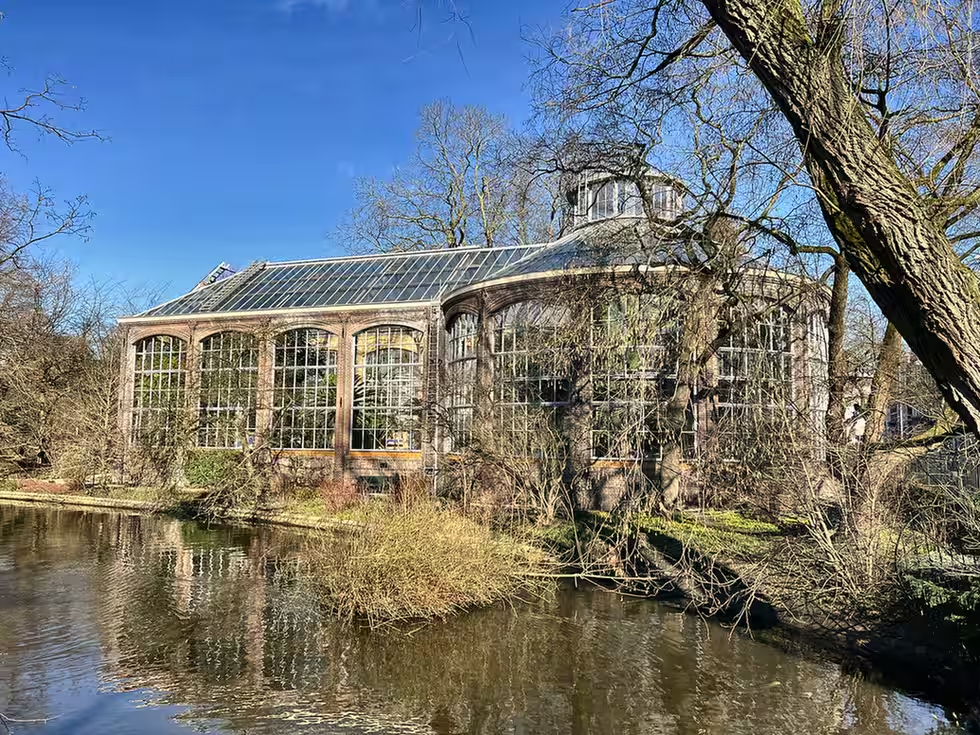

Located in the Plantage district, the Hortus Botanicus Amsterdam offers visitors a specialized look at over 4,000 plant species distributed across seven distinct glasshouses and an outdoor garden. Originally founded as a medicinal herb garden for local doctors and pharmacists, the site evolved into a pivotal botanical hub during the Dutch Golden Age. Today, the garden functions as a protected national monument, preserved for its architectural heritage and its living collection. This guide explores the scientific contributions, the architectural evolution of the glasshouses, and the specific botanical rarities that define the institution’s international reputation.
In this blog:
The Historical Foundation of the Medicijnhoff
The origins of the Hortus Botanicus Amsterdam date back to the 17th century, specifically to the year 1638. At this time, Amsterdam faced significant health challenges, including outbreaks of the plague. The city council established the garden under the name Hortus Medicus to ensure that physicians and apothecaries had access to reliable medicinal plants. This was a critical development in urban healthcare, as it moved the production of remedies from private, unregulated gardens to a centralized, supervised institution.
During the first decades of its existence, the garden was located in the Jordaan district before moving to its current location in the Plantage in 1682. The transition to the larger site allowed for an expansion of the collection beyond European herbs. The garden’s early directors, including Jan Commelin, began documenting the collection in illustrated catalogs, which remain vital records for botanical historians. These publications helped establish Amsterdam as a center for botanical science, attracting scholars from across the continent.
The garden’s layout has seen numerous modifications over nearly four centuries, yet it retains several elements of its 17th-century design. The circular herb garden, known as the Systematic Garden, still organizes plants according to their evolutionary relationships. This educational focus was mandatory for medical students until the late 19th century, reflecting the garden’s primary function as a teaching facility for the University of Amsterdam.
Tip: The Hortus Botanicus Amsterdam is officially registered as a National Monument (Rijksmonument) under complex number 451950, which includes the garden layout and several historic buildings.
How to get there?
Plan my journey


Global Impact: The Coffee and Cinnamon Trade
The Hortus Botanicus Amsterdam played a disproportionately large role in the history of global agriculture and trade. During the 17th and 18th centuries, the Dutch East India Company (VOC) brought seeds and plants from overseas territories to Amsterdam. The garden served as a nursery where exotic species were acclimatized before being shipped to other parts of the world. One of the most significant examples is the Coffea arabica plant. In the early 1700s, a single coffee plant from the Hortus collection was gifted to King Louis XIV of France; the offspring of this specific plant eventually populated the coffee plantations of South and Central America.
Beyond coffee, the garden was instrumental in the distribution of the oil palm (Elaeis guineensis). Seeds from the Hortus were sent to Java, which laid the foundation for the palm oil industry in Southeast Asia. The economic implications of these botanical transfers were immense, shifting the focus of the garden from purely medicinal use to a strategic asset for the Dutch colonial economy.
Researchers and botanists at the Hortus also focused on the cultivation of cinnamon and nutmeg. By studying these plants in controlled environments, the Dutch were able to better understand the growth cycles and requirements of spices that were, at the time, among the most valuable commodities in the world. This history is still visible in the garden’s collection, which maintains specimens related to these early trade routes, providing a physical link to the era of Dutch maritime expansion.
Tip: A direct descendant of the original 1706 coffee plant, which significantly influenced the global coffee industry, is still maintained within the collection of the Hortus Botanicus Amsterdam today.
Amsterdamse bos | Nature within the city!
Architectural Heritage: From the Orangerie to the Three-Climate Greenhouse
The built environment of the Hortus Botanicus Amsterdam reflects the evolution of glasshouse technology over three centuries. The oldest standing structure is the Orangerie, built in 1875. Originally designed to house citrus trees during the winter months, it transitioned into a lecture hall and eventually a café. Its neoclassical architecture, characterized by large windows and high ceilings, was a standard for 19th-century botanical institutions, allowing for maximum light penetration while protecting frost-sensitive plants.
In contrast to the 19th-century brickwork, the Three-Climate Greenhouse (Drieklimatenkas), completed in 1993, represents modern horticultural engineering. This structure is divided into three distinct zones: the subtropics, the desert, and the tropics. Each zone uses automated climate control systems to mimic the natural habitats of the plants housed within. The tropical section features an elevated walkway, allowing visitors to view the canopy of large trees and giant ferns from above.
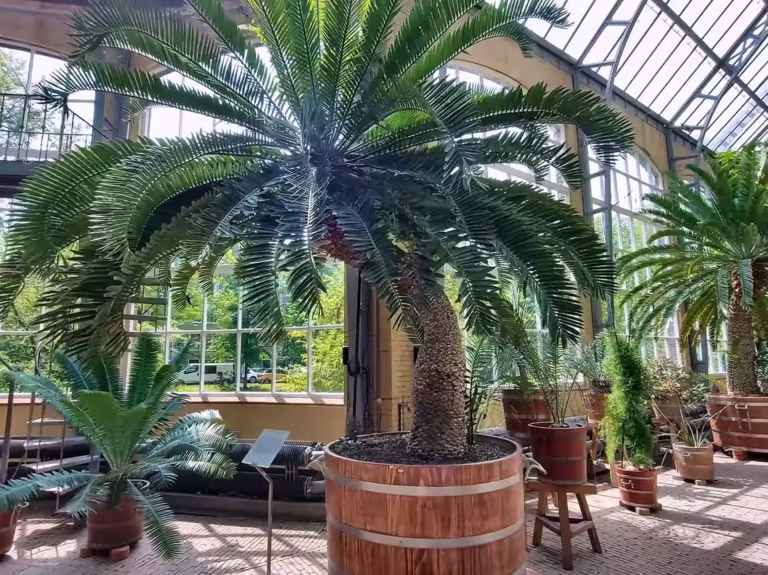
Another notable structure is the Palm House, which dates back to 1912. Designed in the Amsterdam School style of architecture, it was constructed to replace an older, wooden greenhouse that could no longer support the height of the growing palms. The use of iron and glass in this building allowed for a soaring interior space. It currently houses one of the world’s oldest potted plants: a 300-year-old Eastern Cape giant cycad (Encephalartos altensteinii).
(the blog continues after the banner)
Did you know this about Amsterdam?
THE VONDELPARK
Vondelpark is the most famous park in Amsterdam and a favorite place for both locals and visitors to relax, walk, or cycle through the city’s green heart. The park was opened in 1865 and quickly became a popular escape from the busy streets of the growing city.
Originally the park was called the Nieuwe Park, but it was later renamed Vondelpark after a statue of the Dutch poet Joost van den Vondel was placed in the park in 1867. Today the park welcomes millions of visitors each year and is known for its open lawns, ponds, and lively atmosphere.

Notable Botanical Collections and Rare Species
The living collection of the Hortus Botanicus Amsterdam is categorized into several specialized groups, with a heavy emphasis on rare and endangered species. The garden’s cycad collection is among the most significant in Europe. Cycads are often referred to as “living fossils” because they have remained relatively unchanged for over 200 million years. The presence of the 300-year-old Encephalartos altensteinii serves as a centerpiece for this collection, highlighting the garden’s long-term commitment to plant preservation.
The Victoria amazonica, a giant water lily, is another highlight of the summer months. This plant is housed in its own dedicated pond within the tropical greenhouse. The leaves can grow up to three meters in diameter and are capable of supporting the weight of a small child. The flowering process of the Victoria lily is a brief event, lasting only two nights; the flower changes from white to pink before submerged.
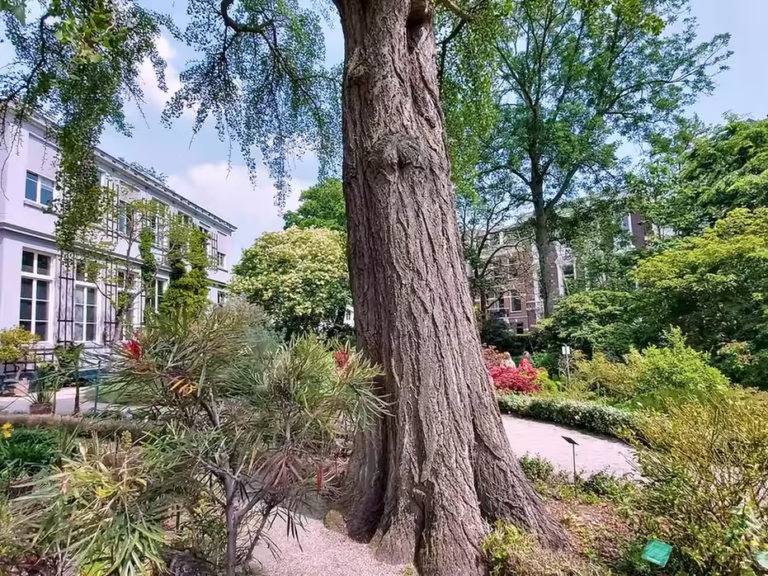
Additionally, the garden maintains a comprehensive collection of South African plants, a legacy of the VOC’s presence at the Cape of Good Hope. This includes various species of Protea and succulents that are adapted to arid environments. The outdoor garden also features a monumental Ginkgo biloba tree, which has survived at the site for decades, representing another lineage of ancient plant life that predates the evolution of modern flowering plants.
Tip: The Eastern Cape giant cycad (Encephalartos altensteinii) in the Palm House has been part of the Hortus collection since it was acquired in 1850 and is estimated to be over 300 years old.



The Role of the Hortus in Modern Conservation
In the 21st century, the Hortus Botanicus Amsterdam has transitioned from a colonial nursery to a center for biodiversity conservation. The institution is a member of Botanic Gardens Conservation International (BGCI) and participates in global seed exchange programs. These programs allow botanical gardens to share seeds from rare and endangered species, ensuring that genetic diversity is preserved even if wild populations are threatened by habitat loss or climate change.
The garden also serves as an “urban lung” and a research site for urban ecology. By maintaining a high density of plant life in the center of Amsterdam, the Hortus supports local pollinators, including several species of wild bees and butterflies. The Butterfly House, located within the garden, provides a controlled environment for tropical butterfly species while educating the public on the importance of insect-plant interactions.
Educational programs at the Hortus are designed for various age groups, focusing on sustainability and the importance of plants in everyday life. From workshops on botanical illustration to guided tours about the history of medicine, the garden maintains its 400-year-old mission of public education. By highlighting the links between plants, history, and the environment, the Hortus encourages a deeper understanding of the natural world among both locals and international tourists.

What can you see at Hortus Botanicus Amsterdam?
The Hortus Botanicus Amsterdam serves as one of the oldest botanical gardens in the world, established in 1638. This section provides a concise overview of its historical significance, its role in global trade, and its current function as a center for plant conservation and education in the heart of the Netherlands.
Visiting the Monumental Complex
The Hortus Botanicus Amsterdam is accessible to the public throughout the year, offering a different experience in each season. The outdoor gardens are most vibrant in the spring and summer when the medicinal herbs and the systematic garden are in full bloom. However, the greenhouses provide a consistent climate-controlled environment that makes the garden a viable destination during the winter months.
The site is located at Plantage Middenlaan 2a, easily reachable via Amsterdam’s public transport network. It is situated near other cultural landmarks, such as the ARTIS Royal Zoo and the Dutch Resistance Museum, making it part of a wider historical and scientific corridor in the city. The garden is managed by a dedicated foundation that relies on admission fees, donations, and the support of volunteers to maintain the glasshouses and the botanical collection.
For those interested in the architectural and historical aspects, the garden offers guided tours that provide in-depth information about the 17th-century origins and the 19th-century expansions. The presence of the monumental Snijdershuis, the former residence of the garden’s director, further adds to the historical atmosphere of the complex. Whether visiting for scientific interest or historical exploration, the Hortus remains a cornerstone of Amsterdam’s heritage.
Take a virtual tour with Google Streetview!
Frequently Asked Questions (FAQ)
How old is the oldest plant in the Hortus Botanicus Amsterdam?
The oldest plant in the collection is the Eastern Cape giant cycad (Encephalartos altensteinii), which is estimated to be over 300 years old and has been in the garden since 1850.
Is the Hortus Botanicus Amsterdam part of the University of Amsterdam?
While the garden was originally the botanical laboratory for the University of Amsterdam, it has been managed by an independent foundation since 1987.
What was the original purpose of the garden when it was founded in 1638?
It was established as the Hortus Medicus, a medicinal herb garden intended to provide doctors and pharmacists with the plants necessary to create remedies and combat diseases like the plague.
Where is the Hortus Botanicus Amsterdam located?
The garden is located in the Plantage district of Amsterdam, specifically at the address Plantage Middenlaan 2a.
Can you see tropical plants at the Hortus?
Yes, the Three-Climate Greenhouse and the Palm House contain a wide variety of tropical and subtropical plants, including palms, ferns, and the giant Victoria amazonica water lily.
Sources
- University of Amsterdam. (2021). The history of the Amsterdam Hortus.
- Hortus Botanicus Amsterdam. (n.d.). History of the Hortus.
- Rijksdienst voor het Cultureel Erfgoed. (n.d.). Monumentnummer: 451950 – Hortus Botanicus.
- Stadsarchief Amsterdam. (n.d.). De Hortus Botanicus.
- Botanic Gardens Conservation International. (2023). Garden Search: Hortus Botanicus Amsterdam.

Leave a Reply