
The Begijnhof offers a unique glimpse into the social and religious fabric of medieval Amsterdam. Located in the heart of the city, this courtyard was not a convent but a community for lay religious women known as Beguines. While the city around it evolved into a bustling commercial hub, the Begijnhof maintained its secluded character. You can observe a collection of historical houses, many of which are national monuments, surrounding a central green. This site provides evidence of how religious minorities managed to maintain their practices during the Reformation. Understanding the Begijnhof requires looking at its architectural transitions and the specific rules that governed its residents for centuries.
In this blog:
The Origins and Social Structure of the Beguines
The history of the Begijnhof begins in the 14th century, although the exact founding date remains a subject of historical debate. Documents from 1346 mention a “Beghynhuys,” indicating that a community was already established by the mid-1300s. Unlike nuns, the women living in the Begijnhof did not take perpetual vows. They were lay religious women who promised obedience to the mistress of the court and vowed to remain celibate as long as they lived there. However, they retained the right to own private property and could leave the community at any time to marry. This flexible social structure allowed the Begijnhof to thrive as a self-sustaining community for centuries.
The Beguines focused on a life of prayer and charitable works, often tending to the sick or educating the poor in Amsterdam. The court was originally surrounded by water, with a single entrance that emphasized its separation from the secular world. This physical isolation helped the community maintain its internal discipline and religious focus. The social hierarchy within the Begijnhof was managed by “grootjuffrouwen” (grand dames), who oversaw the administration and the adherence to the community’s statutes. These statutes were officially recognized by the church authorities, providing the women with a degree of protection and legitimacy that was rare for independent female organizations in the Middle Ages.
Tip: The last Beguine to reside in the courtyard was Sister Antonia, born as Cornelia Frietman, who passed away on May 23, 1971, at the age of 84.
How to get there?
Plan my journey


Architectural Highlights: The Houten Huys and Beyond
The architecture surrounding the Begijnhof reflects several centuries of Dutch building styles, ranging from the late Gothic period to the 18th century. Most of the original wooden structures were destroyed by the great fires of 1421 and 1452, which led to a city-wide ban on wooden facades. One notable exception is the Houten Huys located at Begijnhof 34. This building, constructed around 1475, is recognized as one of the two oldest wooden houses remaining in the Netherlands. You can identify it by its black wooden facade and the characteristic Gothic timber frame that has been meticulously preserved over the centuries.
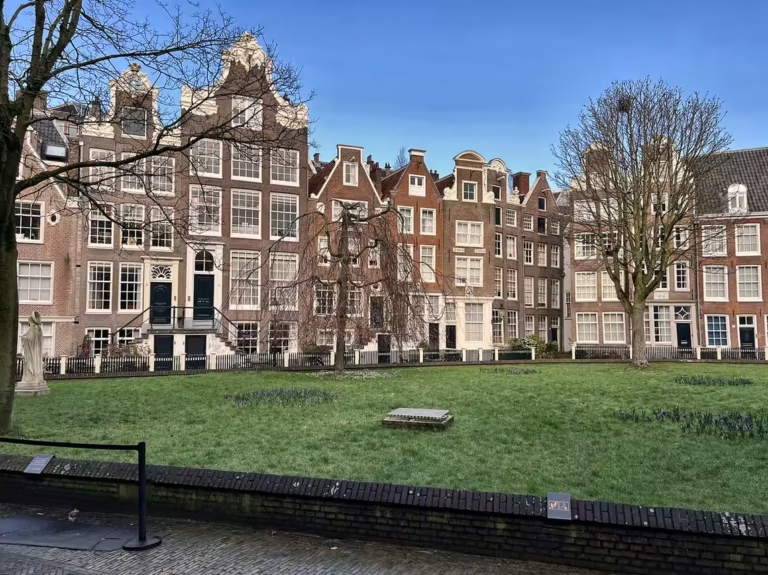
Surrounding the central lawn, the houses are predominantly tall, narrow brick structures. Many of these buildings feature stone tablets, known as “gevelstenen,” which served as addresses before the implementation of a formal numbering system. These tablets often depict religious scenes or symbols associated with the Beguines who once lived there. The uniform height and style of the houses contribute to the sense of enclosure that defines the Begijnhof. While the interiors have been modernized to meet current living standards, the exterior facades are strictly protected under Dutch national heritage laws. This ensures that the visual identity of the medieval court remains intact for future generations to study.
Tip: The house at Begijnhof 34 was restored between 1957 and 1958, during which the original 15th-century timber skeleton was reinforced while preserving the medieval wooden cladding.
The Begijnhof in Amsterdam
The Religious Transformation of the Court
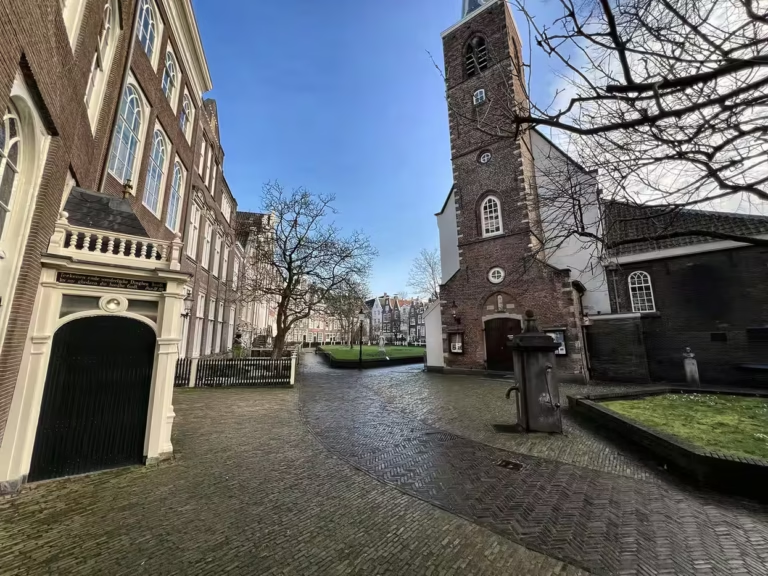
The Begijnhof underwent a significant transformation during the Alteration of 1578, when Amsterdam transitioned from Catholic to Protestant rule. While Catholic worship was officially banned in public, the Beguines were allowed to remain in their homes because they owned the property privately. However, their main church, a Gothic structure built in the 15th century, was confiscated by the city authorities. In 1607, this church was granted to the English-speaking community of Amsterdam and became known as the English Reformed Church. It continues to serve as a place of worship for the Church of Scotland to this day.
Deprived of their official church, the Beguines were forced to find alternative ways to practice their faith. They eventually converted two residential houses across from the confiscated church into a “schuilkerk” or hidden church. From the outside, these buildings, located at Begijnhof 29 and 30, appeared to be ordinary dwellings. Inside, however, they contained a fully functional Catholic chapel dedicated to Saint John the Baptist and Saint Ursula. This transition highlights the religious resilience of the community and provides a concrete example of the “clandestine” churches that were common in the Dutch Republic during the 17th and 18th centuries.
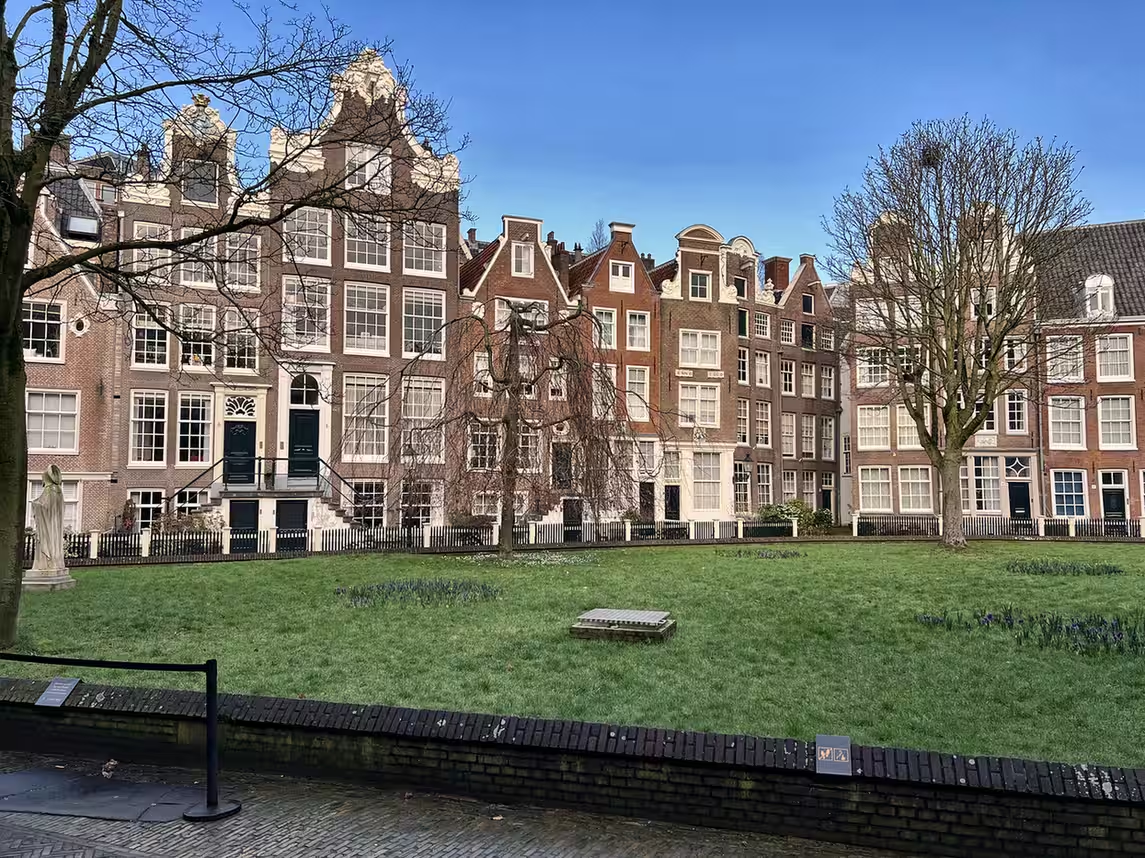
Hidden behind a historic gate in the heart of Amsterdam, the Begijnhof is a quiet courtyard dating back to the 14th century, where—unlike most places in the city—only women are allowed to live, continuing a centuries-old tradition of female residents.
The Begijnhofkapel and the Miracle of Amsterdam
The hidden chapel, known as the Begijnhofkapel, is a site of significant historical and religious importance. Its interior is decorated in the Baroque style, featuring marble columns and paintings that contrast sharply with the austere Protestant church across the lawn. The chapel serves as a primary location for commemorating the Miracle of Amsterdam, an event that allegedly occurred in 1345. According to historical records, a dying man vomited a consecrated host, which was then thrown into a fire but remained unconsumed by the flames. This event turned Amsterdam into a major pilgrimage site, and the Beguines became the unofficial guardians of this Eucharistic tradition.
You can still see visual representations of the Miracle within the chapel’s artwork and stained-glass windows. The chapel also contains the relics and memorials of various Beguines who contributed to the upkeep of the court during times of persecution. Despite its “hidden” status, the chapel was well-known to the local population and the city government, who often turned a blind eye to its activities as long as they remained discreet. Today, the chapel remains an active place of Catholic worship, holding regular services and maintaining the historical connection to the city’s medieval religious roots.
Tip: The Begijnhofkapel is officially open to visitors daily between 9:00 and 17:00, though visitors are required to maintain silence and refrain from taking photographs during active religious services.


Modern Regulations and Current Residential Function
Today, the Begijnhof is no longer home to Beguines, but it remains a residential complex exclusively for women. This tradition is maintained by the Begijnhof Foundation, which manages the property and selects new residents based on specific criteria. The court is private property, although the central area is open to the public during the day. Because it is a residential area, there are strict rules regarding visitor behavior. Large groups are generally discouraged, and silence is mandatory to respect the privacy of the women living in the surrounding houses.
The management of the Begijnhof involves a careful balance between preserving a national monument and providing a functional living space. The houses are subject to rigorous maintenance schedules to prevent decay of the ancient brickwork and timber. Unlike many other historical sites in Amsterdam, the Begijnhof does not charge an entrance fee, but it relies on donations and the cooperation of visitors to maintain its tranquil atmosphere. Understanding these regulations is essential if you plan to visit, as the security staff actively monitors the area to ensure that the rules of conduct are followed by every guest.
The Begijnhof, Amsterdam’s best kept secret
The Begijnhof is one of the oldest inner courts in Amsterdam, originally founded in the 14th century as a residence for Beguines. This historical site features the famous Houten Huys, a hidden Catholic chapel, and the English Reformed Church, serving as a well-preserved example of medieval urban planning and religious history.
Notable Residents and Historical Burial Customs
The Begijnhof is the final resting place of many Beguines, but one particular burial custom stands out in the historical record. Cornelia Arens, a devout Beguine who died in 1754, requested not to be buried in the church but in the “gutter” of the courtyard. She believed that she was not worthy of being buried in the consecrated ground of the church after it had been taken over by Protestants. According to the legend, her body was twice placed in the church against her wishes, only for her coffin to be found back in the gutter the next morning. Eventually, her request was honored.
You can find a memorial stone for Cornelia Arens in the pavement of the Begijnhof, marking the spot where she was finally laid to rest. This site serves as a reminder of the deep religious convictions and the internal conflicts that the Beguines faced after the Reformation. In addition to Cornelia Arens, the court has hosted various notable figures in Dutch religious history, including influential “klopjes” (lay Catholic women) who supported the underground church network in Amsterdam. The records of these residents are preserved in the city archives, providing a detailed prosopography of the women who inhabited this space over six centuries.
Take a virtual tour with Google Streetview!
Frequently Asked Questions (FAQ)
Is the Begijnhof a public park?
No, the Begijnhof is private property owned by a foundation. While the central courtyard is open to the public during designated hours, it is a residential area where visitors must follow specific rules of conduct, including maintaining silence.
Can men live in the Begijnhof?
Historically and currently, the Begijnhof is a women-only residential community. This tradition has been maintained since its founding in the 14th century, though men are allowed to visit the public areas and the churches within the court.
When was the Houten Huys built?
The Houten Huys at Begijnhof 34 was built around the year 1475. It is one of the last remaining wooden-fronted houses in the Netherlands due to historical fire safety bans on wooden architecture.
Is there an entrance fee for the Begijnhof?
There is no entrance fee to enter the Begijnhof courtyard or the churches. However, the site is managed by a private foundation, and donations for the upkeep of the historical buildings and the chapel are encouraged.
Sources
- Amsterdam City Archives. (n.d.). Archief van de Kapel van het Begijnhof.
- Kerkeraad van de Engelse Hervormde Kerk. (2024). History of the English Reformed Church, Amsterdam.
- Monumenten.nl. (2024). Begijnhof 34, Amsterdam. Rijksdienst voor het Cultureel Erfgoed.
- Stichting Begijnhof Amsterdam. (2024). History and Residents of the Begijnhof.
- UNESCO World Heritage Centre. (2024). Flemish Beguinages (Reference for context).

Leave a Reply