



NEMO Science Museum Amsterdam lets visitors explore science and technology through hands-on exhibits. Its copper-clad building, designed by Renzo Piano, stands above the IJ tunnel. This guide introduces the museum’s history, exhibitions and facilities for planning a family visit.
In this guide
The Institutional History from 1923 to Present
While the current building is a modern structure, the institution behind the NEMO Science Museum has a history spanning over a century. It was founded in 1923 by artist Herman Heijenbrock as the Museum van den Arbeid (Museum of Labor). The original goal was to educate the Dutch youth about industry and technology. In 1954, the name was changed to the Nederlands Instituut voor Nijverheid en Techniek (NINT). The museum was initially located on the Rozengracht in Amsterdam-West before the decision was made to create a new, purpose-built facility to accommodate growing visitor numbers and modern exhibition styles.
The transformation into the NEMO Science Museum as it is known today occurred in the late 1990s. The new building was officially opened by Queen Beatrix on June 1, 1997. At the time of the opening, the museum was briefly named “NewMetropolis,” but it was renamed NEMO in 2000. Since its inauguration at the Oosterdok location, the museum has become the fifth most visited museum in the Netherlands, attracting over 600,000 visitors annually. The institution remains dedicated to its founding principle of making science and technology accessible through direct participation.
Tip: The NEMO Science Museum institution was originally founded as the Museum van den Arbeid in the year 1923.


Architectural Design by Renzo Piano
The building housing the NEMO Science Museum was designed by the world-renowned Italian architect Renzo Piano. The structure is intentionally shaped like a ship’s hull, finished in pre-patinated copper to give it a distinctive green color. A significant technical challenge for the design was its location; the building is constructed directly on top of the foundations of the IJ-tunnel. The curvature of the building’s facade corresponds to the curve of the tunnel below. The building rises to a height of 32 meters above the water level, providing a massive internal volume for exhibitions.
Piano designed the interior to be a “neutral” space with minimal decoration, using grey concrete and exposed functional elements to ensure the focus remains on the interactive exhibits. The total floor area of the museum is approximately 12,000 square meters. One of the most unique features of the design is the pedestrian ramp that leads from the street level up to the roof, which is the only large, sloped public square in the Netherlands. This architectural choice was intended to reconnect the city center with the waterfront, providing a public space that is accessible regardless of museum operating hours.
Tip: The NEMO Science Museum building is located at the exact address of Oosterdok 2, 1011 VX Amsterdam.
NEMO Science museum
Exhibition Floors and Interactive Galleries
The NEMO Science Museum is organized across five distinct levels, each focusing on a specific branch of science or technology. The ground floor, known as “Fenomena,” focuses on the basic principles of physics, such as light, sound, and static electricity. The second level, “Technium,” explores the logistics and engineering behind everyday objects, including a large-scale “Chain Reaction” demonstration that runs several times per day. This level also features the “World of Shapes,” which focuses on the mathematics found in nature and architecture.
On the higher levels, the museum shifts toward biological and human-centric sciences. Level three, “Elementa,” includes a fully equipped laboratory where visitors aged 6 and older can perform supervised chemistry experiments. Level four, “Humania,” is a major permanent exhibition that explores the biology, sociology, and psychology of the human species. The museum utilizes over 500 individual interactive exhibits, many of which were designed and built in the museum’s own workshop. This hands-on approach is based on the educational philosophy that active participation leads to better retention of scientific concepts.
Tip: The NEMO Science Museum features exactly five floors of interactive exhibitions for visitors to explore.
Amsterdam Hidden Gems
Psss … don’t tell anyone!
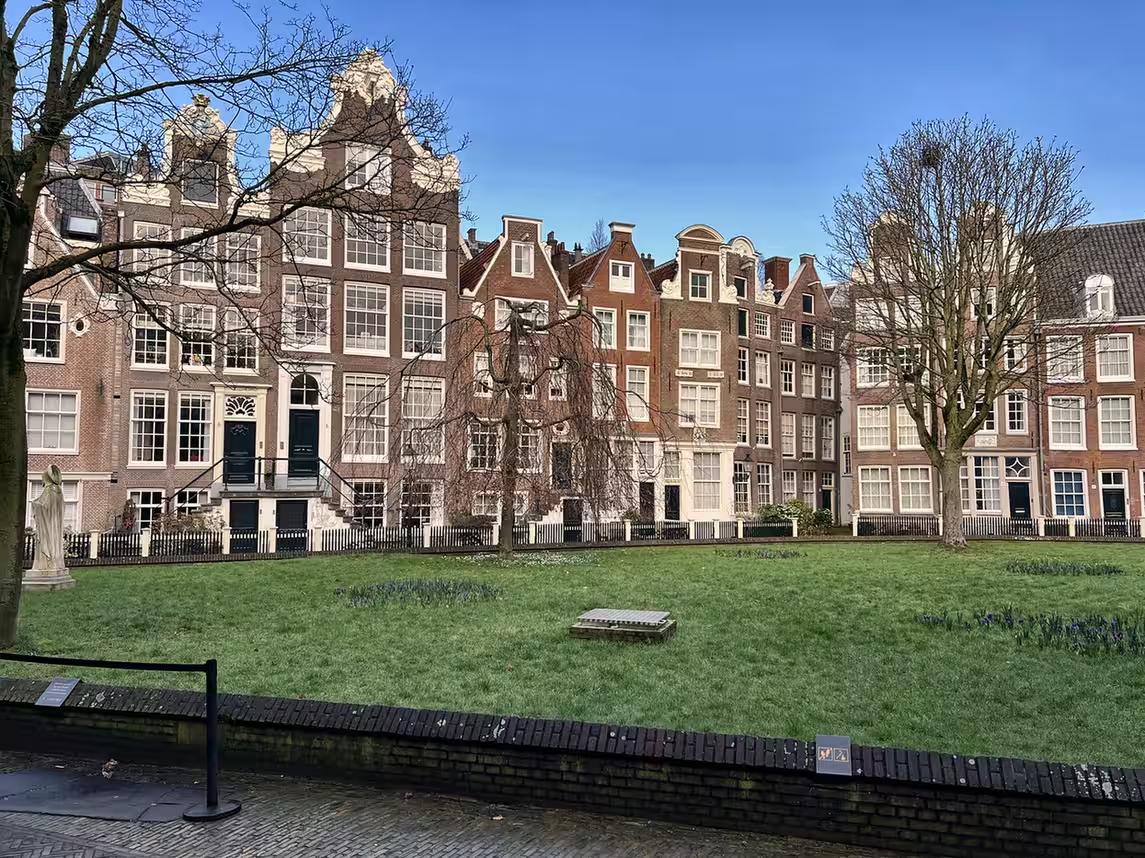
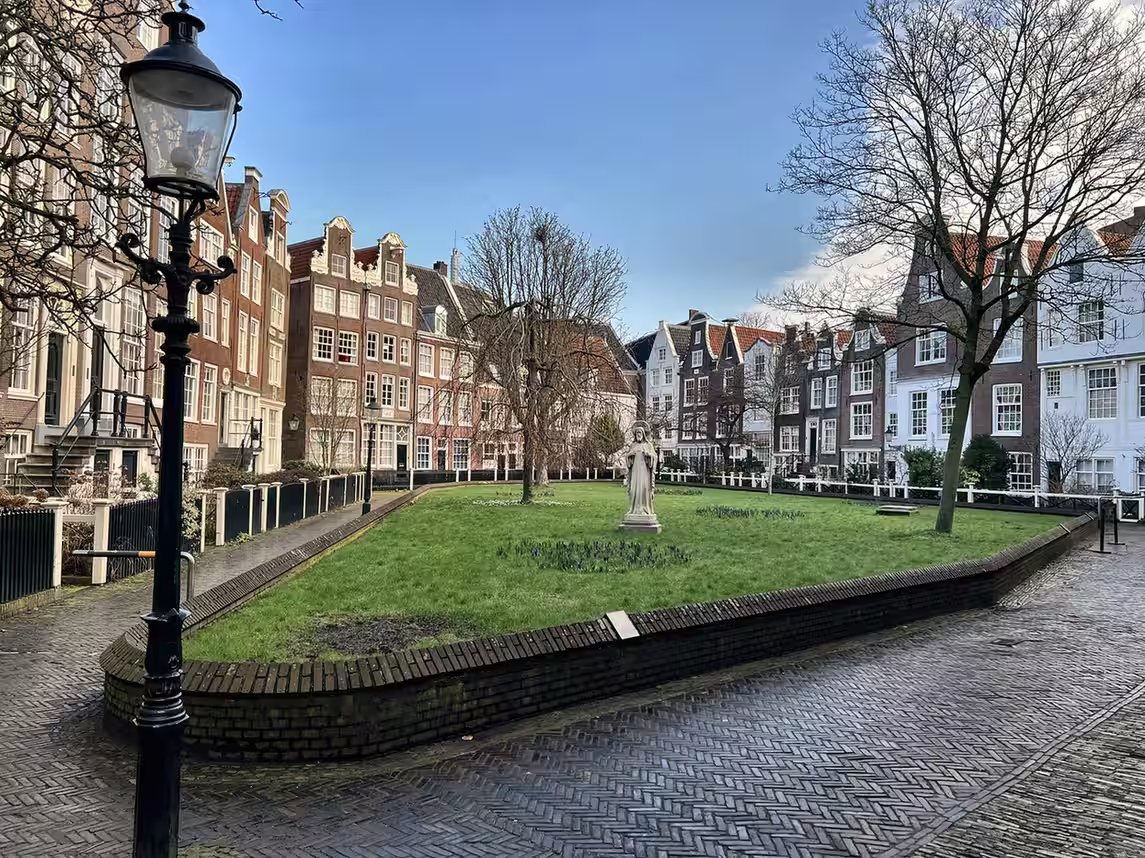
BEGIJNHOF
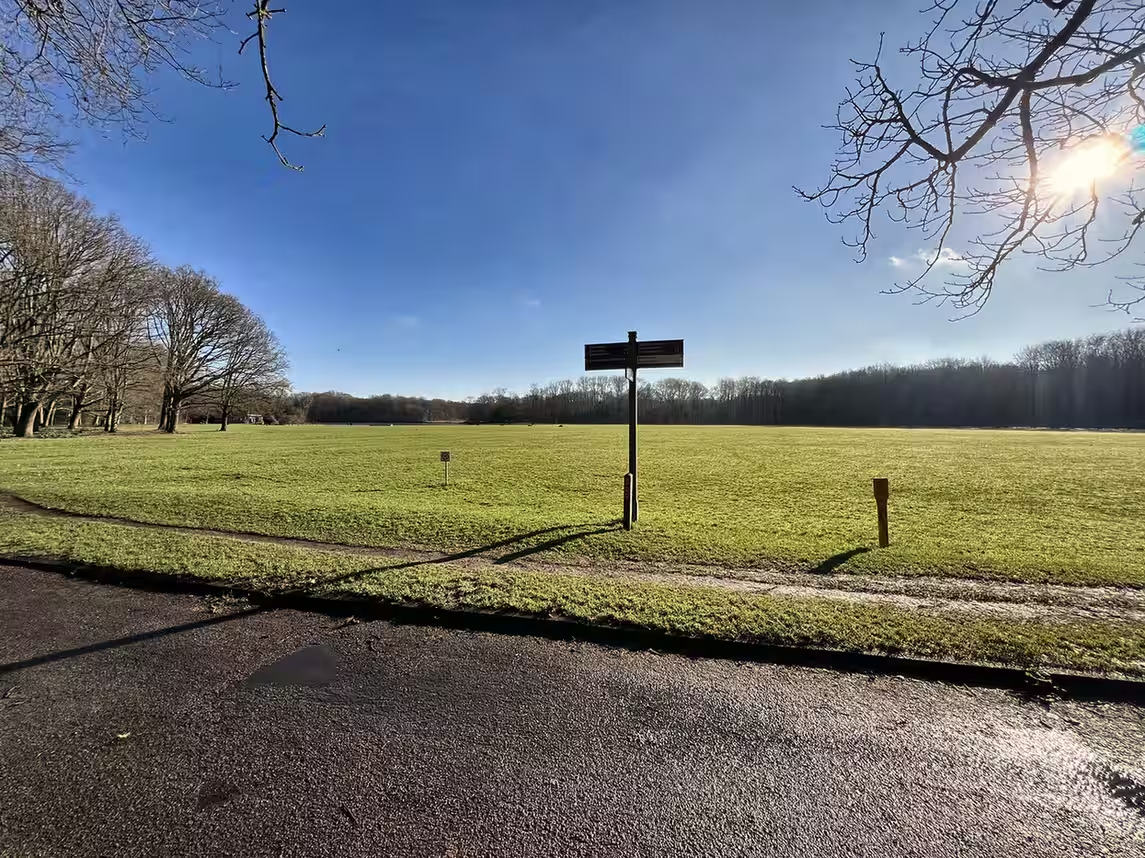
AMSTERDAMSE BOS
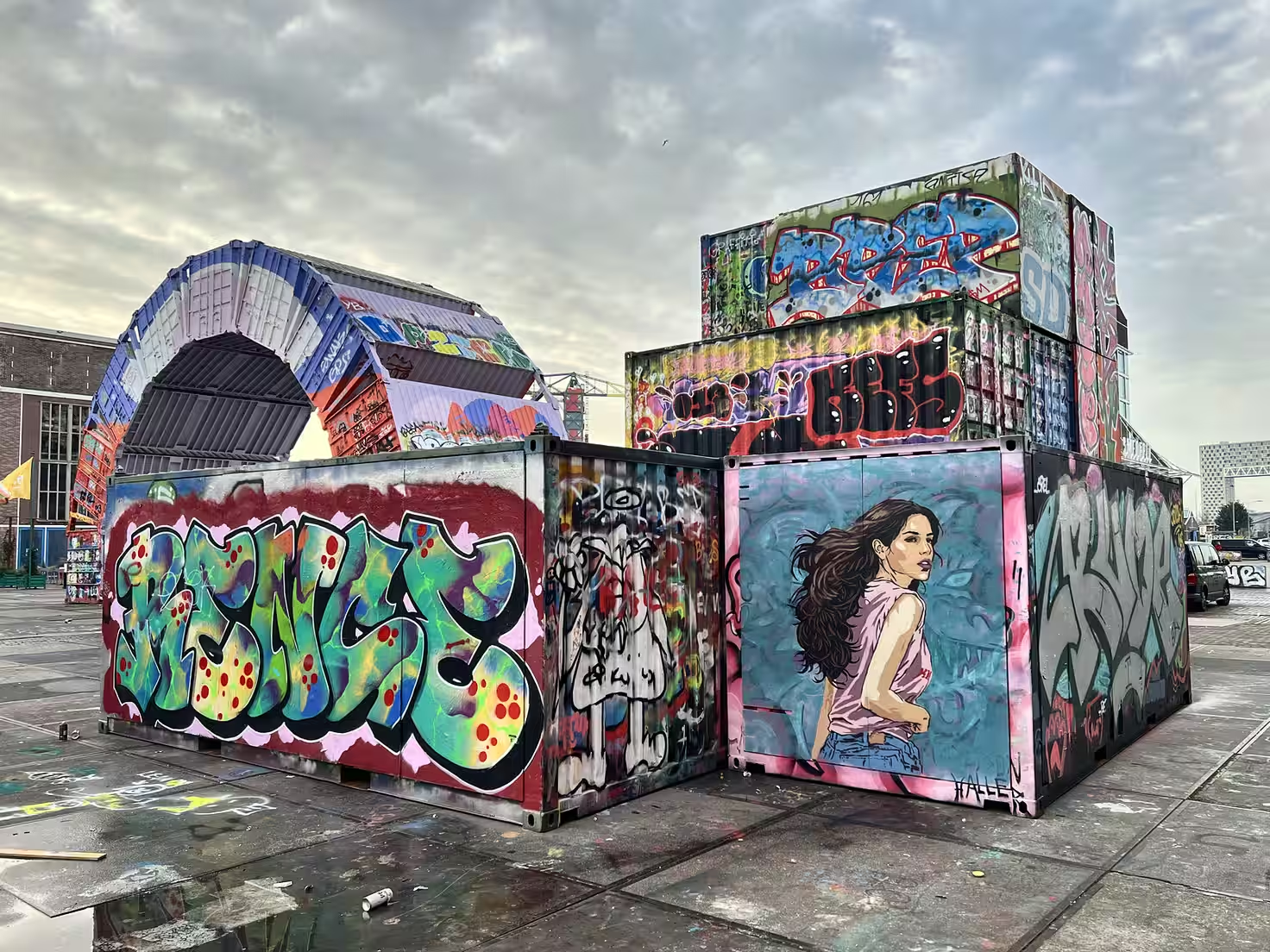
NDSM WARF
OOSTERPARK
The Public Roof Terrace and Energetica
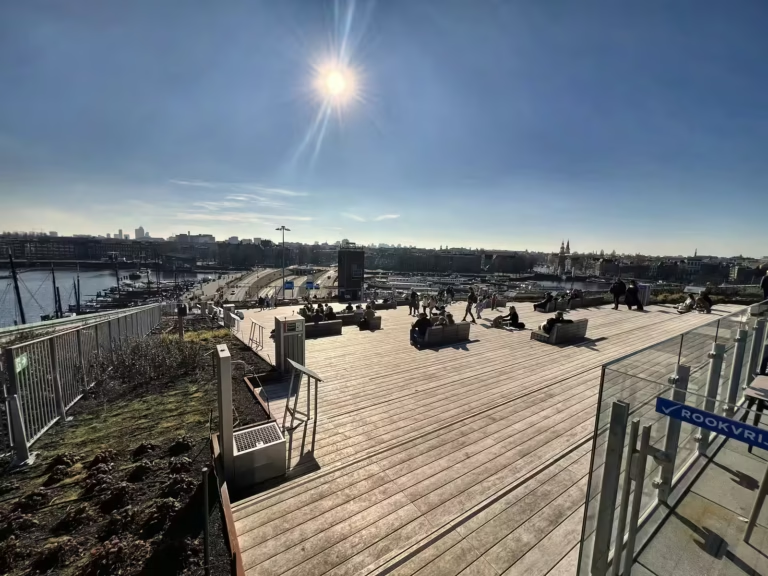
The roof of the NEMO Science Museum serves a dual purpose as a public square and an outdoor exhibition space titled “Energetica.” The terrace is situated 22 meters above ground level and offers a panoramic view of the historic city center and the Amsterdam harbor. Access to the roof is free for the public, even for those who do not purchase a museum ticket. The “Energetica” exhibition consists of installations that demonstrate the power of sustainable energy sources, such as wind, water, and solar power.
The roof terrace also houses a restaurant and a large water feature consisting of 30 interconnected pools. During the summer months, these pools are used to demonstrate water management and flow dynamics. The terrace is designed to be a “city beach” and is equipped with seating areas and educational signage explaining the various sustainable technologies installed on the roof. This area is a primary example of how the museum integrates its educational mission into the urban fabric of Amsterdam, providing a factual look at renewable energy in a high-visibility public space.



Location, Transport, and Accessibility
The NEMO Science Museum is centrally located in the Oosterdok, a short distance from Amsterdam Central Station. Visitors can reach the museum on foot in approximately 15 minutes by following the signs for “Oosterdok.” The museum is also accessible via public transport; bus line 22 stops at the Kattenburgerplein station, which is adjacent to the museum. For those arriving by car, the Oosterdok Parking garage is the closest facility, located within 400 meters of the museum entrance.
The museum is designed with full accessibility in mind. There are elevators serving all five floors, and the building is equipped with ramps for wheelchair users. The public roof terrace is also accessible via a dedicated elevator located in the main hall. For visitors with sensory sensitivities, the museum provides information regarding the noise levels of specific exhibits. It is a factual requirement that children under the age of 13 must be accompanied by an adult to ensure safety while interacting with the various mechanical and chemical exhibits.

NEMO Science Museum Amsterdam: experiments and family visits
NEMO Science Museum Amsterdam lets visitors explore science and technology through hands-on exhibits. Its copper-clad building, designed by Renzo Piano, stands above the IJ tunnel. This guide introduces the museum’s history, exhibitions and facilities for planning a family visit.
Practical Visitor Information
The NEMO Science Museum is open daily from 10:00 to 17:30. It is important to note that the museum is closed on certain Mondays during the low season and on major holidays like King’s Day. Tickets can be purchased at the entrance or via the official website. The museum accepts the National Museum Pass (Museumkaart) and the I amsterdam City Card, both of which provide free admission. Holders of the European Youth Card or student IDs are often eligible for discounted rates, which are verifiable at the ticket counter.
Inside the museum, facilities include a cafe on the second floor and the “Museumrestaurant” on the roof level. A specialized museum shop is located on the ground floor, selling educational toys, science kits, and literature. For visitors bringing their own food, there are designated picnic areas within the building. To avoid peak times, it is recommended to visit on weekday afternoons, as school groups frequently occupy the galleries during the morning hours. The museum also offers free lockers for storing coats and bags, which is necessary as large backpacks are not permitted in the exhibition zones.
Take a virtual tour with Google Streetview!
Frequently Asked Questions (FAQ)
What are the opening hours of the NEMO Science Museum?
The museum is open daily from 10:00 to 17:30.
Is the roof terrace free to visit?
Yes, the roof terrace and the “Energetica” exhibition are accessible to the public free of charge, regardless of museum admission.
How much time should I plan for a visit?
A thorough visit to all five floors typically takes between 3 and 4 hours.
Is the NEMO Science Museum suitable for adults?
Yes, while many exhibits are geared toward youth, the architecture, the “Humania” exhibit, and the “Energetica” roof terrace are designed to be informative for adults as well.
Can I perform experiments at the museum?
Yes, visitors can participate in supervised experiments in the Lab on the third floor, provided they are at least 6 years old.
Sources
- Holland.com. (2024). NEMO Science Museum Amsterdam.
- I amsterdam. (2024). NEMO Science Museum.
- NEMO Science Museum. (2024). Practical Information and History.
- Renzo Piano Building Workshop. (2024). Projects: National Centre for Science and Technology (NEMO).
- Wikipedia contributors. (2024). NEMO Science Museum.

Leave a Reply