
The Johan Cruijff ArenA remains a centerpiece of Dutch sports culture and urban engineering. Originally opened in 1996 as the Amsterdam ArenA, it was renamed in 2018 to honor the legacy of football player and coach Johan Cruijff. The stadium is known for its retractable roof and its role as a pioneer in smart stadium technology. Whether you are attending a match, a concert, or a guided tour, understanding the facility’s logistics and history enhances the experience. The stadium is easily accessible via the Amsterdam Bijlmer ArenA station, connecting it to the city center and national rail networks.
In this blog:
The Construction and Opening of the Stadium
The development of the Johan Cruijff ArenA was a significant project for the city of Amsterdam during the 1990s. The city required a modern replacement for De Meer Stadium and the Olympic Stadium, which no longer met the increasing demands for capacity and safety. Construction began in 1993, following a design by architect Rob Schuurman in collaboration with Sjoerd Soeters and Benthem Crouwel Architects. The project was part of a broader urban renewal plan for the Amsterdam-Zuidoost district, transforming it into a commercial and entertainment hub.
The stadium was officially inaugurated on August 14, 1996. The opening ceremony featured a friendly match between AFC Ajax and AC Milan. At the time of its completion, it was the first stadium in Europe to feature a retractable roof. This innovation allowed the venue to host events regardless of weather conditions, though the early years were marked by challenges regarding the quality of the grass pitch due to the lack of sunlight and airflow within the enclosed structure.
Tip: The official opening of the stadium occurred on August 14, 1996, in the presence of Queen Beatrix of the Netherlands.
How to get there?
Plan my journey


Architectural Features and the Retractable Roof
The Johan Cruijff ArenA is characterized by its distinct bowl shape and the two massive arches that support the retractable roof. These arches are 115 meters long and 24 meters high. The roof itself consists of two movable panels, each measuring 37 by 110 meters. When the roof is operated, it takes approximately 18 to 20 minutes to fully open or close. This mechanism is primarily used to protect the pitch from heavy rain or to provide a climate-controlled environment for indoor concerts and events.
Inside the stadium, the seating is divided into two main tiers, with a total capacity of approximately 55,885 for football matches. For concerts, the capacity can increase to 68,000 depending on the stage configuration. The stadium also includes 76 skyboxes and several business lounges. The proximity of the stands to the pitch was designed to ensure clear sightlines for all spectators. Over the years, the stadium has undergone several renovations to improve the concourses, including the expansion of the East and South stands to provide more space and facilities for fans.
Tip: The two movable roof panels of the stadium each have a weight of approximately 520 tons.
Johan Cruyff ArenA – AFC Ajax
The Renaming and Legacy of Johan Cruijff
The decision to rename the stadium was made following the death of Johan Cruijff in 2016. Cruijff is widely regarded as one of the most influential figures in football history, both as a player for Ajax and the Dutch national team and as a visionary coach. The renaming process was a collaborative effort between the stadium management, the municipality of Amsterdam, and AFC Ajax. The official name change to Johan Cruijff ArenA took effect at the start of the 2018-2019 football season.
The renaming is more than a symbolic gesture; it reflects the deep connection between the venue and the philosophy of Cruijff. A large mural of the player is situated near the main entrance, and his likeness is integrated into the stadium’s branding. The “Cruijff Court” initiative and the Johan Cruyff Foundation also have ties to the stadium, promoting sports and education for children. For many visitors, the stadium serves as a monument to the “Total Football” era that Cruijff helped define on the global stage.
(the post will continue after the next block)
Did you know this about Amsterdam?
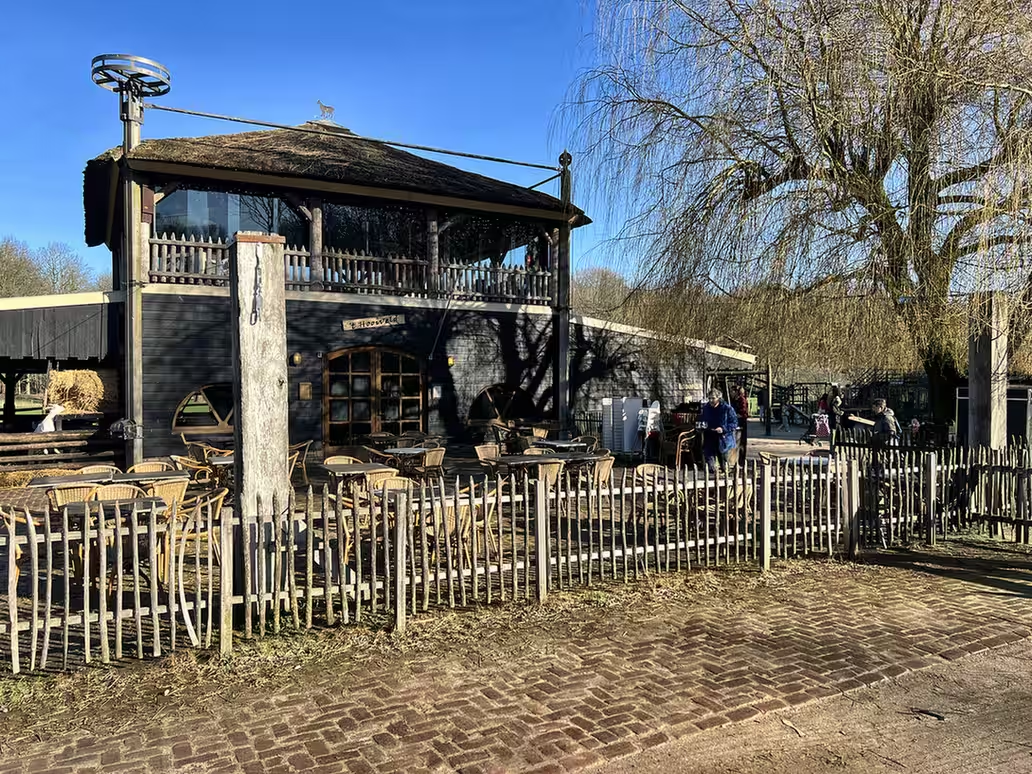
Amsterdamse Bos
The vast Amsterdamse Bos is one of the largest green areas near the city and is actually three times larger than New York’s Central Park. Although many visitors think it is a natural forest, the area was carefully designed and planted in the 1930s as a large recreational park for the people of Amsterdam.
What makes the Amsterdamse Bos unique is that much of the forest was built by hand during the Great Depression, when thousands of workers planted trees, dug lakes, and created paths. Today the park offers open meadows, rowing lakes, and cycling routes, making it a popular place for nature, sports, and relaxation.
Sustainability and the Smart Stadium Concept
The Johan Cruijff ArenA is a global leader in stadium sustainability and technological innovation. It operates as a “living lab” for the Amsterdam Innovation Arena. One of the most significant features is the massive solar array on the roof. Thousands of solar panels provide a substantial portion of the stadium’s energy needs. Furthermore, the stadium utilizes a circular energy storage system made from second-life electric vehicle batteries. This system, which is the largest of its kind in a commercial building in Europe, stores energy from the solar panels and provides back-up power during outages.
Rainwater harvesting is another key sustainability feature. Water collected from the roof is stored and used to irrigate the grass pitch, reducing the demand on the city’s potable water supply. The stadium also uses deep-lake cooling from the nearby Ouderkerkerplas to regulate temperatures in the offices and lounges. These initiatives have earned the Johan Cruijff ArenA numerous international awards for green building management and smart city integration.
Tip: The stadium roof is equipped with 4,200 solar panels, covering a total surface area of approximately 7,000 square meters.


Visitor Facilities and the Ajax Gallery of Fame
For those visiting outside of match days, the Johan Cruijff ArenA offers a comprehensive Stadium Tour. This tour provides access to areas usually closed to the public, such as the dressing rooms, the players’ tunnel, and the dugout. A highlight of the visit is the Ajax Gallery of Fame. This museum section documents the history of the club, showcasing trophies such as the UEFA Champions League cups, historical jerseys, and memorabilia from legendary players.
The stadium is also equipped with modern catering facilities. There are dozens of snack bars and kiosks distributed throughout the concourses, as well as high-end restaurants like “Onze Trots.” The area surrounding the stadium, known as the Arena Boulevard, features the official Ajax Fanshop, where visitors can purchase official merchandise. The boulevard is also home to other major venues, including the Ziggo Dome and AFAS Live, making it the primary entertainment district of Amsterdam.

A visit to Johan Cruijff Arena in Amsterdam
The Johan Cruijff ArenA is the largest stadium in the Netherlands and the home ground of AFC Ajax. Located in Amsterdam-Zuidoost, it serves as a multipurpose venue for football matches and international concerts. This guide details its innovative architecture, historical transformation, and current sustainability initiatives for visitors and fans.
Practical Information for Match Days and Events
Attending an event at the Johan Cruijff ArenA requires some preparation regarding logistics. The stadium is situated at Johan Cruijff Boulevard 1. On match days, the surrounding area becomes very busy, and public transport is the most efficient way to reach the venue. The Amsterdam Bijlmer ArenA station is served by trains from Utrecht and Schiphol, as well as Metro lines 50 and 54.
Security at the stadium is strict, and there are specific regulations regarding the size of bags permitted inside. Generally, only bags of A4 size or smaller are allowed. Digital ticketing is the standard, and fans are encouraged to use the official stadium app for navigation and updates. Cashless payment is implemented throughout the venue, meaning you must use a debit or credit card for all transactions at the food and beverage kiosks.
Tip: The Ajax Fanshop located at the stadium is open Monday through Saturday from 09:30 to 18:00 and on Sundays from 10:00 to 17:00.
Take a virtual tour with Google Streetview!
Frequently Asked Questions (FAQ)
How do I get to the Johan Cruijff ArenA from Amsterdam Central?
The fastest way is to take Metro line 54 towards Gein. Exit at the Amsterdam Bijlmer ArenA station. The walk from the station to the stadium entrance takes approximately five minutes.
Can I visit the locker rooms during a stadium tour?
Yes, the standard stadium tour includes a visit to the Ajax dressing room, provided there are no training sessions or matches scheduled that day.
Is the stadium roof always closed during matches?
No, the roof is generally kept open to maintain the health of the natural grass pitch. It is closed only during periods of heavy rain, snow, or for specific non-sporting events like concerts.
Where can I buy tickets for a match?
Tickets for AFC Ajax matches are sold primarily through the official Ajax website. Due to high demand, it is recommended to book well in advance, especially for European fixtures or the “Klassieker” against Feyenoord.
Is the Johan Cruijff ArenA accessible for wheelchair users?
Yes, the stadium is fully accessible. There are designated elevators, wide concourses, and specific viewing platforms for wheelchair users and their companions.
Sources
- Johan Cruijff ArenA. (2024). Stadium History and Facts.
- AFC Ajax. (2023). The Ajax Gallery of Fame. https://www.ajax.nl/fans/stadiontour
- Gemeente Amsterdam. (2022). Urban Development in Amsterdam-Zuidoost.
- Benthem Crouwel Architects. (1996). Project Archive: Amsterdam ArenA.
- Johan Cruyff Foundation. (2023). Legacy and Renaming of the Stadium.

Leave a Reply