
The canal district of Amsterdam is home to De Negen Straatjes, a sub-district that spans the Herengracht, Keizersgracht, and Prinsengracht. Often referred to in English as “The Nine Streets,” this area is celebrated for its preservation of 17th-century urban architecture and its concentration of independent businesses. For tourists and residents, De Negen Straatjes offers a specialized shopping experience that differs from the mainstream retail found on the Kalverstraat. This guide explores the historical branding of the neighborhood, the specific geography of the streets, and the practical details necessary for a visit to this part of the city.
In this blog:
The Geographical Layout and Street Names
The area known as De Negen Straatjes is located in the western part of the city’s canal ring. The streets are arranged in a grid of three by three, crossing three of Amsterdam’s major canals. Specifically, they are situated between the Raadhuisstraat and the Leidsegracht. The nine streets are divided into three columns. The first set, closest to the city center, consists of Reestraat, Hartenstraat, and Gasthuismolensteeg. The second set, moving outward, includes Berenstraat, Wolvenstraat, and Oude Spiegelstraat. The final set is comprised of Runstraat, Huidenstraat, and Wijde Heisteeg.
This layout was part of the massive 17th-century urban expansion project known as the “Grachtengordel.” While the canals were designated for the wealthy merchant class, the side streets—the nine streets—were originally intended for trade, artisanal workshops, and smaller residences. This functional distinction remains visible today in the smaller scale of the buildings compared to the grand mansions situated directly on the canal fronts. Navigating De Negen Straatjes is a common way for visitors to experience the transition between the different rings of the canal belt.
Tip: The Nine Streets neighborhood covers a total area of approximately 0.2 square kilometers within the Amsterdam canal ring.
How to get there?
Plan my journey


The Commercial Branding of the Nine Streets
Unlike many historical neighborhoods that evolved organically over centuries, the name De Negen Straatjes is a relatively modern invention. The branding of the area was initiated in 1996 by Daan van der Meulen, a local entrepreneur who sought to unify the independent businesses in these side streets under a single marketing identity. Before this period, the streets were known individually but lacked a collective reputation as a primary shopping destination. The creation of the “De Negen Straatjes” association allowed for coordinated promotion and street-level improvements.
The branding was successful in attracting both domestic and international attention. By presenting the area as a cohesive district, the association encouraged visitors to spend more time exploring the side streets rather than staying on the main thoroughfares. This initiative is often cited in urban marketing studies as a prime example of successful neighborhood branding. Today, the area is officially recognized on city maps and tourism portals as a distinct retail zone, maintaining its focus on small-scale, non-chain stores.
Tip: The official entrepreneurs’ association, Vereniging De Negen Straatjes, was formally established in November 1996.
De Negen Straatjes Amsterdam
Independent Retail and Vintage Specialization
The primary attraction of De Negen Straatjes is its high density of independent boutiques. Unlike the large-scale international chains found in other parts of the city, many shops here are owner-operated. The area has become particularly well-known for its vintage fashion and second-hand luxury goods. Specialized stores like “Episode” and “Zipper” have been fixtures in the neighborhood for years, providing a curated selection of clothing that attracts a younger, fashion-conscious demographic.
In addition to fashion, the streets host specialized retailers such as bookstores, high-end stationery shops, and jewelry designers. Many of these businesses utilize the small, split-level “souterrain” (basement) and ground-floor spaces characteristic of 17th-century Dutch architecture. This verticality creates a unique shopping environment where products are displayed across multiple half-floors. The commitment to maintaining independent retail is a core value of the local business association, which monitors the balance of store types to prevent the neighborhood from becoming dominated by any single industry.
Tip: The vintage store Episode is located at Berenstraat 1 and operates daily from 11:00 to 19:00.
Did you know this about Amsterdam?
The Nine Streets Amsterdam
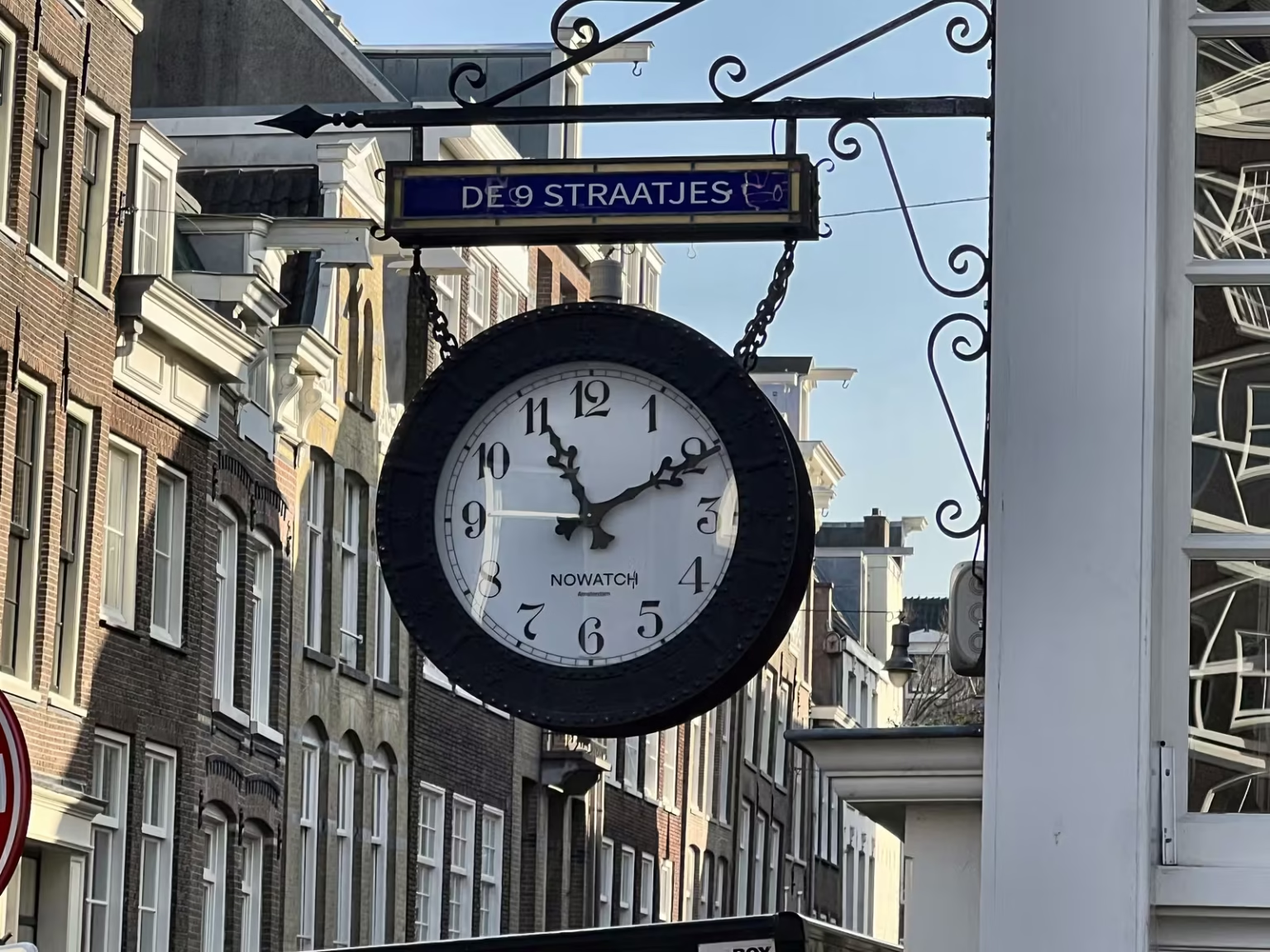
The Nine Streets (De Negen Straatjes) are a charming network of small streets located in the historic Canal Ring between the Prinsengracht, Keizersgracht, and Herengracht. This lively shopping area is known for its independent boutiques, vintage stores, cafés, and specialty shops, making it one of the most enjoyable places to explore on foot in Amsterdam.
A fun fact is that the Nine Streets were originally laid out in the 17th century during the expansion of Amsterdam’s canal district and were mainly home to small artisans and local traders. Today the area combines historic canal houses with unique shops and has become one of the most popular shopping districts in the city.
Culinary Offerings and Cafe Culture
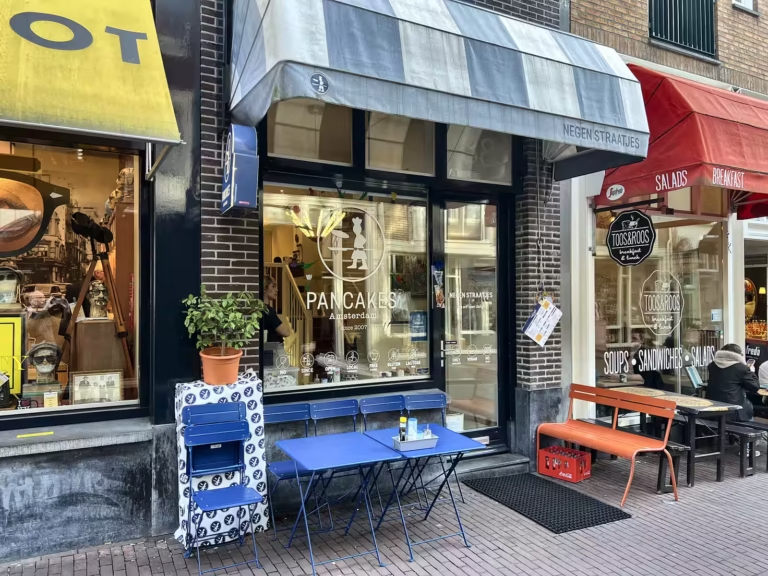
The culinary landscape of De Negen Straatjes is as diverse as its retail offerings. The area is home to numerous “eetcafés” and lunchrooms that cater to both the local workforce and visiting tourists. Many of these establishments are located in corner buildings, offering views of the canals. Factual records show a high concentration of specialized food shops, such as the “Kaaskamer” (Cheese Room), which has been a staple of the Runstraat for decades, offering over 400 varieties of cheese.
The cafe culture in this district often revolves around traditional Dutch hospitality, but it also includes modern third-wave coffee shops. Because space is limited, many cafes feature outdoor seating on the sidewalk or directly overlooking the water during the summer months. This use of public space is strictly regulated by the city to ensure that pedestrian flow is not blocked on the narrow sidewalks. For visitors, these cafes serve as essential rest points within the grid-like structure of the neighborhood.



Cultural Impact and Media Representation
De Negen Straatjes frequently appears in media as the visual representation of “quaint” Amsterdam. The area has served as a filming location for several international and Dutch films. For example, scenes from the 2004 film “Ocean’s Twelve” were filmed in and around the canal belt, featuring the distinctive streetscapes of the neighborhood. The visual consistency of the 17th-century facades makes it a preferred location for fashion photography and social media content creation.
The neighborhood is also featured in several high-profile travel guides. National Geographic and Condé Nast Traveler frequently list the area as a top destination for those seeking an alternative to the city’s more commercial centers. The cultural impact of the neighborhood extends to its reputation for lifestyle and design, with many local brands gaining international recognition through their presence in these nine specific streets. This media attention has helped sustain the area’s economic viability as a luxury and boutique hub.

A charming area in Amsterdam: De Negen Straatjes
De Negen Straatjes is a micro-neighborhood in Amsterdam’s canal belt, consisting of nine picturesque side streets. Established as a retail association in 1996, the area is known for independent boutiques and vintage shops. This blog provides a factual overview of the street names, history, and essential visitor information.
Practical Logistics and Opening Hours
Visiting De Negen Straatjes requires an understanding of standard Dutch retail hours. While some shops open earlier, the majority of boutiques operate from 10:00 to 18:00 on weekdays and Saturdays. On Sundays, the neighborhood is active, though shops typically follow shorter hours, usually opening at 12:00 and closing at 17:00 or 18:00. Unlike the larger malls, individual shop hours in the nine streets can vary slightly depending on the owner’s discretion.
Access to the area is most convenient via public transport or on foot. The neighborhood is situated between the Westermarkt and Spui tram stops. Lines 2, 11, and 12 serve the Spui area, while lines 13 and 17 stop at Westermarkt. Parking for cars is extremely limited and expensive within the canal ring; therefore, visitors are encouraged to use the underground parking garages at Q-Park Europarking on the Marnixstraat or use the “Park and Ride” (P+R) facilities on the outskirts of the city.
Take a virtual tour with Google Streetview!
Frequently Asked Questions (FAQ)
What are the exact nine streets that make up the area?
The streets are Reestraat, Hartenstraat, Gasthuismolensteeg, Berenstraat, Wolvenstraat, Oude Spiegelstraat, Runstraat, Huidenstraat, and Wijde Heisteeg.
Is De Negen Straatjes a pedestrian-only zone?
No, the streets are accessible to cars and cyclists, though traffic is generally light and slow-moving due to the narrow layout and pedestrian density.
Are there many chain stores in the Nine Streets?
The area specifically markets itself as a hub for independent boutiques, although a few high-end international brands have established small-scale locations in recent years.
How do I get to the Nine Streets from Amsterdam Central Station?
You can walk in about 15 minutes or take tram 13 or 17 to the Westermarkt stop.
Are the shops open on public holidays?
Many shops in De Negen Straatjes close on major holidays like Christmas Day and King’s Day, though some cafes may remain open.

Leave a Reply