


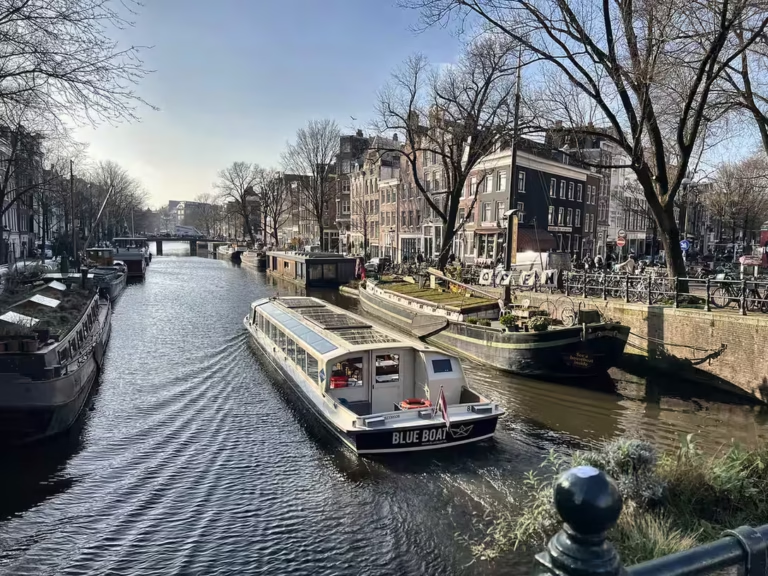
Amsterdam canal cruises offer views of canal houses and bridges from the water. Operators differ in their routes, boat types and onboard services. This guide explains what to compare before booking and introduces the history of the canal belt.
In this guide
The Historical Development of the Amsterdam Canal Ring
The network of waterways that facilitates every canal cruise today was planned in the early 17th century during the Dutch Golden Age. As the city’s population expanded rapidly due to maritime trade, the municipal government initiated the “Grote Uitleg” (Great Expansion). This project resulted in the construction of the three main concentric canals: the Herengracht, Keizersgracht, and Prinsengracht. These canals were designed not only for residential prestige but also as a functional transport system for the goods arriving at the port.
The architecture visible from a canal cruise reflects the wealth and social hierarchy of the 17th and 18th centuries. The Herengracht was historically the location for the wealthiest merchants, characterized by wide plots and ornate neck, bell, and spout gables. Because the soil in Amsterdam consists of thick layers of peat and clay, every building and bridge along the route is supported by wooden or concrete piles driven deep into the sand layer. This structural necessity is a frequent point of interest during educational tours of the waterways.
Tip: The Amsterdam Canal District was officially added to the UNESCO World Heritage List on August 1, 2010.


Engineering and Infrastructure: Bridges and Water Management
Amsterdam is often compared to other water-based cities, but its scale is distinct. The city contains over 100 kilometers of canals and approximately 1,500 bridges. During a canal cruise, visitors pass under various types of bridges, including historical brick arches and modern steel bascule bridges. The Magere Brug (Skinny Bridge) over the Amstel river is perhaps the most documented, originally built in 1691 and replaced by the current wooden drawbridge structure in 1934.
Water management is a continuous technical operation handled by Waternet. The water level in the canals is kept constant to prevent the wooden foundation piles of the historical houses from rotting. To maintain water quality, the locks are opened several times a week to flush the system with fresh water from the IJsselmeer. This process ensures that the water remains clean enough for the diverse ecosystem of fish and birds that reside in the city center, which can be observed closely from the deck of a canal cruise.
Tip: The Magere Brug is officially classified as a Rijksmonument under registration number 5940.
Amsterdam canal cruise: a view from the water
Environmental Regulations and Electric Propulsion
The canal cruise industry is currently undergoing a significant technological transition driven by municipal environmental policy. The City of Amsterdam has established a “Clean Air Action Plan” which mandates that all commercial vessels in the city center must be emission-free by the year 2025. This has led to the widespread replacement of traditional diesel engines with electric motors and large battery banks.
This shift affects the visitor experience by significantly reducing noise pollution and exhaust fumes during the tour. Many modern boats used for a canal cruise are now “silent,” allowing for clearer audio guides and a more tranquil atmosphere. The charging infrastructure has been expanded along the docks to support these electric fleets. Operators have also invested in solar-powered charging stations and hydrogen-cell technology to meet the city’s strict sustainability targets for the historical maritime zone.

ESCAPE THE CITY!

Westerpark Amsterdam: green space and the Westergas complex
Westerpark Amsterdam brings green space and former industrial buildings together. Walk through the park, then explore the Westergas complex to see how…
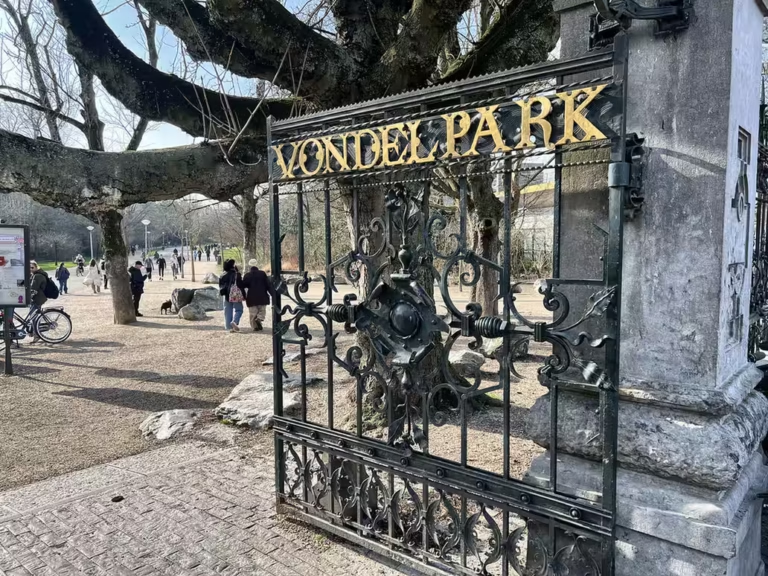
Vondelpark Amsterdam: things to do and visiting tips
Vondelpark is an easy outdoor stop near Amsterdam’s Museum District and Leidseplein. Come for a walk past ponds and lawns, a café…
Visiting ARTIS Amsterdam with kids: 10 tips and a family route
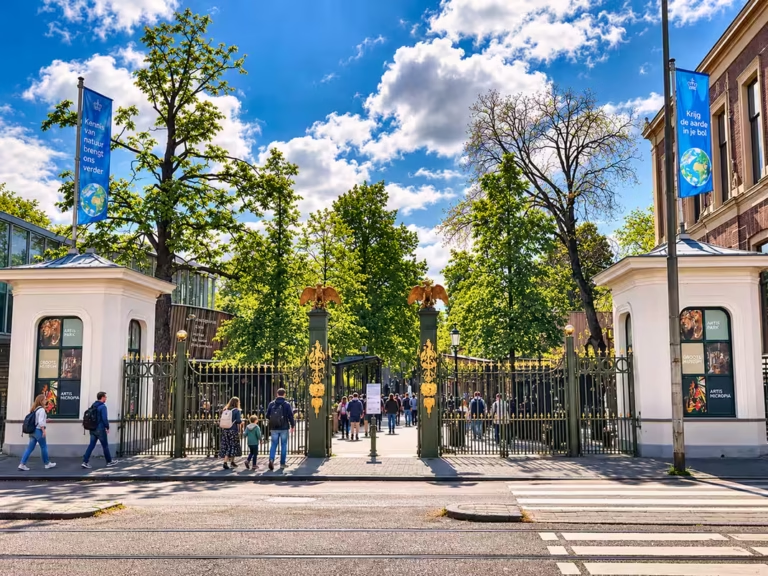
Visiting ARTIS Amsterdam with kids? Plan your route, compare tickets and discover animals, gardens, the Aquarium and useful family tips.
Top 5 Most Popular Canal Cruise Operators
When selecting a canal cruise, several established companies offer standardized and specialized tours. The following five operators are the most prominent based on fleet size and passenger volume:
- Those Dam Boat Guys: Known for a more informal and small-group approach, this provider uses open electric boats. Their tours focus on social interaction and a non-scripted historical narrative of the city.
- Stromma: Formerly known as Canal Company, this is one of the largest providers with multiple departure points near Central Station and the Rijksmuseum. They offer the classic 1-hour tour with GPS-triggered audio guides in 19 languages.
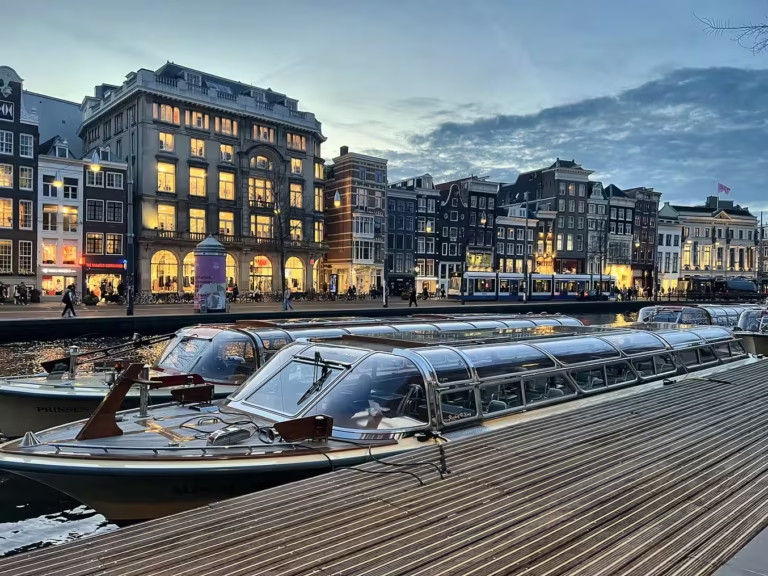
- Lovers Canal Cruises: Situated directly in front of Amsterdam Central Station, this operator is known for its glass-topped boats. They focus on the primary canal ring and offer specialized “Light Festival” tours during the winter months.
- Blue Boat Company: Operating primarily from the Stadhouderskade near the Heineken Experience, this company is recognized for its blue-themed vessels and specific programs for families and children.
- Flagship Amsterdam: This operator specializes in open-boat tours, providing a more interactive experience. Their vessels are typically smaller and skippered by local guides who provide live commentary rather than recorded audio.


Logistics: Departure Points and Practical Information
The majority of canal cruise services depart from the area surrounding Amsterdam Central Station, specifically along the Prins Hendrikkade and the Damrak. Other significant hubs include the Leidseplein and the Museumplein. Most tours last between 60 and 75 minutes, covering the most significant sections of the Herengracht and Prinsengracht.
Tickets can be purchased at the quay-side kiosks or through online booking platforms. Most operators utilize digital tickets, which are scanned upon boarding. It is important to note that many companies have moved to a cashless system, meaning debit or credit cards are required for on-board purchases. Accessibility varies by vessel; while many newer boats are equipped with wheelchair lifts, it is advisable to check with the specific operator at the departure point, such as the Stromma dock at Damrak Pier 5.
Tip: The Lovers Canal Cruise main departure point is located at Prins Hendrikkade 25, directly opposite the main entrance of Amsterdam Central Station.

Amsterdam canal cruises: routes, boats and booking tips
Amsterdam canal cruises offer views of canal houses and bridges from the water. Operators differ in their routes, boat types and onboard services. This guide explains what to compare before booking and introduces the history of the canal belt.
Canal cruises in Amsterdam:
Frequently Asked Questions (FAQ)
How much does a canal cruise cost?
The price for a standard 1-hour canal cruise typically ranges between 16 and 22 euros for adults, depending on the operator and the time of day. Children’s tickets are usually offered at a discounted rate.
Are there canal cruises at night?
Yes, many operators provide evening tours. These allow visitors to see the bridges and canal houses illuminated. During the Amsterdam Light Festival (usually from December to January), specialized routes are established to view light art installations.
Do I need to book my canal cruise in advance?
While it is possible to buy tickets at the dock, booking in advance is recommended during the peak tourist season (April to September) and on weekends to ensure a specific departure time and avoid long wait times.
Is food and drink served on the boat?
This depends on the type of tour. Standard sightseeing cruises usually do not serve full meals, though some allow you to purchase drinks. Specialized “Dinner Cruises,” “Pizza Cruises,” or “Wine and Cheese Cruises” are available as separate products.
What happens if it rains during my canal cruise?
Most large tour boats are equipped with glass roofs that can be closed in the event of rain, ensuring the tour proceeds as scheduled. Open-boat tours may provide umbrellas or ponchos, or they may offer the option to reschedule.
Sources
- Stadsarchief Amsterdam. (2023). De bouw van de Grachtengordel.
- UNESCO World Heritage Centre. (2010). Seventeenth-Century Canal Ring Area of Amsterdam inside the Singelgracht.
- Gemeente Amsterdam. (2024). Uitstootvrij varen 2025: Regels en beleid.
- Waternet. (2024). Waterbeheer in de Amsterdamse grachten.

Leave a Reply