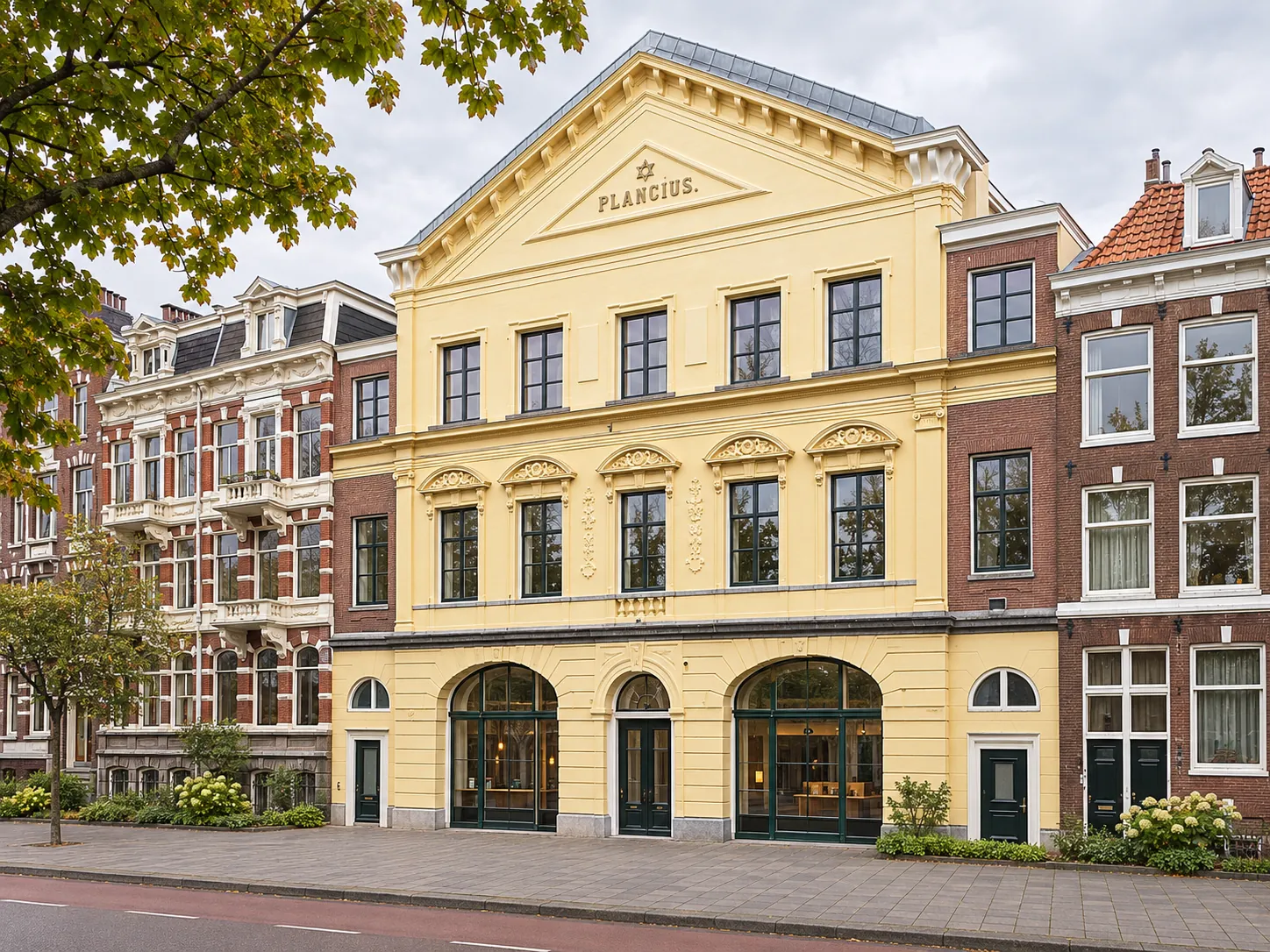



The Dutch Resistance Museum in Amsterdam tells the story of people who lived through the German occupation of the Netherlands during the Second World War. The museum, also known as Verzetsmuseum, is at Plantage Kerklaan 61, across the street from ARTIS. It has a chronological exhibition about the occupied Netherlands, a permanent exhibition about the former Dutch colonies and a separate Junior route told through the experiences of four children.
A standard ticket includes an audio guide for the main exhibition and admission to Junior. The Junior displays are in Dutch and English and the museum recommends them from age nine. The main museum is on one floor, with an accessible toilet and display cases designed for wheelchair users. There are some less accessible places in Junior, and the lighting and sounds vary between rooms. The museum’s access guide explains what to expect.
Allow roughly 90 minutes for a first visit focused on the main exhibition, or around two hours if you also want to spend time in Junior or the former-colonies exhibition. These are planning estimates. You can follow the main timeline and choose individual accounts as you go, so a shorter visit can still have a clear beginning and end.
Visitor tip: Decide which route matters most before you arrive. If you are with children, ask the desk how to reach Junior and how busy it is before you spend time at the first displays.
Contents
Which parts of the museum should you visit?
Start with The Netherlands in World War II if you want to understand what changed between May 1940 and May 1945. The exhibition divides the occupation into six phases. A large film projection introduces each phase and smaller displays tell the stories of individual people. Reading or listening to one account from each phase makes a workable first visit. You can then linger at any object or story you want to understand in more depth.
Families can take the route into Resistance Museum Junior. Junior is in the same building and the visual preparation guide places the entrance partway through the main exhibition. The permanent exhibition on the former Dutch colonies is reached after part of the main route too. If you have a limited window, use the floor plan to pick a priority. Our three-day Amsterdam itinerary can help you leave enough space between stops.
Visitor tip: Keep the display titles in view when you use the audio guide. The labels give the time and place, so it is easier to put each voice in context.
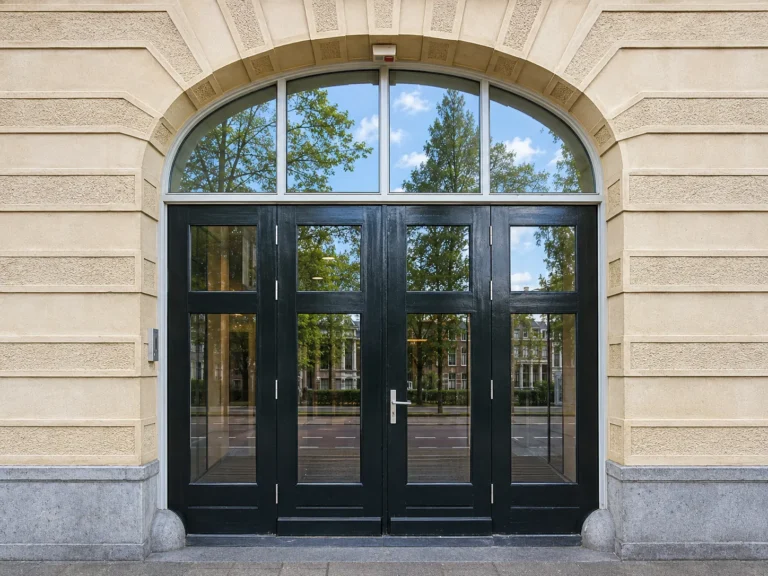
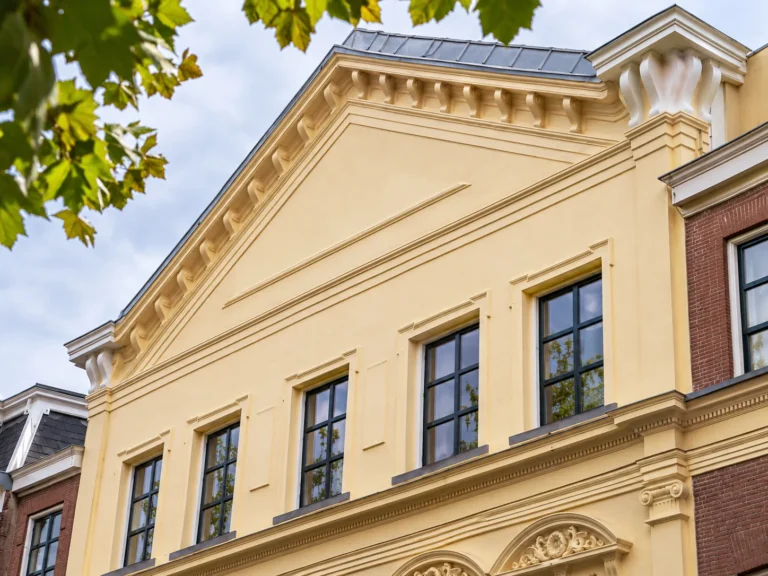
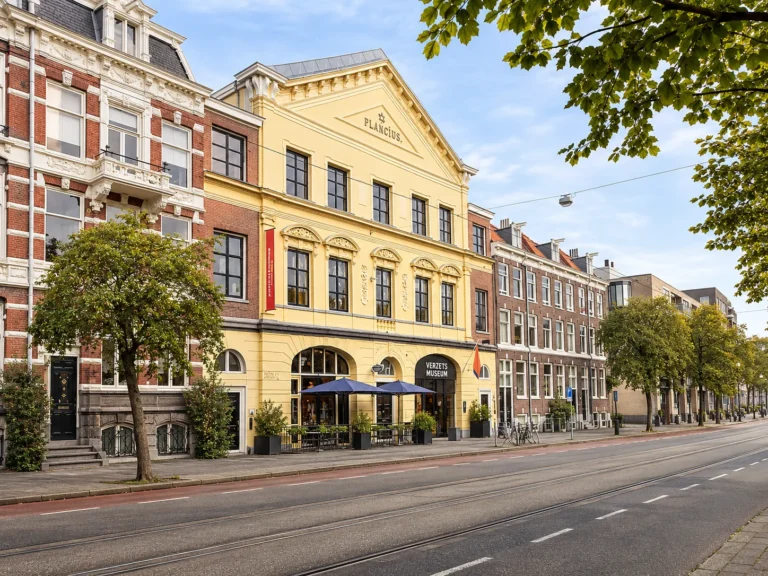
Image credits
Illustrations adapted from the photographs and artworks credited here.
- Cream façade of the Plancius building on Plantage Kerklaan. Anne-Marie Steenbergen (CC BY-SA 4.0) · Anne-Marie Steenbergen (CC BY-SA 4.0) · A. Bakker (CC BY 3.0) → CC BY-SA 4.0
- Dark glazed entrance beneath a cream-coloured arch. Nick-D (CC BY-SA 3.0) → CC BY-SA 4.0
- Upper windows and cornice of the Plancius building. Anne-Marie Steenbergen (CC BY-SA 4.0) · Anne-Marie Steenbergen (CC BY-SA 4.0) → CC BY-SA 4.0
- Plantage Kerklaan with tram rails and the Plancius façade. A. Bakker (CC BY 3.0) · Anne-Marie Steenbergen (CC BY-SA 4.0) → CC BY-SA 4.0
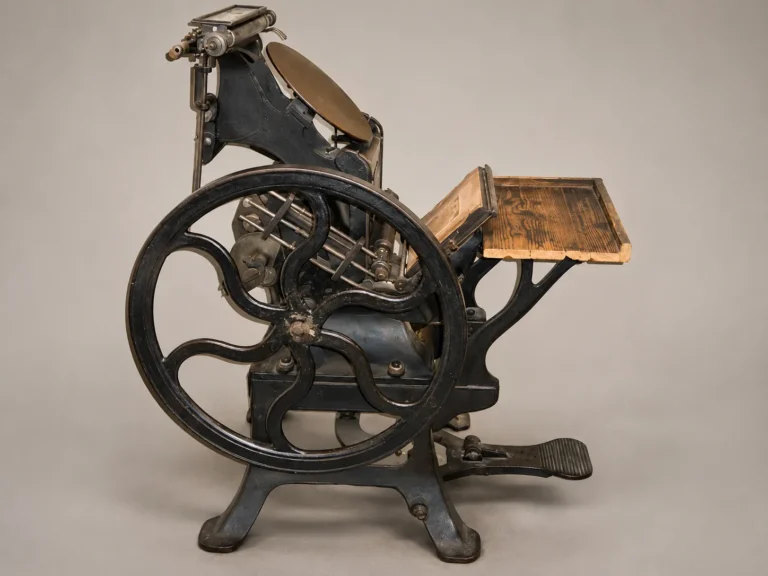
- Cast-iron printing press with a large flywheel. Thomas Quine (CC BY 2.0) → CC BY-SA 4.0
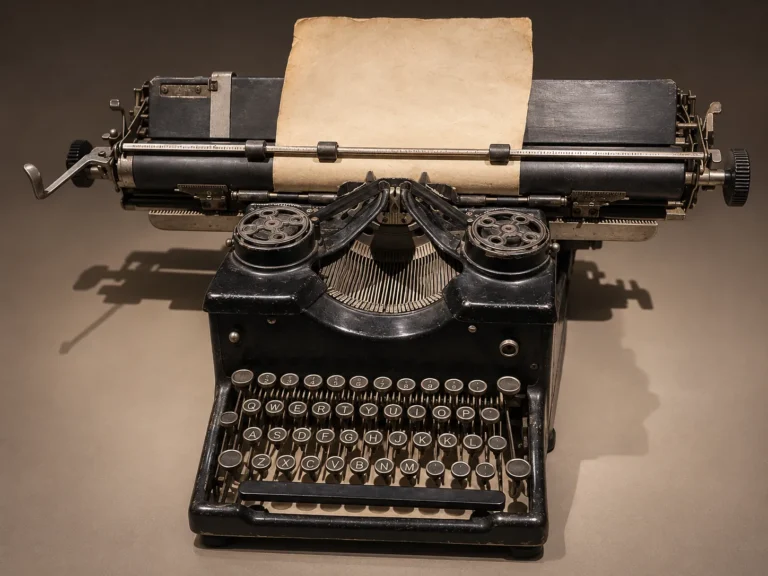
- Black mechanical typewriter with a sheet of paper. Hnapel (CC BY-SA 4.0) → CC BY-SA 4.0
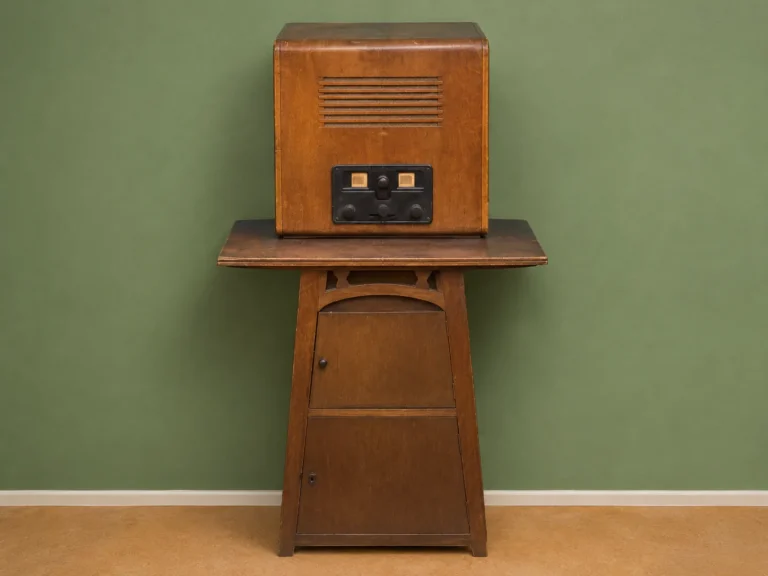
- Wooden tabletop radio with a rectangular speaker grille. Thomas Quine (CC BY 2.0) → CC BY-SA 4.0
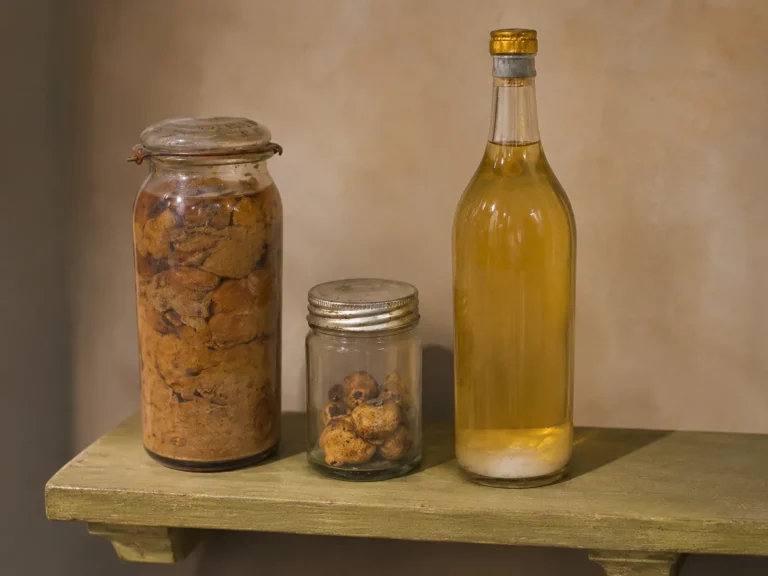
- Two glass jars and a bottle on a wooden shelf. Thomas Quine (CC BY 2.0) → CC BY-SA 4.0
- Open wooden school desk with a connected chair. Thomas Quine (CC BY 2.0) → CC BY-SA 4.0
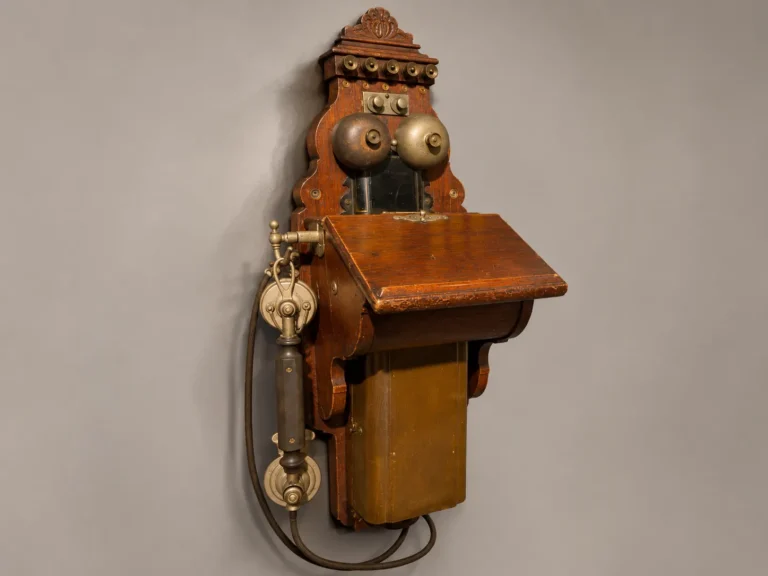
- Wooden wall telephone with twin metal bells. Thomas Quine (CC BY 2.0) → CC BY-SA 4.0
How the museum developed in the Plantage
The museum occupies the Plancius building. The Dutch monuments register dates it to 1874–1876 and describes a civic association building with a concert hall and meeting rooms. Its broad plastered front and trio of entrances belong to that earlier use. The height of the façade can make it look like an exhibition spread over several storeys, but the visitor route is at ground level. Looking up from the pavement gives you a sense of the building before you go inside.
Former members of the Dutch resistance helped establish the foundation in 1984. The museum’s history traces its move to the Plantage and the opening of Junior in 2013. The museum reopened its redesigned main exhibition in December 2022, with more space for personal accounts and for choices made under occupation. That development explains why its permanent displays include documents and possessions from bystanders, people facing persecution and others whose choices differed.
The Plantage is easily reached from Amsterdam Centraal. It is worth treating the museum as your main visit in this part of the city, then deciding how much you want to add. A short walk towards the waterfront can lead to the National Maritime Museum, and a visit to the nearby Hortus Botanicus fits a quieter afternoon. Allow space between reservations if you want time to absorb what you have seen.
Visitor tip: Take a moment outside before you make your next stop. The bench or garden break you plan into the afternoon can give your group time to talk about the exhibition.
Five things to notice at the Dutch Resistance Museum
1. Six turning points change the pace of the exhibition
The exhibition timeline puts the invasion, an expansion of resistance, collaboration, increasing persecution and liberation into six sections. The large projections explain events outside the room and help date the smaller stories round them. Look at the dates on two neighbouring displays before assuming they refer to conditions at the same point in the war. What a person could learn or decide in 1940 was shaped by circumstances that changed throughout the occupation.
The exhibits make those changes concrete. A document from the first years of occupation can sit within a very different kind of account from one dating to the final winter. Take the February Strike as one example. The Amsterdam City Archives explains why people struck in February 1941 in protest over the persecution of Jewish Amsterdam residents. Seeing a particular act against the timeline puts it alongside the events that prompted it and helps you see what followed.
Visitor tip: Pick one period you want to understand more closely, then let yourself move faster through displays you already know.
2. The underground press depended on ordinary tools
The museum’s account of the underground press describes equipment from Jesse Printers, where Het Parool was produced in Amsterdam. It also records a press used for the Haarlem newspaper De Vonk. The collection puts the scale of this work in view. Typewriters, stacks of paper and printing machinery help a visitor think about the people involved in writing, editing, printing and passing newspapers from reader to reader.
The same material also explains why newspapers became important to readers. The official press was subject to occupation-era controls. Underground newspapers could bring people other accounts of the war and the choices facing them. Look at an issue date and the place of publication if that information is on a label. The newspaper makes more sense when you can connect the message it carries to the people who were expected to read it.
Visitor tip: Find one label that identifies the person or organisation behind an object. It can tell you more about why the museum selected the object than the appearance of the object alone.
3. Everyday possessions record the shortage of food
The museum’s collection includes jars of preserved food as well as letters, clothing and photographs. Objects such as these help explain how war reached kitchens and shops. In the last winter of the occupation, hunger became severe in the western Netherlands. A container that still looks ordinary can help you imagine what it meant to keep food for a household at a time when access to supplies was becoming uncertain.
Read the names and dates on the displays about scarcity, then look for an object with a connection to someone in the account. A typical food container can illustrate a general shortage. A container with a known history can also tell you who preserved its contents and in what circumstances. That focus on provenance runs through the collection and gives you a way to choose what to stop and read when there is more material than time.
Visitor tip: Leave time to read one short first-person account all the way through. Pause at the end rather than starting another audio stop immediately.
A look inside the Dutch Resistance Museum
4. Junior puts four real childhoods side by side
The Junior exhibition begins with a short introductory experience and leads into a reconstructed square. Eva, Jan, Nelly and Henk are the four voices you meet there. Eva was Jewish and experienced persecution, Jan’s parents were in the resistance, Nelly joined the youth organisation of the Dutch Nazi party and Henk came from a family navigating everyday life. Photos and objects anchor the stories in what the children experienced at the time.
The arrangement makes it possible to compare accounts without treating the children’s circumstances as interchangeable. Listen to one account first and then let a child choose a second based on a question it raised. The exhibition includes material about what happened to the four after the war and a section on other countries. Reading our Anne Frank House visitor guide alongside this one is useful if you are planning a separate visit to the house and want to leave enough time for both.
Visitor tip: Text and sound in Junior are available in Dutch and English. Give an adult a chance to read ahead if a child wants to know what the next room contains.
5. The former-colonies exhibition extends the timeline
The museum’s permanent exhibition about the former Dutch colonies takes the war to Indonesia, Suriname and the six Dutch Caribbean islands. It follows more than thirty people’s stories. The exhibition describes Japanese occupation in Indonesia and anti-colonial resistance, as well as the roles of Suriname and the Dutch Caribbean in supplying the Allied war effort. Its perspectives are rooted in the different places it covers.
The accounts continue beyond 1945 into questions of independence and decolonisation. That makes the order of a visit important. If you have only followed the chronology of occupied Amsterdam, take a moment at the entrance to this section to check the places and their dates. The museum’s historical resources let you read further about individual regions before or after a visit. Keeping the sections distinct makes both easier to understand.
Visitor tip: For a short visit, choose one place in the former-colonies gallery and follow its story into the years after the war.
Street View on Plantage Kerklaan
Open the panorama in Google Maps
Ten practical tips for your visit
- Check the ticket inclusions. The booking calendar on this page offers admission and the audio guide. The museum’s ticket information explains access to Junior, discounted tickets and accepted passes. Check the terms for your ticket type when booking.
- Go to Plantage Kerklaan 61. The museum is diagonally opposite ARTIS. Tram 14 normally serves the Artis stop. Check the GVB journey planner from your starting point.
- Check hours for the date you choose. The usual hours are 10.00 to 17.00. The official times list exceptions including New Year’s Day, King’s Day and Christmas Day.
- Start with one route. Allow about 90 minutes for a selective tour of the main exhibition and more time if you want to see Junior or the former-colonies exhibition. Follow the visual guide to locate the entrances.
- Check the available languages. The main audio guide includes English, Dutch, German, French, Italian, Spanish and Portuguese. Junior’s displays and audio are in English and Dutch.
- Ask about school groups when visiting Junior. They have priority for their learning activities on weekdays during school hours. The Junior page explains how to ask about bookings. A weekend is another option.
- Use the accessibility information before you go. The main route is at ground level. Check the accessibility guide for the accessible toilet, wheelchair use, tactile routes and details on where the Junior route differs.
- Allow for sound and dark spaces. The route includes projections, changes in lighting and triggered sounds. Check the museum’s visual guide if you want to prepare for those transitions.
- Pair the visit with a nearby stop at your own pace. The Hortus, NEMO Science Museum and the Amsterdam canals are alternatives depending on your interests and the time left in your day.
- Leave a gap before your next reservation. If your next day includes Dam Square, the Rijksmuseum or a canal cruise, put those visits in a separate time block. That gives you room to stay longer at the museum or take a break.
Frequently asked questions
Does the Dutch Resistance Museum ticket include Junior?
Yes. Museum admission covers both the main museum and Resistance Museum Junior, which are in the same building. Junior has a separate entrance within the museum. Follow the markings partway through the main exhibition and check the museum’s guidance if you expect to arrive when school groups use the route.
Is the audio guide available in English?
Yes. Admission includes a main audio guide and English is one of its languages. The main exhibition also has English text. Junior has its own Dutch and English text and audio at the displays. You can visit Junior using those exhibits without following the main audio tour.
Is Resistance Museum Junior suitable for young children?
The museum’s Junior page recommends it from age nine. It covers persecution, resistance, collaboration and everyday life through the experiences of four children. Consider the topics and sounds when deciding whether to go with a younger child. The museum’s preparation guide gives examples of what visitors will encounter.
How much time do I need at the Dutch Resistance Museum?
Allow about 90 minutes for a first visit focused on the main exhibition. Plan around two hours if you want to combine that with a visit to Junior or to the former-colonies galleries. You can choose individual audio stories and read at your own pace, so the time depends on how much you want to see.
Is the Dutch Resistance Museum wheelchair accessible?
The main museum is at ground level and has an accessible toilet and wheelchair-accessible display cases. Some points in Junior are less accessible. Use the museum’s accessibility page to check the current facilities and contact it if you want help planning your visit.
Sources
Visitor information checked on 22 November 2026. The gallery images are illustrations based on the photographic references. Some object references were taken before the exhibition redesign.
- Dutch Resistance Museum · The Netherlands in World War II
- Dutch Resistance Museum · Resistance Museum Junior
- Dutch Resistance Museum · Accessibility
- Dutch Resistance Museum · Visual preparation guide
- Verzetsmuseum · Geschiedenis van het museum
- Dutch Resistance Museum · Our collection
- Dutch Resistance Museum · Historical resources
- Dutch Resistance Museum · The former Dutch colonies
- Dutch Resistance Museum · Address and opening hours
- Dutch Resistance Museum · Tickets and admission
- Dutch Resistance Museum · The underground press
- Amsterdam City Archives · February Strike
- Rijksdienst voor het Cultureel Erfgoed · Plancius
- GVB · Journey planner