
When you explore the De Pijp neighborhood in Amsterdam, you encounter a massive brick building that once served as the primary production facility for a globally recognized beer brand. Today, this industrial complex functions as the Heineken Experience, a large-scale museum and corporate visitor center. The site offers a deep dive into the industrial heritage of the Dutch capital. You can examine original copper brewing kettles, understand the specific fermentation processes, and witness how the company transitioned from a local enterprise to an international exporter. This article explains the factual history of the building, the brewing techniques developed here, and what you encounter inside the Heineken Experience today.
In this blog:
The Historical Origins Of The Brewery
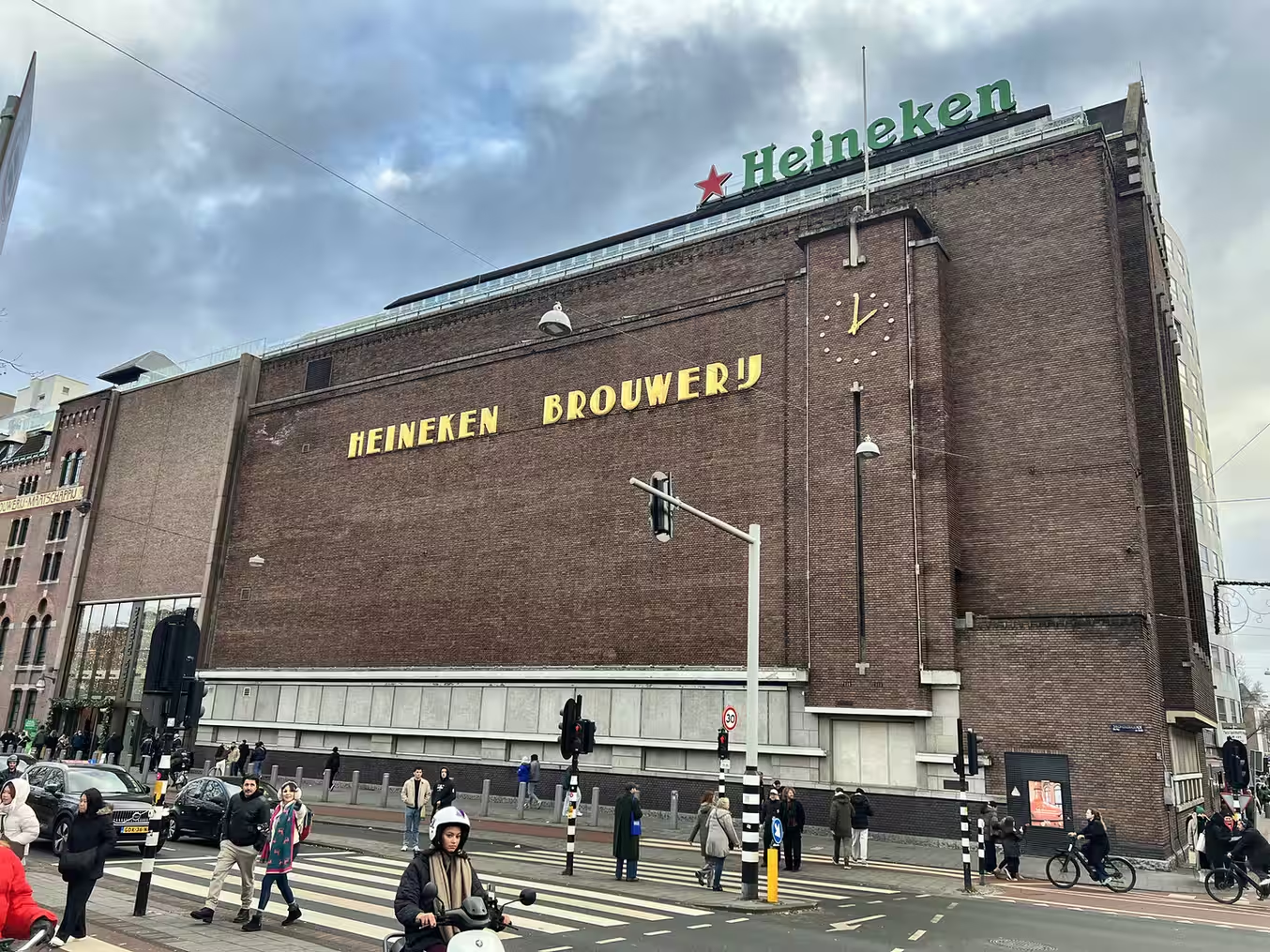
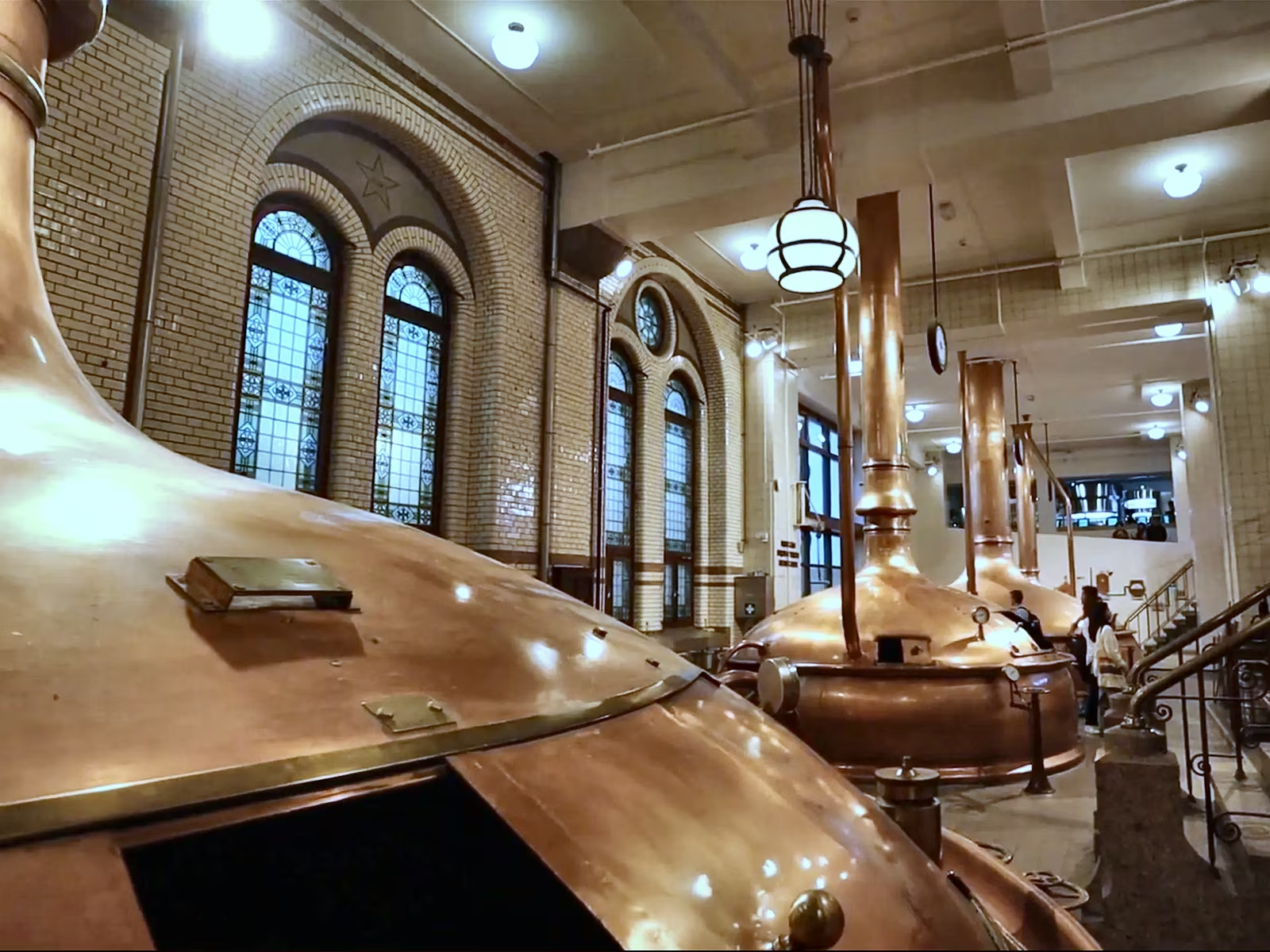
Gerard Adriaan Heineken laid the foundation for his company in 1864 when he purchased an existing brewery named De Hooiberg in the center of Amsterdam. As his business expanded, he required a much larger industrial space to accommodate new brewing technologies and higher production volumes. In 1867, he commissioned the construction of a completely new, state-of-the-art brewing facility just outside the historic city walls. This massive brick complex arose on the Stadhouderskade, an area that was rapidly developing during the industrial revolution. The architecture reflects the pragmatic industrial design of the late nineteenth century, characterized by robust brickwork, large iron-framed windows, and tall chimneys.
Tip: The historic brewhouse of the Heineken Experience, located at Stadhouderskade 78, is officially registered as a Dutch national monument under monument number 527808.
Over the decades, the facility continuously expanded to meet the growing international demand for exported Dutch beer. The company acquired adjacent plots of land and constructed additional silos, storage warehouses, and malting floors. You can still see the distinct architectural phases when you look at the exterior facades along the street. The building survived two world wars and numerous economic fluctuations, constantly adapting its internal layout to house larger, more efficient brewing equipment. For over a century, the distinct smell of boiling malt and hops dominated the surrounding residential streets of the De Pijp district.
How to get there?
Plan my journey


The Discovery Of The Famous A-Yeast
The most crucial scientific development in the history of the company took place inside the laboratory of the Stadhouderskade facility. In the late nineteenth century, most European brewers struggled with inconsistent beer quality due to wild, unpredictable yeast strains. To solve this problem, the company established a dedicated laboratory and hired a prominent scientist named Dr. Hartog Elion. He was a former student of the French microbiologist Louis Pasteur, who had recently made groundbreaking discoveries regarding fermentation and pasteurization. Dr. Elion utilized Pasteur’s theories to systematically analyze and cultivate various yeast cultures within the Amsterdam brewery.
Tip: Dr. Hartog Elion successfully isolated the specific Heineken A-yeast for the brewery in the exact year 1886.
The isolation of this specific A-yeast strain revolutionized the entire production process. It allowed the brewers to produce a bottom-fermented pilsner with a highly consistent flavor profile, characterized by a crisp taste and slight fruity notes. Because this specific yeast proved so reliable and resilient, it became the standard for all breweries owned by the company worldwide. The brand carefully guards the original biological culture, storing it in secure vaults and continuously propagating it to supply their modern, large-scale factories. When you walk through the historical sections of the Heineken Experience, you see the reconstructed laboratory where this exact scientific breakthrough occurred, complete with nineteenth-century microscopes and glass cultivation tubes.
Heineken Experience (Amsterdam)
Transition From Factory To Visitor Center
By the late twentieth century, the immense commercial success of the brand created severe logistical problems for the original Amsterdam facility. The De Pijp neighborhood had become highly urbanized and densely populated, leaving no room for further industrial expansion. Heavy delivery trucks carrying grain, empty bottles, and full kegs caused constant traffic congestion on the narrow residential streets. The municipal government and the brewery management mutually agreed that operating a massive chemical and industrial plant in the city center was no longer viable or safe. The company built massive, highly automated brewing facilities in provincial towns like Zoeterwoude and ‘s-Hertogenbosch, where space and highway access were abundant.
Tip: The original commercial brewing operations at the Stadhouderskade facility officially ceased in the year 1988.
Following the closure of the active production lines, the company decided to preserve the historical core of the building rather than demolish it. In 1991, they opened the doors to the public, offering simple, informative guided tours through the silent brewhouses. As global tourism in Amsterdam increased, the company realized the massive marketing potential of the historic site. In 2001, the facility underwent a comprehensive renovation and officially rebranded as the Heineken Experience. The management replaced the traditional, quiet museum format with highly interactive, multimedia installations designed to engage a younger, international demographic while retaining the authentic copper kettles and architectural heritage.
Discover our Amsterdam Classics on Spotify!
Dutch classics about Amsterdam
Exploring The Modern Interactive Tour
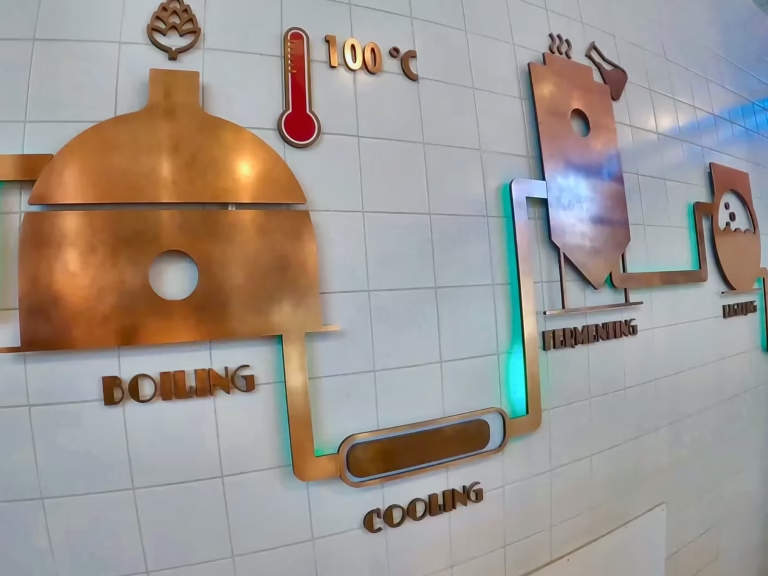
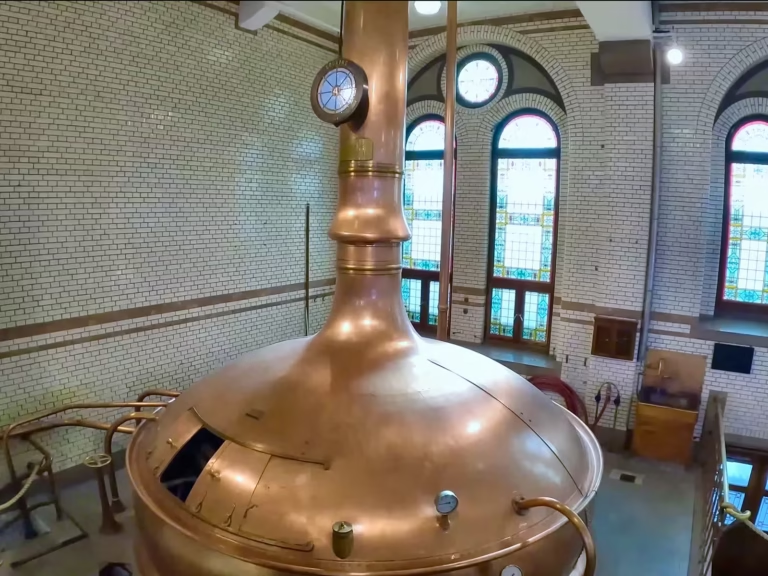
When you enter the Heineken Experience today, you embark on a self-guided route that takes you through the distinct phases of the beer-making process. The initial rooms focus entirely on the raw ingredients: water, barley, hops, and the proprietary A-yeast. You can physically touch the roasted barley and smell the different hop varieties used in the recipe. The route then leads you directly into the most visually striking area of the complex: the historic brewhouse. Here, massive, highly polished copper kettles stand in their original positions. You can look inside these enormous vessels where millions of liters of wort were boiled over the course of the twentieth century.
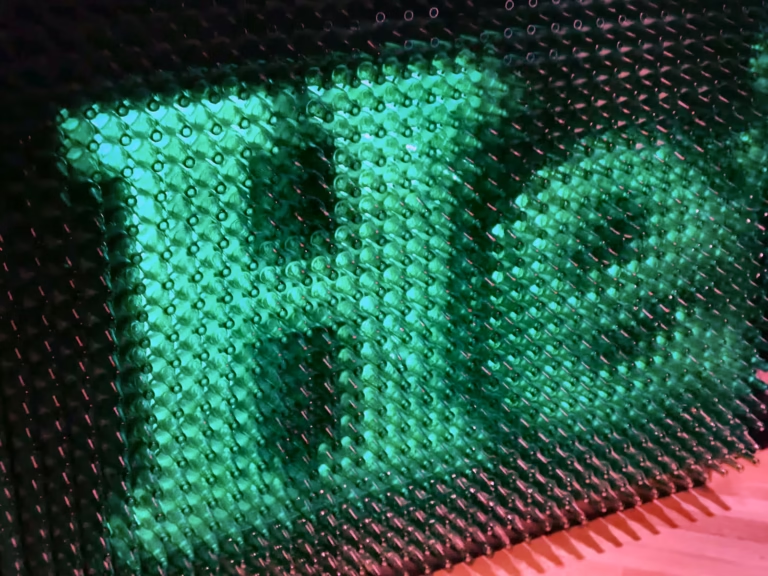
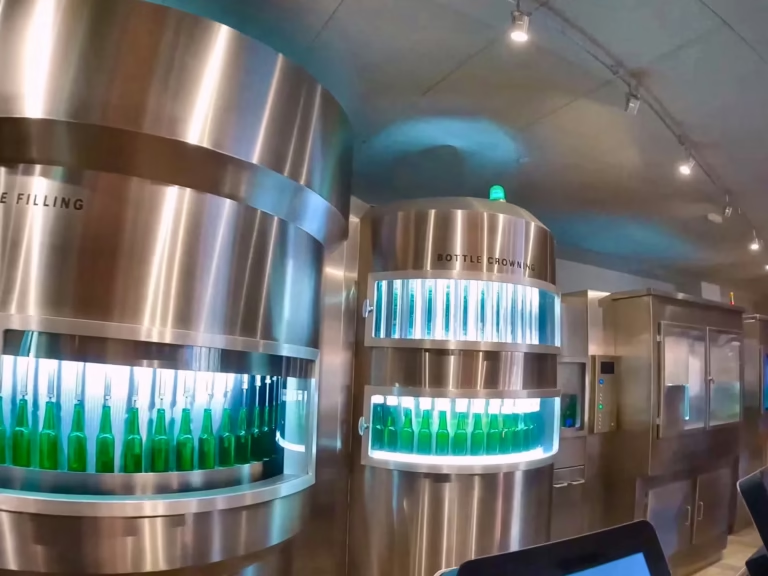
The second half of the tour shifts away from historical artifacts and relies heavily on modern audiovisual technology. You enter a sensory simulation room where moving floors, heat lamps, and water sprays mimic the physical experience of being brewed and bottled on a factory line. Following this, you encounter various interactive gaming stations focused on the brand’s global sports and music sponsorships. The Heineken Experience route systematically educates visitors on the correct way to pour a draft beer, emphasizing the importance of a clean glass and the precise angle of the pour to create the perfect protective foam head.

The Historic Shire Horses In The City Center
An unexpected element of the Heineken Experience is the presence of live animals within the dense urban center of Amsterdam. Long before the invention of motorized trucks, the brewery relied entirely on heavy draft horses to transport wooden kegs to pubs across the city. The company specifically favored Shire horses, a massive and highly muscular British breed capable of pulling immense weight over the cobbled streets and steep canal bridges. While motorized transport completely took over the commercial distribution in the mid-twentieth century, the brewery chose to maintain a small stable of these historic horses at the Stadhouderskade location for ceremonial and promotional purposes.
You can visit these active stables during your tour through the Heineken Experience. The stables are located on the ground floor and maintain the exact structural dimensions and ironwork from the late nineteenth century. The dedicated caretakers maintain a strict schedule for the animals, ensuring they receive proper exercise, grooming, and veterinary care. On specific days, you can see the horses being harnessed to a traditional wooden beer wagon. The drivers, dressed in historical brewery uniforms, navigate the wagon through the modern traffic of Amsterdam, delivering symbolic kegs to select local pubs and keeping a centuries-old transportation method visible in the public space.
Plan your visit to Heineken Experience Amsterdam today
Discover the rich history and modern reality of the former brewery in Amsterdam. This guide details the nineteenth-century origins, the scientific breakthroughs in brewing, and the interactive elements of the current visitor center. Learn about the preserved architecture and the enduring traditions maintained at this specific historical site.
Details For Planning Your Visit
To access the Heineken Experience, you must purchase your entry tickets in advance through their official digital channels, as the venue operates with strictly timed entry slots to manage the massive daily flow of tourists. The complex does not sell tickets at a physical box office at the door. You will find the main entrance situated directly on the Stadhouderskade, which is easily accessible via the city’s extensive public tram network. The entire facility is completely cashless, requiring you to use physical debit or credit cards or digital payment applications on your smartphone for any purchases in the gift shop or the final tasting room.
The complete self-guided route typically takes an average visitor about ninety minutes to complete. The final section of the Heineken Experience consists of a large, brightly lit tasting room where your entry ticket entitles you to two freshly poured glasses of pilsner. In this area, the staff provides a brief, structured tasting explanation, teaching you how to properly assess the color, smell, and bitterness of the beverage. If you are under the legal Dutch drinking age of eighteen, the staff strictly enforces a policy of serving only non-alcoholic beverages or water in this final section.
Take a virtual tour with Google Streetview!
Frequently Asked Questions (FAQ)
What exactly is the Heineken Experience?
It is a corporate museum and interactive visitor center located in the original nineteenth-century brewing facility in Amsterdam. It offers a self-guided tour covering the history of the company, the brewing process, and the modern brand.
Is the facility still an active brewery?
No, commercial beer production at the Stadhouderskade location completely stopped in 1988 because the facility became too small for the growing company and delivery trucks could no longer navigate the busy city center.
Are children allowed inside the museum?
Minors are permitted to enter the facility when accompanied by an adult, but they are not served any alcoholic beverages at the end of the tour due to strict Dutch drinking age laws.
How long does a visit typically take?
Most visitors spend approximately ninety minutes walking through the historical rooms, participating in the interactive multimedia installations, and attending the final tasting session.

Leave a Reply