
Brown cafés in Amsterdam are traditional pubs known for wooden interiors and an informal atmosphere. Some have long histories as neighbourhood meeting places. This guide explains their character, typical food and drinks, and the cafés covered below.
In this guide
The Origins Of Traditional Brown Cafés In Amsterdam
The history of Traditional Brown Cafés in the city dates back several centuries, running parallel to the economic development of the Dutch capital. During the seventeenth century, the city expanded rapidly due to international maritime trade and a massive influx of merchants and laborers. Many working-class citizens lived in small, unheated, and cramped houses, making the local neighborhood pub an essential and daily gathering space for warmth, news, and social interaction. People visited these simple establishments to drink beer or jenever, a traditional Dutch liquor made from malt wine and juniper berries. The dark interiors developed entirely naturally over time due to the heavy smoke from pipes, cigars, and cigarettes, combined with the extensive use of dark wooden furniture and wall paneling. This consistent, decades-long exposure to tobacco smoke and general aging gave the walls and ceilings their characteristic brown color, which ultimately led to the official naming of these establishments.
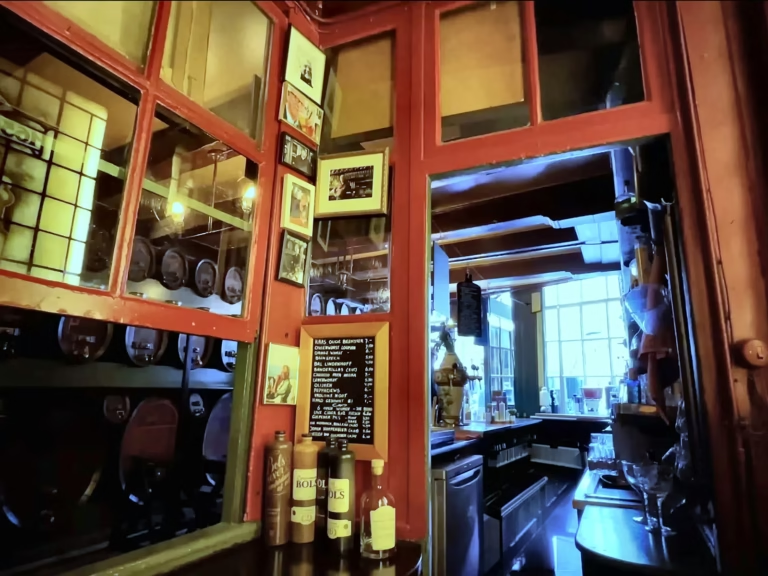
Several of these historic pubs fiercely claim the title of being the oldest in the city, but verifying exact establishment dates heavily relies on municipal archives, property deeds, and old liquor licenses. City records show that the earliest forms of these pubs operated strictly as tasting rooms, known locally as ‘proeflokalen‘, for adjacent jenever distilleries. Customers would stand directly at the wooden bar to taste the freshly distilled spirits before purchasing a larger quantity in bulk. As municipal regulations changed and the hospitality industry evolved into a more leisure-based sector, these tasting rooms gradually transformed into the seating-based Traditional Brown Cafés you see functioning today. You can still recognize this distinct commercial history in venues that maintain strictly separated standing and seating areas, or those that still display massive, antique wooden liquor barrels on racks directly behind the bar.
Key Architectural And Interior Characteristics
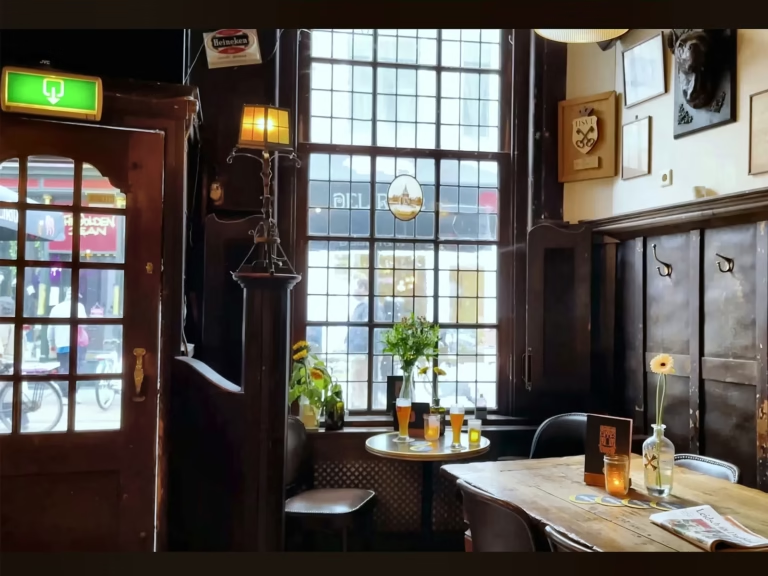
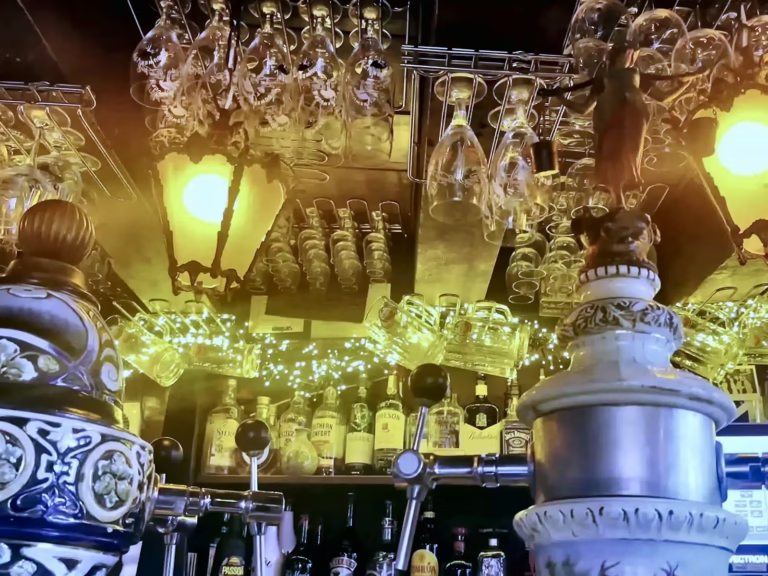
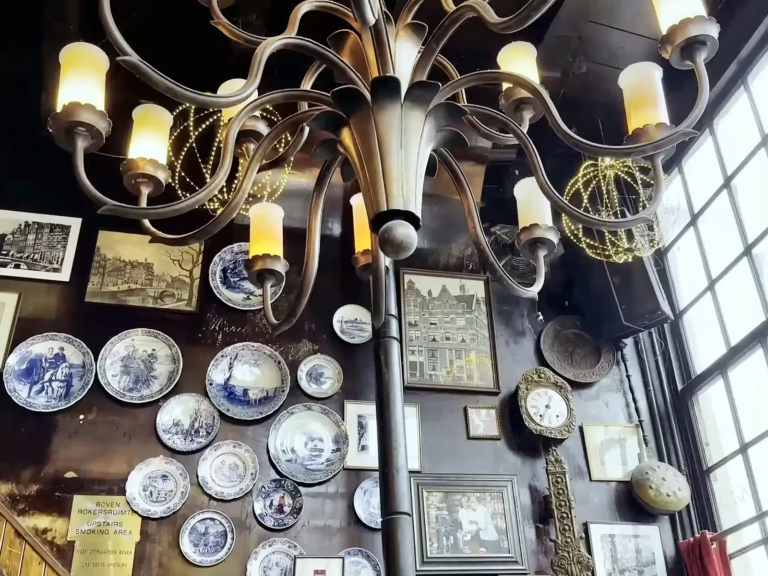
When you step inside Traditional Brown Cafés, you immediately notice specific architectural and interior elements that sharply distinguish them from modern bars or international pub chains. The floors often consist of wide, worn wooden planks or old stone tiles, and some historical venues still practice the centuries-old tradition of throwing fine sand on the floor. This sand originally served to absorb spilled drinks, mud from the streets, and chewing tobacco, making it easier to sweep the floor clean at the end of the night. The bars themselves are constructed from solid, dark mahogany or oak wood, often featuring a polished brass footrest and a thick countertop that shows the dents and scratches of decades of use. Lighting is kept deliberately low and atmospheric, utilizing small, warm lamps, stained glass windows, and sometimes even candles, rather than bright overhead fluorescent fixtures. You will rarely find modern television screens, arcade machines, or loud contemporary pop music in the oldest and most authentic establishments; the auditory focus remains strictly on human conversation and the clinking of glasses.
The layout of these pubs is designed to foster a sense of equality and direct communication among all patrons. The physical space is usually quite small, forcing customers to sit close together at small, round wooden tables covered with traditional Persian rugs that act as tablecloths. These rugs were historically used to absorb spilled beer and hide stains, and they remain a visual hallmark of the authentic Dutch pub experience. The bartender functions not just as a server, but as a central host who monitors the mood of the room, facilitates conversations between strangers, and pours drinks with practiced efficiency. Because the spaces are so intimate in Traditional Brown Cafés, you will often find that the line between different social classes blurs completely when you stand at the bar. Bank directors, local construction workers, students, and tourists all share the same limited space, ordering the exact same beverages and adhering to the same unwritten rules of pub etiquette.
Five brown cafés in Amsterdam
- Café Hoppe Spui 18-20 (Centrum) cafehoppe.com
- Café ‘t Papeneiland Prinsengracht 2 (Jordaan) papeneiland.nl
- Café de Sluyswacht Jodenbreestraat 1 (Centrum) sluyswacht.nl
- Café Lowietje 3e Goudsbloemdwarsstraat 2 (Jordaan) cafelowietje.nl
- Café ‘t Smalle Egelantiersgracht 12 (Jordaan) t-smalle.nl
Brown cafés: beer, bitterballen and apple pie
The Traditional Food And Drink Menu
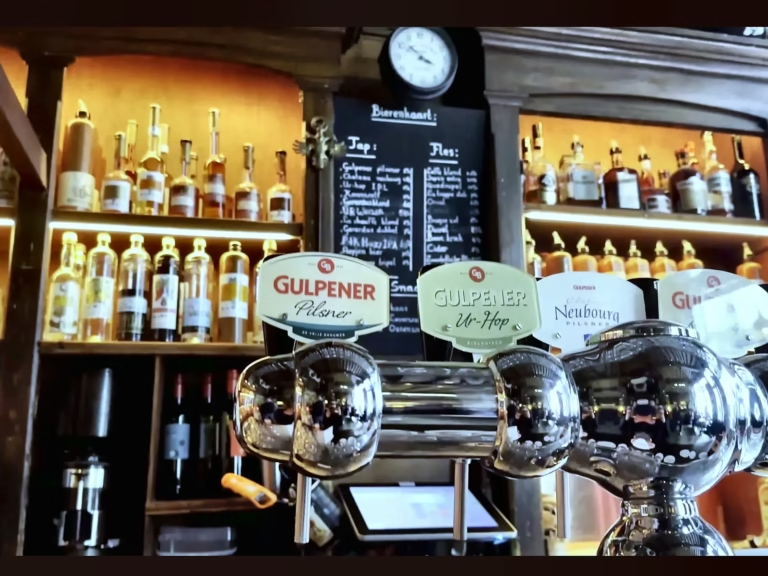
The beverage menu in Traditional Brown Cafés is deliberately straightforward, focusing on quality and historical continuity rather than modern mixology. The cornerstone of the drink selection is the local pilsner, typically sourced from historical Dutch breweries. The bartender serves the beer in small, ribbed glasses, filling them to the very top before slicing off the foam with a wet plastic or wooden spatula. This precise pouring technique creates a protective seal of foam that keeps the beer fresh and prevents oxidation. Alongside beer, jenever remains the most prominent spirit. You can choose between ‘jonge’ (young) jenever, which has a neutral taste similar to vodka, and ‘oude’ (old) jenever, which is smoother, malty, and slightly sweet due to aging in oak barrels.
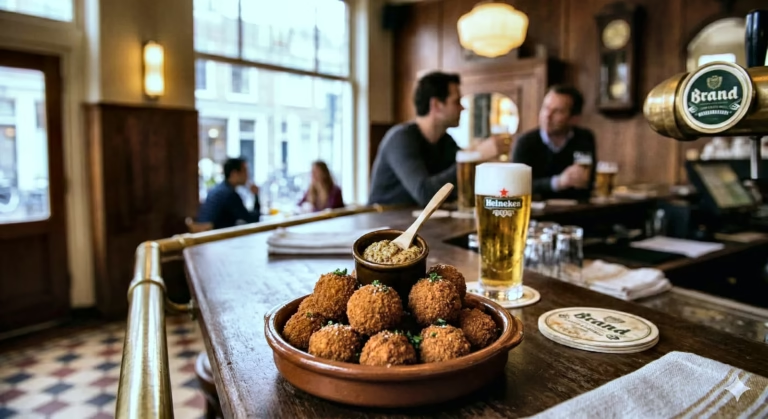
If you want to experience a highly traditional drinking custom, you should order a ‘kopstootje’. This translates to ‘little headbutt’ and consists of a glass of jenever served immediately next to a glass of beer. The bartender fills the tulip-shaped jenever glass so full that the liquid forms a convex meniscus over the rim. To drink it properly, you must bend over the bar and take the first sip with your hands firmly behind your back. Following the drinks, you can order classic Dutch bar snacks that have remained unchanged for decades in Traditional Brown Cafés. The selection usually includes bitterballen with strong mustard, small cubes of young or aged Gouda cheese, and ossenworst, which is a traditional raw beef sausage spiced with mace, pepper, and cloves.
ESCAPE THE CITY!

Westerpark Amsterdam: green space and the Westergas complex
Westerpark Amsterdam brings green space and former industrial buildings together. Walk through the park, then explore the Westergas complex to see how…
Vondelpark Amsterdam: walks, cafés and park history
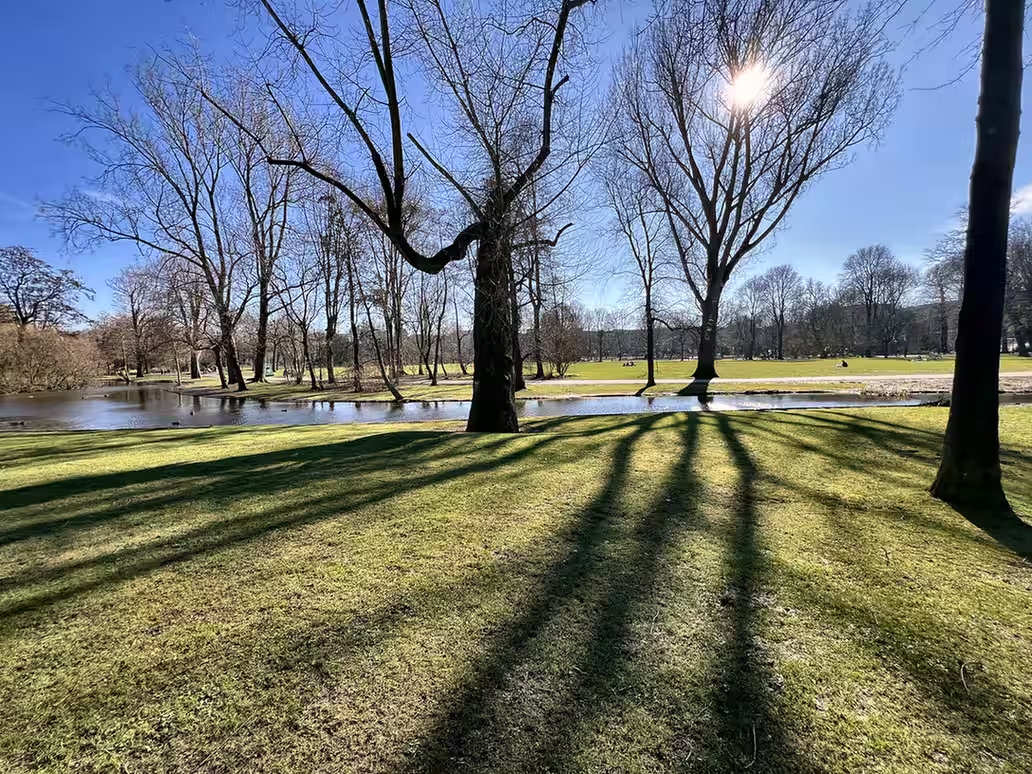
Vondelpark Amsterdam is a place to walk, cycle or pause near Museumplein. Its lawns, ponds and winding paths are used by residents…
Oosterpark Amsterdam: walks, monuments and history
Oosterpark Amsterdam combines walking paths and lawns with monuments that invite a longer look. This guide covers the park’s design, history and…
Famous Traditional Brown Cafés In The City Center
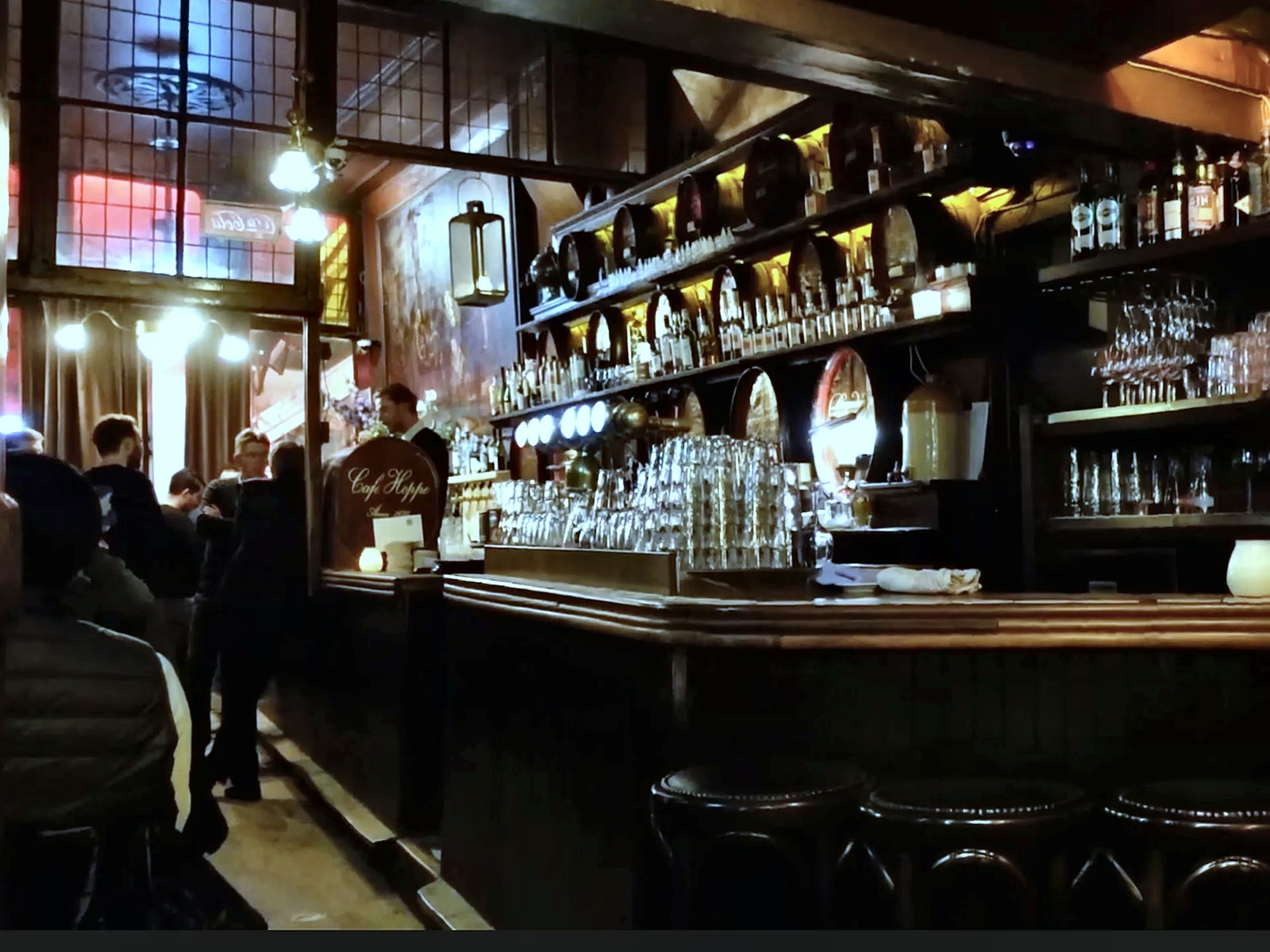
The city center houses several famous Traditional Brown Cafés that have carefully maintained their original state and atmosphere for centuries. One of the most historically documented locations is Café Hoppe, situated near the lively Spui square right in the bustling heart of the capital. The establishment originally opened its doors in 1670 as a jenever tasting room and has since served a wide variety of customers, ranging from local dock workers to prominent politicians and even members of the Dutch royal family. The venue officially consists of two separate sections: the original, strictly standing area and a newer seating area that was incorporated into the business during the twentieth century. The standing section retains its original architectural layout, including the historical sand scattered on the floor and the ancient, numbered liquor barrels lining the dark wooden walls.
Tip: The historical standing room of Café Hoppe is situated at Spui 18, which is registered as an official national monument.
Another well-known and highly respected location is Café De Druif, located on the Rapenburgerplein in the quieter eastern part of the city center. Historical narratives and local legends suggest the pub has roots going back to the late sixteenth century, with persistent stories claiming that the famous Dutch naval hero Piet Hein was a regular customer before his maritime voyages. While the exact year of its very first informal opening is debated among historians, municipal archives confirm the establishment received its official liquor license early in the seventeenth century, specifically in 1631. The building’s interior remains remarkably small and intimate, preserving the authentic, unpolished feel of a neighborhood pub originally meant for local dock workers and sailors from the nearby shipyards. Today, you can sit at the same worn wooden bar and order the classic Dutch drinks that have been served in that exact room for many generations.

Where André Hazes And Other Legends Performed
Beyond the medieval city center, the Jordaan and De Baarsjes neighborhoods hold a entirely different type of cultural history for Traditional Brown Cafés. These working-class areas became the absolute epicenter for the ‘levenslied’, a specific genre of highly emotional, sentimental Dutch folk music. Many famous Dutch singers started their musical careers by performing live in these local, smoke-filled neighborhood pubs. André Hazes, arguably one of the most successful and beloved artists in Dutch music history, has a direct and well-documented connection to this specific pub culture. Before he achieved massive national fame, Hazes worked multiple heavy blue-collar jobs during the day and spent his evenings working in the local hospitality sector. He gained a formidable local reputation as a singing bartender, entertaining his guests with emotional songs while serving beers in his neighborhood pub.
Tip: Before his national breakthrough in 1976, André Hazes performed as a singing bartender at Café De Krommerdt, situated on the corner of the Witte de Withstraat and Jan Evertsenstraat (the café is permanently closed).
The Jordaan district features several operational pubs that are specifically dedicated to maintaining this vibrant musical heritage. Café Nol is a prime example of a venue that fully embraces the local folk music tradition and the extravagant Jordaan aesthetics. Unlike the dark, subdued, and quiet pubs in the historic center, this specific location features bright red awnings, heavily mirrored walls, crystal chandeliers, and loud, continuous sing-along music from prominent local artists like Johnny Jordaan, Tante Leen, and Willy Alberti. Another notable venue with a strong media connection is Café Lowietje, which gained extensive national television fame as a primary filming location for the popular and long-running Dutch police series Baantjer. Both venues represent a vital and energetic part of the city’s cultural identity, proving that Traditional Brown Cafés serve not just as places to drink, but as fundamental stages for local entertainment and community bonding.
Tip: Café Nol opened its doors on July 1, 1966, and is located at Westerstraat 109 in the Jordaan district.
Brown cafés in Amsterdam: history, drinks and places to visit
Brown cafés in Amsterdam are traditional pubs known for wooden interiors and an informal atmosphere. Some have long histories as neighbourhood meeting places. This guide explains their character, typical food and drinks, and the cafés covered below.
How To Experience Traditional Brown Cafés Today
When you plan to visit Traditional Brown Cafés, you should adjust your expectations regarding service protocols and overall atmosphere. These historic venues operate strictly on a walk-in basis, and it is highly uncommon, and often impossible, to make table reservations for a standard visit. You simply walk in, find an available spot at the heavy wooden bar or at a small table, and wait for the bartender or server to approach you. The service style is typically efficient, fast, and very direct, lacking the extensive formalities or polished scripts you might encounter in modern cocktail bars or high-end restaurants. While the interiors remain firmly stuck in the past, payment methods have fully modernized; while cash was the absolute standard for decades, you can now securely use debit and credit cards in almost all of these locations.
To fully appreciate the diversity of these historic pubs, you should visit several different neighborhoods to observe the distinct variations in architectural style and local clientele. You can start your day in the historic center to see the centuries-old, quiet tasting rooms with their sand-covered floors and intellectual atmospheres. As the afternoon progresses into evening, you can easily move towards the Jordaan neighborhood to experience the much more vocal, brightly lit, and music-driven venues. You should always respect the local customs by keeping your group sizes relatively small, as the physical spaces inside these historical buildings are often cramped and not suited for large, loud parties. By quietly observing the regular customers, ordering the local drinks, and engaging in polite conversation, you actively participate in a centuries-old urban tradition that continues to shape the social fabric of the Dutch capital.
Take me to a Brown Cafe in Amsterdam!
Frequently Asked Questions (FAQ)
What defines Traditional Brown Cafés in Amsterdam?
They are historic local pubs characterized by their dark wooden interiors, which were historically stained by centuries of tobacco smoke. They serve traditional Dutch drinks like beer and jenever in a simple, community-focused setting without modern distractions.
Are children allowed inside Traditional Brown Cafés?
While there is no strict national law banning minors from entering pubs during the day, these venues are primarily adult drinking establishments. It is generally acceptable to bring children during quiet afternoon hours, but evening visits are strictly tailored for adults.
Do Traditional Brown Cafés serve full meals?
No, the vast majority of these pubs do not have commercial kitchens. They strictly serve traditional bar snacks such as bitterballen, cheese cubes, and ossenworst. If you want a full dinner, you will need to visit a restaurant or a modern dining café.
Who was André Hazes and why is he connected to these pubs?
André Hazes was one of the most famous singers of Dutch folk music, known as the ‘levenslied’. Before his massive commercial success, he worked as a singing bartender in a local pub in Amsterdam (De Krommerdt, it is permanently closed now) , firmly rooting his musical legacy in the city’s traditional pub culture.

Leave a Reply