
The flower market in Amsterdam, known as the Bloemenmarkt, lines the Singel with stalls on fixed barges. Visitors come to browse tulip bulbs, flowers and souvenirs. This guide covers its history, seasonal products and what to check before taking bulbs home.
In this guide
The Historical Evolution of the Singel Market
The origins of the flower market in Amsterdam are tied to the city’s water-based logistics. Before 1862, the primary market for flowers and plants was located at the Sint-Luciënwal. However, due to urban changes and the need for more space, the market was moved to its current location on the Singel canal. This move was significant because it placed the market between the Koningsplein and the Muntplein, two major hubs in the city center. At that time, nurserymen from outside the city would sail their boats up the Amstel river to sell their products directly from the water.
Throughout the 19th and early 20th centuries, the flower market functioned as a wholesale and retail center where residents purchased trees, shrubs, and flowers. As the city modernized and land-based transport became the norm, the boats became permanently moored barges. This transition from a mobile water market to a permanent fixture on the canal defines the current aesthetic of the Bloemenmarkt. Today, it remains the only floating flower market in the world, maintaining a tradition that has spanned over 160 years.
Tip: The Amsterdam Floating Flower Market was officially established at its current Singel location in the year 1862.


Architecture and Floating Structure
The physical layout of the flower market is distinct from any other retail space in Amsterdam. The market consists of approximately 15 floating barges. These structures are moored to the quay on the southern side of the Singel canal. While they appear to be standard shops from the street side, they are actually supported by floating platforms. This design was a practical solution to the lack of available land space in the densely built-in medieval city center.
Each stall or barge in the flower market is designed with glass-roofed structures, reminiscent of traditional Dutch greenhouses. This ensures that the plants and flowers receive sufficient natural light while being protected from the North Sea climate. The interior of these barges is often deeper than it appears from the sidewalk, extending over the water. This architectural choice allows the flower market to maintain a high density of vendors without obstructing the narrow streets of the Grachtengordel (Canal District).
Tip: The flower market is situated on the Singel canal between house numbers 610 and 630.
Amsterdam Flower Market
Regulations for Exporting Flower Bulbs
For many visitors, the primary reason to visit the flower market is to purchase tulip bulbs. However, it is essential to understand the legal requirements for transporting these items across international borders. The Netherlands Food and Consumer Product Safety Authority (NVWA) sets strict guidelines regarding the export of plant materials. Bulbs purchased at the flower market must be accompanied by a phytosanitary certificate if they are being taken to countries outside the European Union, such as the United States or Canada.
This certificate proves that the bulbs have been inspected and are free from pests and diseases. Most vendors at the flower market sell pre-packaged bulbs that already feature a stamp or certificate of health. It is a verifiable fact that without this official documentation, customs officials in many countries may confiscate and destroy the bulbs upon arrival. Therefore, checking for the “Export Ready” seal is a necessary step for any international traveler purchasing goods at the flower market.
Tip: Flower bulbs intended for export to the United States must carry a specific phytosanitary certificate issued by the Dutch plant protection service.

ESCAPE THE CITY!

Westerpark Amsterdam: green space and the Westergas complex
Westerpark Amsterdam brings green space and former industrial buildings together. Walk through the park, then explore the Westergas complex to see how…
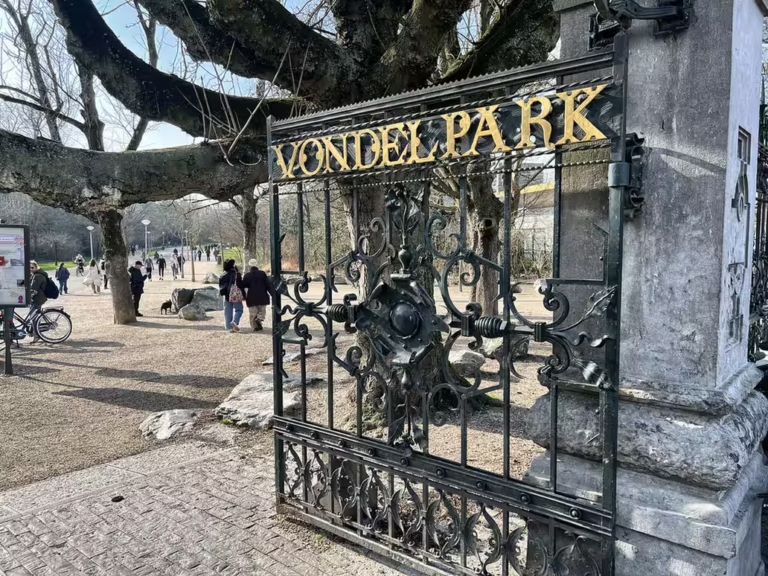
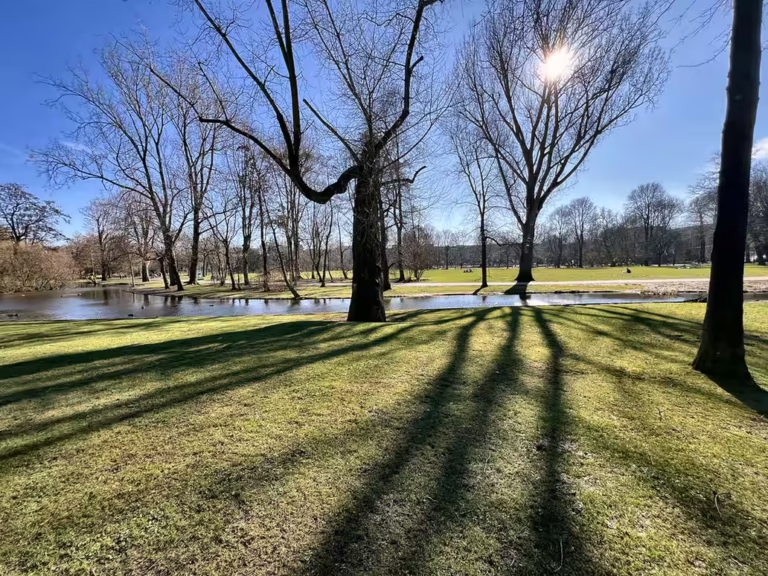
Vondelpark Amsterdam: walks, cafés and park history
Vondelpark Amsterdam is a place to walk, cycle or pause near Museumplein. Its lawns, ponds and winding paths are used by residents…
Oosterpark Amsterdam: walks, monuments and history
Oosterpark Amsterdam combines walking paths and lawns with monuments that invite a longer look. This guide covers the park’s design, history and…

Seasonal Availability and Varieties
The variety of goods at the flower market changes significantly with the Dutch seasons. While tulips are the most famous product, they are typically available as bulbs throughout the year. Fresh cut tulips are most abundant during the spring months, particularly from January to May. During the winter season, the flower market shifts its focus toward Christmas trees and seasonal greenery, a tradition that caters to the local Amsterdam population as much as to tourists.
In addition to tulips, the flower market offers a wide array of other flora, including lilies, narcissus, and various indoor plants. The market also serves as a hub for garden accessories and seeds. Because the Netherlands is one of the world’s largest exporters of flowers, the products found here are often sourced directly from the Aalsmeer Flower Auction, the largest of its kind globally. This ensures a constant rotation of stock and access to diverse species that reflect the current state of Dutch floriculture.


Surrounding Landmarks and Accessibility
The flower market is positioned in a high-traffic area of Amsterdam, making it easily accessible via public transport. It is a short walk from the Munttoren (Mint Tower), which was originally part of one of the main gates in Amsterdam’s medieval city wall. The proximity of the flower market to the Kalverstraat, the city’s primary shopping street, ensures a steady flow of foot traffic.
For those using the Amsterdam tram system, several lines stop in the immediate vicinity. Trams 2, 11, and 12 stop at the Koningsplein station, located at the western end of the market. The eastern end is near the Muntplein tram stop, served by lines 4, 14, and 24. This central positioning makes the flower market an integrated part of the city’s commercial and historical fabric, rather than an isolated tourist site.

Flower Market Amsterdam: the Bloemenmarkt on the Singel
The flower market in Amsterdam, known as the Bloemenmarkt, lines the Singel with stalls on fixed barges. Visitors come to browse tulip bulbs, flowers and souvenirs. This guide covers its history, seasonal products and what to check before taking bulbs home.
Cultural Significance in Amsterdam
The flower market represents more than just a place of commerce; it is a symbol of the “Tulip Mania” that gripped the Netherlands in the 17th century. While the market at the Singel was established later, it carries the legacy of the Dutch obsession with horticulture. It remains a point of interest in various historical surveys of the city and is frequently cited in urban planning studies as a successful integration of historic water use with modern retail needs.
The market has also been documented in various forms of media. It appears in several travel documentaries produced by the BBC and National Geographic regarding the history of the Netherlands. Furthermore, the flower market is a protected part of the Amsterdam canal ring, which is a UNESCO World Heritage site. This status ensures that the market’s unique floating character is preserved for future generations, maintaining the visual and functional link between the city and its canals.
Take a virtual tour with Google Streetview!
Frequently Asked Questions (FAQ)
What are the opening hours of the flower market?
The market is generally open Monday through Saturday from 09:00 to 17:30 and on Sunday from 11:00 to 17:30.
Can I buy fresh flowers at the market?
Yes, while bulbs are the most common item, several stalls at the flower market sell fresh-cut flowers and potted plants.
Is the flower market actually floating?
Yes, the stalls are built on fixed barges that float on the water of the Singel canal, although they are permanently moored to the quay.
Where is the flower market located?
It is located on the Singel canal in the center of Amsterdam, between the Muntplein and the Koningsplein.
Can I take tulip bulbs back to my country?
You can take bulbs to other EU countries without issue. For countries outside the EU, you must ensure the package has an official phytosanitary certificate.
Sources
- City of Amsterdam (Gemeente Amsterdam). (2024). Markets in Amsterdam: Bloemenmarkt.
- I amsterdam. (2024). Floating Flower Market (Bloemenmarkt).
- NVWA (Netherlands Food and Consumer Product Safety Authority). (2024). Exporting plants and plant products.
- Stadsarchief Amsterdam. (n.d.). De geschiedenis van de Bloemenmarkt op het Singel.
- UNESCO World Heritage Centre. (n.d.). Seventeenth-Century Canal Ring Area of Amsterdam inside the Singelgracht.
- Wikipedia contributors. (2024). Bloemenmarkt.

Leave a Reply