
This guide explores the multifaceted nature of Oosterpark, covering its transition from a 19th-century cemetery site to a modern urban sanctuary. You will learn about the park’s architectural heritage, the symbolic power of its national monuments, and its ecological diversity. Whether you are interested in the legacy of the National Slavery Monument or the peaceful walking paths designed by Leonard Springer, this article provides a factual and comprehensive overview of one of Amsterdam’s most cherished public spaces.
In this blog:
Historical Development of the Oosterpark
The history of the Oosterpark is inextricably linked to the rapid expansion of Amsterdam during the late 19th century. Before the park was established, the area was primarily characterized by polders and a large cemetery known as the Oosterbegraafplaats. As the city’s population surged, the demand for public green spaces grew, leading the municipality to repurpose the land for recreational use. In 1891, the transformation began under the guidance of renowned landscape architect Leonard Springer.
Springer’s vision was heavily influenced by the English landscape style, which favored natural-looking curves, expansive lawns, and strategically placed clusters of trees over the rigid symmetry of French gardens. The construction process was complex, requiring significant drainage work due to the marshy nature of the ground. By the time it officially opened to the public in 1894, the Oosterpark had become a symbol of modern urban planning, providing a democratic space where residents of the newly built Oosterparkbuurt could find respite.
Tip: The Oosterpark was officially opened to the public in 1891, though the completion of its primary landscaping features by Leonard Springer continued through 1894.
Throughout the 20th century, the park underwent several renovations to accommodate the changing needs of the local population. In the 1920s and 1930s, the surrounding area became a hub for intellectuals and artists, many of whom lived in the stately houses bordering the park. During the Second World War, the park suffered like much of the city, with trees being cut down for fuel during the “Hunger Winter.” However, post-war restoration efforts successfully returned the park to its former glory, reinforcing its status as a core component of Amsterdam’s green infrastructure.
How to get there?
Plan my journey

Landscape Design and Botanical Diversity
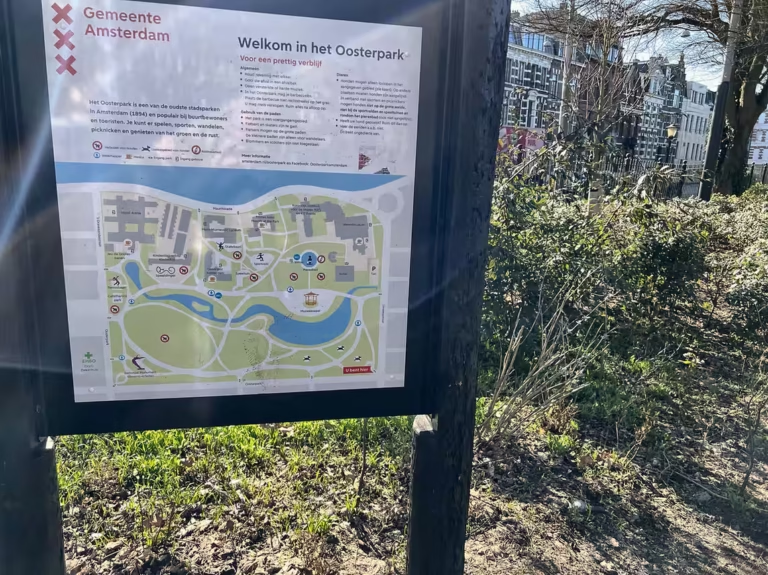
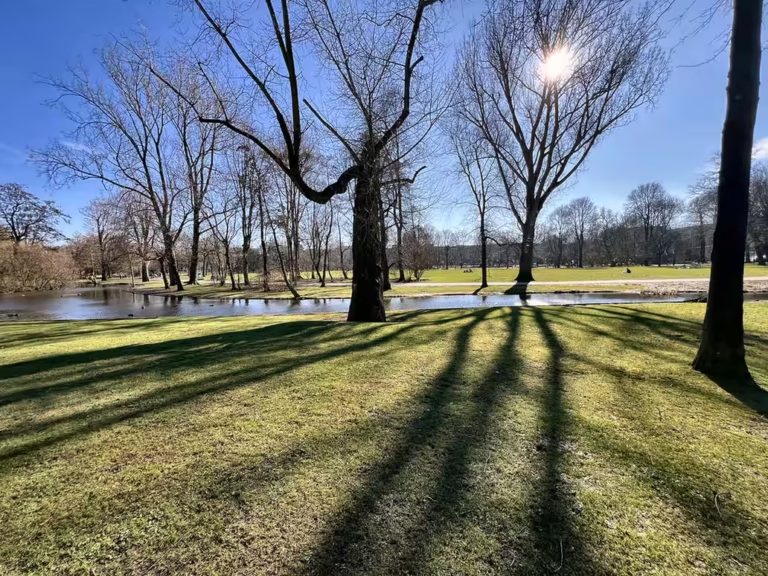
The aesthetic appeal of the Oosterpark lies in its deliberate “wildness” and topographical variety. Leonard Springer utilized a large pond as the central focal point, around which winding paths were constructed to create a sense of depth and discovery. This design choice was intended to make the park feel much larger than its actual size of approximately 12 hectares. The use of elevation changes and “sightlines” ensures that visitors encounter different vistas as they move through the grounds.
In terms of flora, the park is home to a diverse collection of trees, some of which date back to the original planting phase. You will find majestic weeping willows near the water’s edge, as well as sturdy oaks and beeches that provide a dense canopy during the summer months. The park also features a variety of flowering shrubs and perennial beds that support local pollinators. In recent years, the municipality has shifted toward more sustainable maintenance practices, allowing certain areas to grow more naturally to promote biodiversity.
Tip: The Oosterpark covers an official area of approximately 12 hectares and is registered under the monumental status of a municipal monument in the city of Amsterdam.
The avian population of the park is particularly noteworthy. It is famous for hosting a large colony of Grey Herons, which have become a signature sight for regular visitors. These birds are often seen perched near the pond or nesting in the tall trees. Additionally, the park provides a habitat for various songbirds, woodpeckers, and even the occasional kingfisher. For nature enthusiasts, the Oosterpark serves as an outdoor laboratory where the interaction between urban life and natural ecosystems is clearly visible.
Oosterpark Amsterdam, Things to know!
National Monuments and Symbolic Landmarks
Beyond its natural beauty, the Oosterpark is a place of deep historical reflection, housing several of the most important monuments in the Netherlands. The most prominent of these is the National Slavery Monument (Nationaal Monument Slavernijverleden), unveiled in 2002 in the presence of Queen Beatrix. Created by artist Erwin de Vries, the monument commemorates the abolition of slavery in the Dutch colonies in 1863. It consists of three parts representing the past (resistance), the present (breaking the shackles), and the future (freedom).
Another significant landmark is the Monument to Theo van Gogh, titled “De Schreeuw” (The Scream). Created by Jeroen Henneman, it was erected in 2007 near the location where the filmmaker and critic was assassinated in 2004. The sculpture is a powerful representation of freedom of speech, depicting a profile that transforms from a scream into a closed mouth. Its presence in the park serves as a somber reminder of contemporary social challenges and the importance of open dialogue within a multicultural society.
Tip: The National Slavery Monument is the site of the annual Keti Koti ceremony, which takes place every year on July 1 to mark the official end of slavery in Suriname and the Netherlands Antilles.
The park also features the Titaantjes monument, a tribute to the writer Nescio (J.H.F. Grönloh), whose stories often featured the Oosterpark as a backdrop for his characters’ philosophical wanderings. These monuments collectively transform the park into a “memory landscape,” where different layers of Dutch history—from colonial times to modern political discourse—intersect. For the visitor, walking through the Oosterpark is not just a recreational activity but an educational journey through the national psyche.

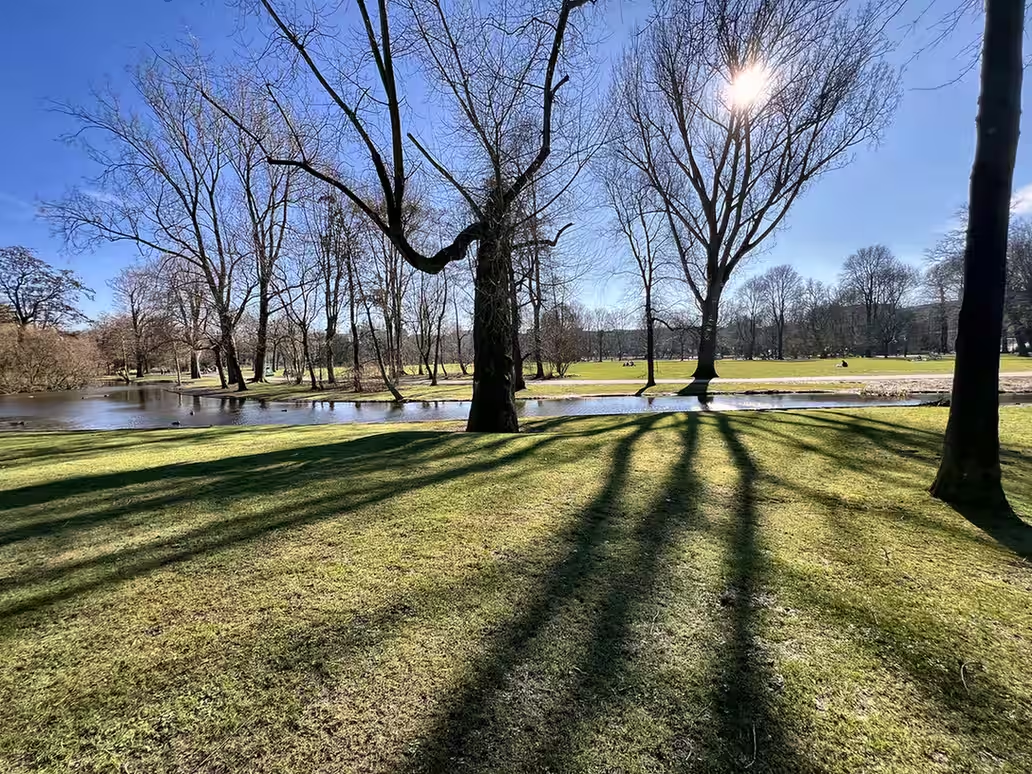
Opened in 1891, Oosterpark was the first large public park in Amsterdam designed in the English landscape style, with winding paths, ponds and open lawns.
The Royal Tropical Institute and Surrounding Architecture
The northern edge of the Oosterpark is dominated by one of the most impressive architectural ensembles in Amsterdam: the Royal Tropical Institute (Koninklijk Instituut voor de Tropen, or KIT). Completed in 1926, the building was designed by J.J. van Nieukerken and his sons. It is a masterpiece of Neo-Renaissance architecture, adorned with intricate brickwork, sculptures, and symbolic carvings that reflect the era’s fascination with global cultures and the then-Dutch East Indies.
The KIT building houses the Tropenmuseum, an ethnographic museum that is widely considered one of the best in Europe. The museum’s grand central hall, with its marble pillars and expansive galleries, overlooks the park, creating a seamless visual link between the indoor cultural exhibits and the outdoor landscape. The architecture of the institute provides a dramatic backdrop to the park’s greenery, grounding the natural space in a sense of historical grandeur.
Tip: The Royal Tropical Institute is located at Mauritskade 63, 1092 AD Amsterdam, and stands as a listed National Monument (Rijksmonument).
On the other sides of the park, you will find a variety of residential styles. The Oosterparkbuurt features late 19th-century “revolutiebouw” (rapidly constructed housing) alongside more ornate townhouses. The contrast between the imposing institutional architecture of the KIT and the domestic scale of the surrounding streets gives the park a unique urban character. It feels integrated into the fabric of the neighborhood, acting as a shared “backyard” for a diverse range of residents, from students and young professionals to families who have lived in the area for generations.


Public Function and Social Life
The Oosterpark has always been more than just a place for quiet contemplation; it is a dynamic social hub. The park’s layout includes large open lawns specifically designed for public gatherings. During the summer months, these areas are filled with people enjoying picnics, practicing yoga, or playing informal sports. The park’s “no-fence” policy, implemented during a major renovation between 2012 and 2016, has made the space feel more open and accessible, literally merging the park with the surrounding sidewalks.
One of the most innovative features of the park is the Sprekershoek (Speakers’ Corner), inspired by the one in London’s Hyde Park. Established in 2005, it provides a designated spot for individuals to exercise their right to free speech and address the public on various topics. This reinforces the park’s reputation as a “park of the people,” where democratic values are physically manifested. The presence of a wading pool for children and several well-maintained playgrounds ensures that the park is a multi-generational destination.
Oosterpark Amsterdam: Things to Know Before You Go
The Oosterpark serves as a vital green lung in the East of Amsterdam, offering a unique blend of English landscape gardening and profound historical significance. As the first large park laid out by the municipality, it reflects the 19th-century vision of urban social improvement. Today, it remains a premier destination for those seeking cultural depth, birdwatching, and a peaceful escape from the city’s busy center.
In addition to daily recreation, the Oosterpark hosts various cultural festivals. The most significant is the Keti Koti festival on July 1st, which celebrates the end of slavery with music, food, and colorful parades. The park’s capacity to host such large-scale events while maintaining its ecological integrity is a testament to its robust design. Whether it is a quiet Tuesday morning or a bustling festival weekend, the park adapts to the needs of its visitors, remaining a central pillar of community life in Amsterdam East.
Take a virtual tour with Google Streetview!
Frequently Asked Questions (FAQ)
When is the Oosterpark open to visitors?
The Oosterpark is a public municipal park and is open 24 hours a day, seven days a week. There are no gates or entry fees, allowing for full accessibility at any time.
Are dogs allowed in the Oosterpark?
Yes, dogs are allowed in the Oosterpark. However, they must be kept on a leash in most areas. There are specific designated “off-leash” zones within the park where dogs can run freely, provided they are under the owner’s control.
Is there a place to eat inside the park?
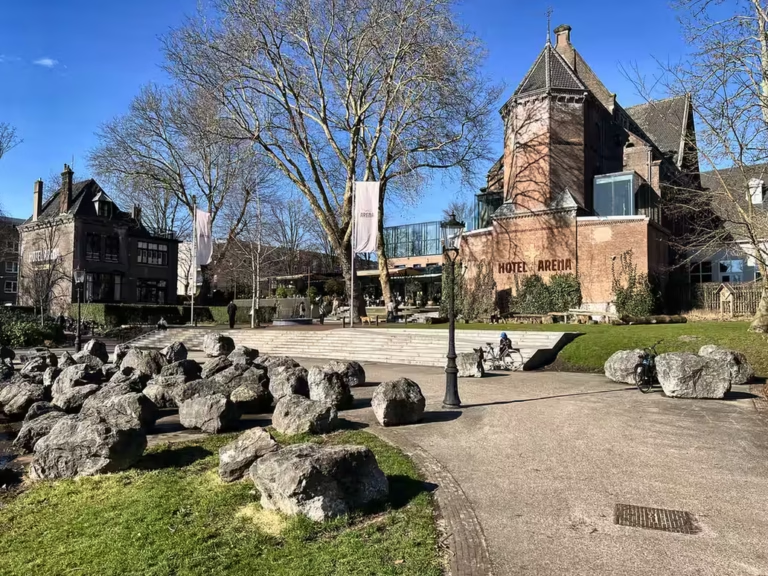
Yes, there are several dining options located directly within or on the edge of the park. This includes the Hotel Arena’s restaurant and the Tropenmuseum café, as well as several smaller kiosks and terraces that operate during the warmer months.
Is the Oosterpark accessible for people with disabilities?
The Oosterpark is highly accessible. Most of the primary walking paths are paved and wide enough for wheelchairs and strollers. The recent renovations have focused on removing barriers and ensuring that the park’s main features, including the monuments, are easy to reach.

Leave a Reply